
Sinoxylon anale
Sinoxylon anale
Description
How to identify
Sinoxylon anale is a species of wood-boring beetle belonging to the Bostrichidae family. These insects are notorious for their ability to infest and degrade seasoned wood, making them a significant concern for the timber industry and quarantine authorities.
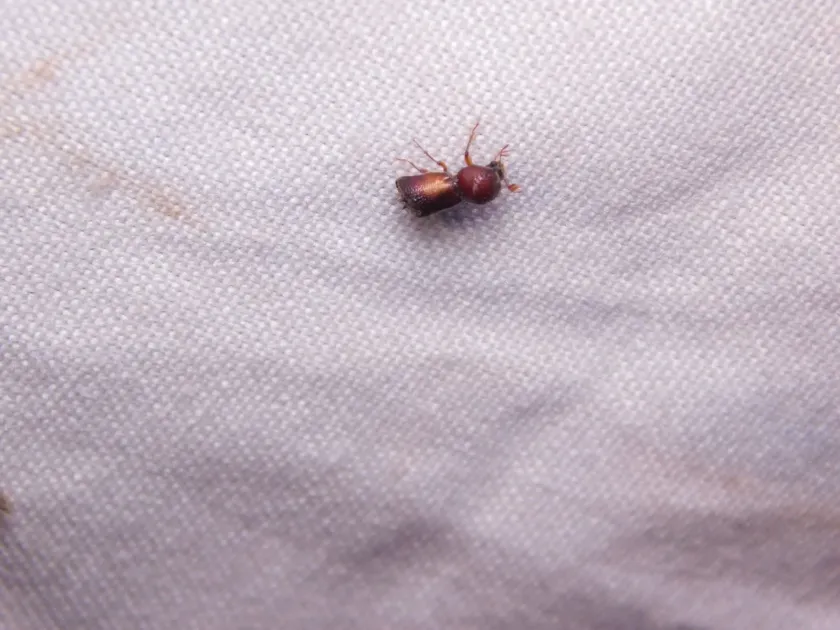
The adult beetle is small, ranging from 3 to 6 mm in length, with a cylindrical body typically dark brown or black in color. Their appearance is distinct due to the hooded pronotum, which covers the head and gives them their common name "auger beetle."
The posterior portion of the elytra features small tubercles or teeth, which are critical diagnostic features for identifying this specific species. These physical structures help the beetle navigate within its tunnels and eject waste material.
Larvae are white, C-shaped, and possess strong mandibles adapted for excavating hard wood. They spend their entire developmental phase inside the wood, creating extensive damage that is often invisible from the exterior surface until the adults emerge.
As members of the subfamily Bostrichinae, these beetles are evolutionarily adapted to utilize starch-rich wood tissues. Their biology allows them to survive in various environments, often spreading through global trade routes via infested packing materials.
What it damages
Sinoxylon anale is a polyphagous species capable of attacking a wide array of hardwood species. It targets not only forest timbers but also various agricultural crops, including fruit trees that are weakened by stress or disease.
The primary economic impact is felt in the timber trade, where these beetles infest stored lumber, crates, and wooden pallets. Their activity severely compromises the structural integrity of these materials, leading to rejection during international inspections.
In orchards, these beetles infest the branches and trunks of fruit trees. By creating extensive gallery systems, they weaken the host tree, making it more susceptible to environmental stress and opportunistic pathogens.
Damaged wood often serves as a site for secondary infections. Fungus and mold can easily colonize the tunnels created by the beetles, leading to the rapid decay of the affected plant tissue or wooden products.
For industries relying on bamboo and rattan, Sinoxylon anale poses a persistent threat. The beetle's ability to thrive in these materials necessitates rigorous monitoring and prophylactic measures to avoid complete product loss.
Signs of infestation
The most prominent sign of an active infestation is the presence of small, circular exit holes measuring 1 to 2 mm in diameter. These holes are usually accompanied by fine, powdery wood dust known as frass.
Internal damage manifests as a network of winding galleries tightly packed with frass. These tunnels can be found by dissecting the wood, revealing the larvae or pupae responsible for the destruction within.
During the flight season, adult beetles are frequently attracted to artificial light sources. Seeing live beetles near stored wood or inside warehouses is a clear indication that a colony is present and potentially expanding.
Structural failure is a common sign of long-term infestation. Wooden supports or branches may snap or lose structural integrity due to the intensive boring and consumption of the inner wood tissues by the larvae.
In quiet environments, a faint clicking or scratching sound can sometimes be heard coming from infested wood. This auditory clue indicates that larvae are actively feeding, providing a way to detect infestations even if exit holes are not yet visible.
Control measures
Phytosanitary regulation is the primary line of defense. All wooden packing materials used in international trade must undergo heat treatment according to ISPM 15 standards to kill larvae and pupae within the wood.
Preventative warehouse management involves keeping stored timber dry and maintaining a clean environment. Removing wood debris and waste material reduces the number of suitable breeding sites for the beetles.
Fumigation is the most effective method for controlling existing infestations in large volumes of lumber. This chemical treatment penetrates deep into the wood, ensuring that all developmental stages of the pest are successfully eliminated.
For agricultural settings, regular orchard maintenance, including the pruning of dead or weakened branches, is crucial. Healthy trees with adequate nutrition are generally less attractive to the beetles and more resistant to attacks.
Spot treatment with insecticides can be used for minor infestations in furniture or individual wooden items. Injecting approved chemicals directly into the galleries ensures the substance reaches the larvae hidden deep within the wood.
Taxonomy
- Latin name
- Sinoxylon anale
- Order
- Coleoptera (beetles)
- Family
- Bostrichidae
- EPPO code
- SINOAN
Discussion
No discussions yet — be the first.