
Scobicia
Scobicia
Description
How to identify
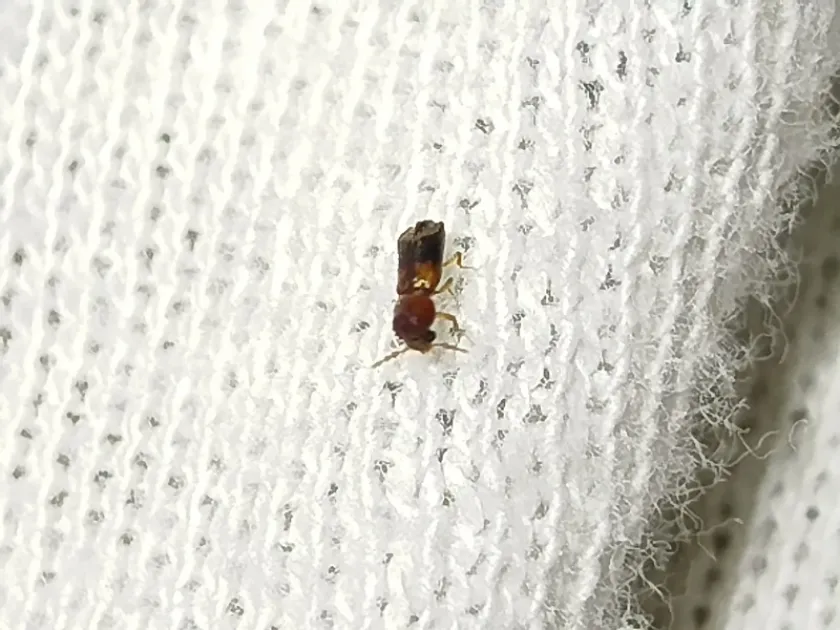
Scobicia is a genus of wood-boring beetles belonging to the family Bostrichidae, also known as auger beetles. These insects are distinguished by their cylindrical shape and a hood-like pronotum that obscures the head.
The adult beetles are generally small, ranging from 3 to 7 mm in length. Their coloration typically spans shades of reddish-brown to black, with a robust and often heavily sculpted exoskeleton.
The larval stage features a characteristic C-shaped body, which is adapted for boring through solid wood. Unlike some other pests, both larvae and adults can be destructive to woody tissues.
Their life cycle involves complete metamorphosis: egg, larva, pupa, and adult. Females usually lay eggs in bark crevices or exposed wood surfaces, which facilitates the spread of the pest via transported timber.
These beetles are well-adapted to various environments, successfully colonizing both standing trees in forests and processed lumber in warehouses or residential settings.
What it damages
Scobicia beetles are significant technical pests of timber. Larvae feed internally on wood, creating elaborate galleries that compromise the structural integrity of the material.
Their host range includes a variety of hardwood trees such as oak, elm, and beech, as well as woody vines like grapevines, making them a concern for both forestry and agriculture.
Stored lumber and finished wood products are particularly vulnerable. When left unchecked, infestations can convert sound wood into structural powder within a few years.
Beyond the mechanical destruction caused by boring, the tunnels created by larvae provide entry points for wood-decaying fungi and pathogens, further accelerating the degradation process.
Economic losses occur due to the reduced value of timber, the need for costly replacement of structural elements, and the potential mortality of ornamental or productive trees.
Signs of infestation
The most prominent sign of a Scobicia infestation is the presence of small, circular exit holes on the surface of the wood, which indicate that adult beetles have emerged.
Beneath or near these exit holes, fine wood dust—often called frass—accumulates. This material is the debris pushed out by the larvae while they consume the inner wood.
In standing trees, infestation may be signaled by declining health, such as premature leaf drop, dieback, or the presence of sap weeping from bark fissures.
During quiet periods, one might hear subtle clicking or crunching sounds emanating from within the infested wood, caused by the larvae feeding on the dense fibers.
Over time, infested wooden items may lose structural rigidity, showing visible signs of warping or crumbling when slight pressure is applied to the surface.
Control measures
Preventive measures include the prompt removal and disposal of infested trees and the proper sanitation of forestry areas to reduce the overall population of the beetle.
Timber should be treated with deep-penetrating insecticides or wood preservatives to create a toxic or repellent barrier against egg-laying adults and emerging larvae.
For infested buildings or furniture, professional fumigation is often the most effective method, as it ensures that the chemical agent reaches deep into the wood galleries.
Monitoring for adult flight activity using pheromone-baited traps allows for timely intervention before the infestation becomes severe and widespread.
Maintaining low moisture content in stored lumber is essential, as many Bostrichid species prefer wood with a certain range of humidity for their optimal development.
Taxonomy
- Latin name
- Scobicia
- Order
- Coleoptera (beetles)
- Family
- Bostrichidae
- EPPO code
- SCOCSP
Discussion
No discussions yet — be the first.