
Psoa viennensis
Psoa viennensis
Description
How to identify
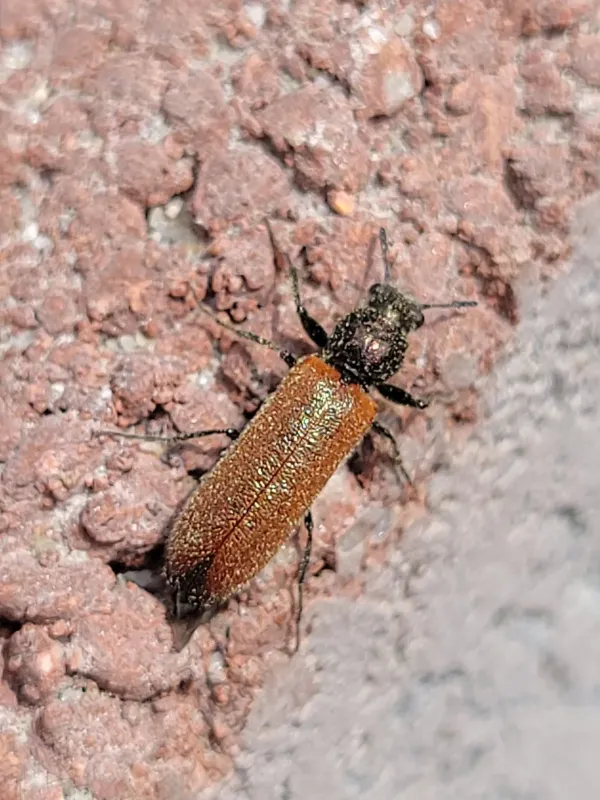
Psoa viennensis is a beetle belonging to the Bostrichidae family, commonly known as the auger beetles or false powderpost beetles. The adult beetle is characterized by an elongated body, typically ranging from 5 to 8 millimeters in length, with a dark brown to black coloration and a subtle metallic luster.
The pronotum of this beetle is highly convex and features well-developed, tooth-like projections at the anterior margin, giving it a hood-like appearance. This distinct morphological feature is crucial for identification and separates it from other wood-boring insects found in orchards.
The larvae of Psoa viennensis are typical of the Bostrichidae family, presenting a curved, C-shaped form. They are creamy white with a robust head capsule and powerful mandibles, which are evolutionary adaptations specifically for burrowing into hard wood tissues.
Adult beetles are proficient fliers, especially during the warm months, facilitating their dispersal across orchards. They are most commonly observed on the bark surface or near exit holes during their peak flight periods.
To identify the presence of this species, one must inspect branches for characteristic round exit holes, typically 2-3 millimeters in diameter. These holes are created by adults as they emerge from the wood after completing their developmental cycle.
What it damages
Psoa viennensis is a significant pest of various fruit crops, including apple, pear, cherry, plum, and apricot trees. Both the larval and adult stages contribute to the overall damage, though the internal tunneling by larvae is the most destructive.
By boring extensive galleries through branches and trunks, the larvae disrupt the vascular system of the tree. This interference with nutrient and water transport leads to the wilting and eventual death of individual branches or the entire tree if the infestation is severe.
Young orchards are particularly vulnerable, as even minor tunneling can compromise the structural integrity and growth potential of young saplings. Infested trees often suffer from reduced vigor, making them susceptible to secondary infections by fungi and bacteria.
In addition to structural damage, the infestation leads to a decline in fruit yield and quality. The stress placed on the host tree often results in stunted growth and a general decline in the long-term health of the orchard.
Wild woody plants surrounding commercial orchards can serve as natural reservoirs for this pest. Identifying and managing these host plants is essential to prevent re-infestation of cultivated fruit trees.
When it appears
The biological cycle of Psoa viennensis is heavily influenced by ambient temperature. Adult beetle activity typically commences in late spring and continues throughout the summer months.
Peak emergence and mating activity generally occur in June, as rising temperatures optimize developmental rates. During this phase, females seek out suitable crevices or wood surfaces to lay their eggs.
Larvae develop within the wood over a prolonged period, feeding on the inner tissues. They often remain inside the host material through the winter months, completing their transformation into pupae in the spring.
The generation time is typically one year, although fluctuations in climate can potentially accelerate or delay this cycle. Understanding the local phenology is key to timing protection efforts effectively.
Orchard monitoring should be intensified during the late spring and early summer months. Visual surveys for new exit holes during these months are critical for evaluating the success of management programs.
Signs of infestation
The primary indicator of an infestation is the presence of fine wood dust or frass accumulating on the bark surface or at the base of the tree beneath exit holes.
Symptoms such as branch dieback or the premature yellowing and wilting of leaves are frequent signs of internal damage caused by larval tunneling, which cuts off sap flow.
Careful examination of the bark will reveal small, circular holes indicative of adult emergence. These holes serve as the most reliable visual evidence of established larval galleries inside.
Bark cracking or swelling in specific areas can indicate the location of extensive internal galleries where the wood structure has been significantly compromised.
General tree decline, characterized by poor vegetative growth and failure to thrive, is often associated with chronic infestations by wood-boring pests like Psoa viennensis.
Control measures
Sanitary pruning is the most effective cultural method for managing this pest. All infested or weakened branches must be removed and destroyed by burning to eliminate the larvae before they emerge.
Maintaining the overall health and vigor of the orchard is essential. Proper irrigation, balanced fertilization, and adequate sunlight help trees resist the establishment of boring insects.
Chemical control with systemic insecticides can be effective if applied during the flight period of the adult beetles, targeting them before they can lay eggs on the bark.
Establishing a monitoring program using traps can help track adult activity and guide the timing of intervention strategies, minimizing the need for broad-spectrum chemical use.
- Rigorous sanitary pruning of dead wood.
- Immediate disposal of infested branches.
- Targeted insecticide applications during peak flight.
- Ensuring optimal tree nutrition to improve resistance.
Taxonomy
- Latin name
- Psoa viennensis
- Order
- Coleoptera (beetles)
- Family
- Bostrichidae
- EPPO code
- PSOAVI
Discussion
No discussions yet — be the first.