
Psoa
Psoa
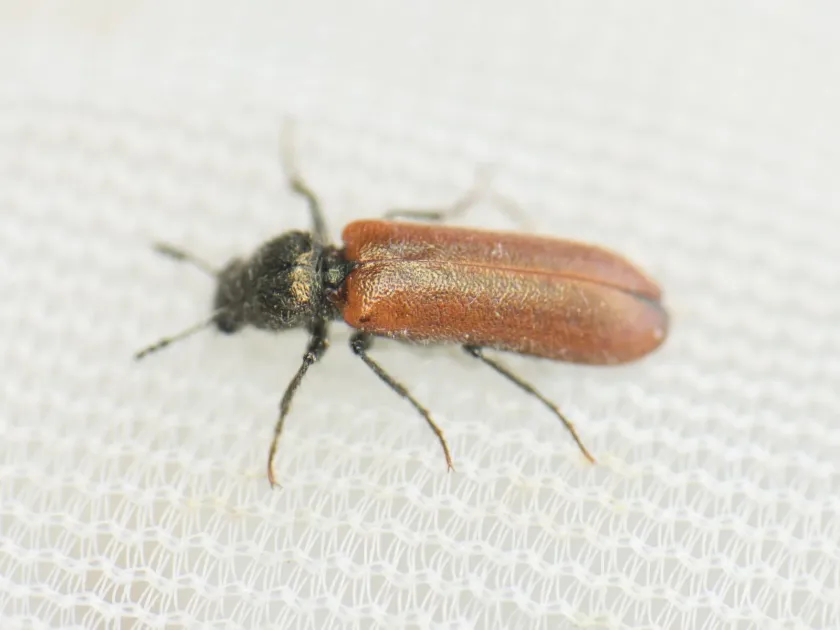
Description
How to identify
The genus Psoa belongs to the Bostrichidae family, commonly known as auger beetles or powder-post beetles. They are characterized by their cylindrical bodies and a hooded pronotum that hides the head.
Adult beetles are typically dark-colored and robust, with powerful mandibles designed for boring into wood. Their surface is often textured with fine punctures or ridges that assist in locomotion within galleries.
Larvae are white, C-shaped, and possess well-developed mouthparts. They spend their entire developmental period inside wood, which provides them with both shelter and nutrition.
Identification often requires careful inspection, as many members of the Bostrichidae family share similar morphological traits that can confuse non-specialists.
Due to their secretive life cycle, the adult beetles are rarely seen on the bark surface except during mating or dispersal periods.
What it damages
These beetles primarily target stressed, weakened, or dying trees. In agricultural settings, they can cause significant damage to fruit tree species that are struggling with drought or disease.
The damage is caused by both adults, which bore into young twigs for food and shelter, and larvae, which tunnel through the interior wood structure.
By excavating deep tunnels, Psoa disrupts the tree's vascular system, leading to wilting, branch dieback, and in severe cases, the death of the entire tree.
Young orchards are particularly vulnerable, as the smaller diameter of the branches allows larvae to rapidly compromise the structural integrity of the wood.
Infestations often reduce the overall vigor and productivity of the trees, making them even more susceptible to subsequent attacks by other secondary pests.
Signs of infestation
The most visible sign of an infestation is the presence of small, round emergence holes on the bark of twigs and branches, often accompanied by fine, powdery wood dust.
Sudden wilting or chlorosis of leaves on specific branches during the growing season is a strong indicator of internal larval activity blocking nutrient pathways.
If a suspected branch is cut, the interior reveals intricate tunnels that have destroyed the cambium and xylem layers of the wood.
Accumulation of sawdust around the base of trees or in branch crotches is a classic indicator that the beetle population is actively boring into the host plant.
Brittle and dead twigs that snap easily when handled often hide a complex network of tunnels bored by the larvae during previous seasons.
Control measures
Sanitation is the most critical control method; all infested and dead branches should be pruned promptly and destroyed by burning to kill larvae and pupae inside.
Maintaining tree health through proper fertilization and irrigation is essential to help trees resist colonization by these wood-boring pests.
Applying contact or systemic insecticides during the beetle flight period can effectively reduce the population by preventing adult females from laying eggs.
Monitoring the orchard for early signs of entry holes allows for targeted removal of infested wood before the pest can spread to the rest of the grove.
- Regular inspection of twig surfaces for boreholes.
- Burning of infested wood to disrupt the life cycle.
- Use of biological control agents where applicable.
Taxonomy
- Latin name
- Psoa
- Order
- Coleoptera (beetles)
- Family
- Bostrichidae
- EPPO code
- PSOASP
Discussion
No discussions yet — be the first.