
Larger grain borer
Prostephanus
Description
How to identify
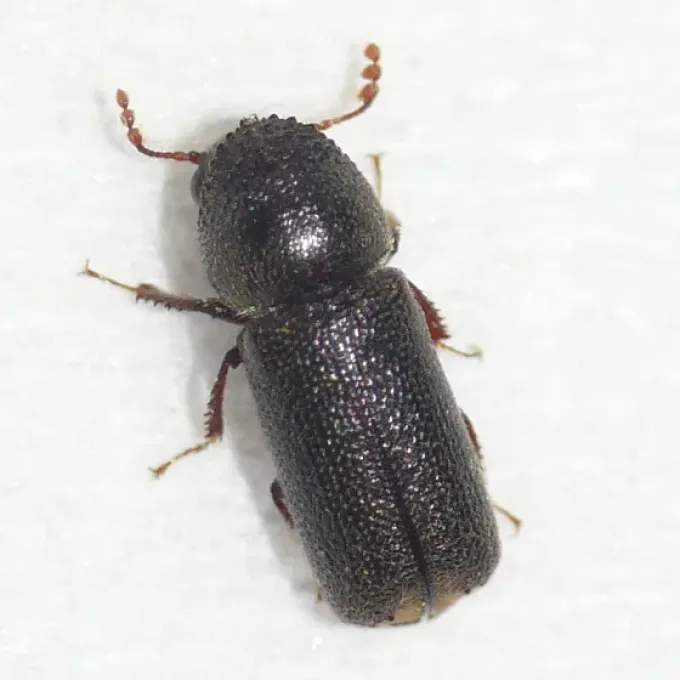
The larger grain borer (Prostephanus truncatus) is a beetle belonging to the Bostrichidae family. The adult beetle is cylindrical, measuring approximately 3 to 4.5 mm in length, and is dark brown to black in color.
The defining feature of this pest is its pronotum, which covers the head like a hood and possesses a series of small, sharp teeth on the anterior edge, enabling it to bore into hard materials.
The larvae are C-shaped, creamy white with a brownish head. They are highly resilient and capable of developing within extremely hard substrates, including dried maize cobs and wooden structures.
Adults are strong fliers, which allows them to migrate quickly between fields, granaries, and storage facilities, spreading infestation rapidly throughout the agricultural landscape.
The species thrives in warm, dry climates, which is why it has become a devastating pest in tropical regions, requiring constant vigilance and advanced storage management techniques.
What it damages
Maize is the primary target of the larger grain borer. It consumes both the grain itself and the cob, often leaving behind nothing but a fine dust of grain particles.
Beyond maize, this pest also attacks dried cassava, sorghum, wheat, and other starchy products, making it a major threat to food security in regions where these crops are stored.
Damage is not limited to the food supply; the borer actively destroys wooden storage facilities, crates, and pallets, complicating the maintenance of sanitary conditions in warehouses.
Infestation leads to secondary attacks by fungi and bacteria, causing the grain to rot, change color, and lose its nutritional value and germination potential.
Economic losses caused by this pest are among the highest in the post-harvest sector, as the borer can decimate a significant percentage of stored stock in a very short duration.
Signs of infestation
The primary indication of an infestation is the presence of fine, flour-like dust accumulating beneath stored bags or on the surface of grain piles within a silo.
Visually inspecting maize cobs reveals circular, clean-cut entry holes that appear as if they were drilled by a mechanical tool, distinct from the irregular damage caused by moth larvae.
A musty or fermented odor often develops in infected storage areas due to the activity of the pests and the subsequent development of mold in the damaged grain.
The emergence of adults can be detected by monitoring traps during the evening or by conducting routine sampling of grain samples taken from different depths of the storage container.
Unexplained localized heating in the center of the grain bulk is a strong indicator of an active pest colony, as the metabolic activity of the larvae generates significant heat.
Control measures
The most effective strategy against the larger grain borer is structural fumigation using phosphine gas, which remains the gold standard for killing all life stages within airtight silos.
Maintaining low moisture content in the grain (below 12%) significantly reduces the reproduction rate of the beetle, serving as a primary cultural control method.
Strict sanitation protocols must be enforced, including the thorough cleaning of all storage equipment and the removal of spilled grain that could harbor populations between seasons.
Farming communities should utilize pheromone-based traps to monitor population levels and detect the arrival of the pest before it reaches infestation levels that require chemical intervention.
- Airtight storage containers;
- Regular inspection of incoming produce;
- Surface sprays with approved contact insecticides;
- Proper ventilation to prevent moisture accumulation.
Taxonomy
- Latin name
- Prostephanus
- Order
- Coleoptera (beetles)
- Family
- Bostrichidae
- EPPO code
- PROESP
Discussion
No discussions yet — be the first.