
Polycaon
Polycaon
Description
How to identify
Polycaon belongs to the Bostrichidae family, commonly known as auger beetles or powder-post beetles, which are known for their wood-boring habits.
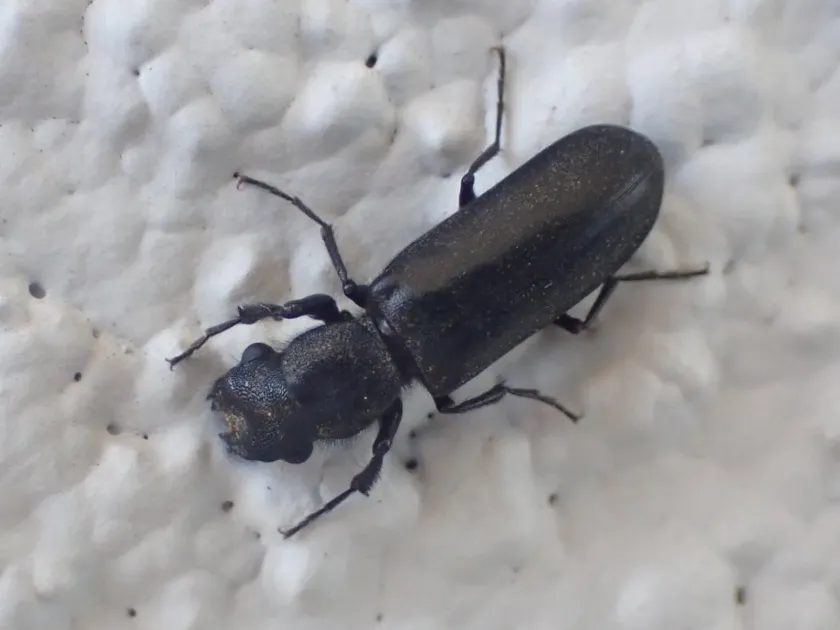
The adult beetles are characterized by a cylindrical, elongated body with a pronotum that often resembles a hood, covering the head completely.
Their larvae are typically C-shaped, fleshy, and possess strong mandibles, which they use to tunnel through dense wood fibers efficiently.
Adult sizes vary depending on the specific species within the genus, usually ranging between 5 mm and 15 mm in length.
Because they spend most of their life cycle protected within the tree tissue, identifying the beetle in its early stages is extremely difficult.
What it damages
Polycaon beetles are known to attack various hardwood tree species, including fruit trees like apples, citrus, and vines like grapevines.
The pest particularly targets stressed, weak, or freshly transplanted trees, as these specimens have lower defensive capabilities against boring insects.
Larvae create extensive tunnel systems within the wood, feeding on the internal structure and significantly hindering the tree's nutrient transport.
Severe infestations can lead to structural compromise of the branches or the main trunk, which may result in the eventual death of the affected plant.
Furthermore, these galleries serve as entry points for pathogens and secondary infections, leading to wood decay and further deterioration of the tree.
Signs of infestation
The most prominent sign of infestation is the appearance of small, perfectly circular exit holes on the surface of the bark, left by emerging adults.
Fine wood dust, resembling sawdust, accumulating near the base of the tree or on the branches is a clear indicator of active larval boring inside.
Infested trees often exhibit signs of general decline, such as wilting foliage, branch dieback, and an overall lack of vigor during the growing season.
In some cases, the bark might become loose or develop cracks, allowing for the inspection of internal galleries carved by the larvae.
A hollow sound when tapping the trunk or branches can indicate extensive internal damage caused by the accumulation of larval tunnels over time.
Control measures
The first line of defense is strict orchard sanitation, which involves the rapid removal and destruction of all infested wood to prevent further spread.
Proper agronomic care, including balanced irrigation and fertilization, strengthens trees and makes them less susceptible to initial colonization.
Pruning out and burning infested branches during the dormant season is a highly effective way to reduce the population of overwintering larvae.
Applying trunk protectors or whitewash containing protective insecticides can deter adult beetles from laying eggs on the surface of young trees.
During the peak flight season of adult beetles, the use of contact or systemic insecticides can help manage population levels in high-risk areas.
Taxonomy
- Latin name
- Polycaon
- Order
- Coleoptera (beetles)
- Family
- Bostrichidae
- EPPO code
- PCAOSP
Discussion
No discussions yet — be the first.