
Melalgus
Melalgus
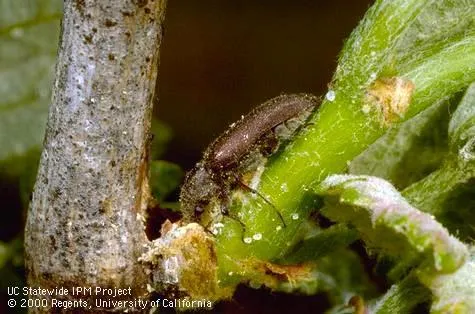
Description
How to identify
Melalgus is a genus of beetles belonging to the family Bostrichidae, commonly known as auger beetles. These insects are recognized for their specialized adaptation to wood-boring, characterized by a cylindrical body shape and a hood-like pronotum that obscures the head.
Adult beetles are typically dark brown or black, featuring a robust structure that allows them to tunnel efficiently into hardwood. The head is directed downward and largely protected, which is a structural hallmark of the family and a key identification feature for field entomologists.
The larval stage is spent entirely within the wood. Larvae are typically C-shaped, legless, or have short legs, and possess strong mandibles capable of pulverizing woody tissues. Their development takes place deep inside the host tree, protecting them from many external environmental pressures.
The life cycle of Melalgus involves complete metamorphosis. Depending on the species and environmental conditions, the development from egg to adult can take several months or even years, especially in temperate climates where growth slows during winter.
These beetles are primarily attracted to stressed, dying, or freshly cut trees. They rely on chemical cues to locate hosts that have reduced resistance, making them secondary pests that often complete the destruction of already weakened woody plants.
What it damages
The primary damage caused by Melalgus is the creation of extensive gallery systems within the trunk and branches of trees. As larvae feed, they disrupt the vascular tissue (xylem and phloem), which is critical for the tree's water and nutrient transport.
This internal tunneling causes the decline of individual branches or the entire tree. The structural integrity of the wood is compromised, making affected trees prone to breakage during strong winds or under the weight of their own foliage.
Entrance and exit holes created by the beetles act as infection courts for secondary pathogens, including wood-decaying fungi and bacteria. These microorganisms often cause more rapid decay than the beetles themselves, accelerating the death of the host tree.
In orchards, Melalgus can affect various fruit-bearing trees, leading to yield losses and decreased tree longevity. High levels of infestation can effectively turn a productive orchard into a source of breeding material for further pest spread.
The economic impact is particularly significant in commercial nurseries and plantations where wood quality is paramount. Infested timber loses its market value and often becomes unfit for structural or decorative purposes due to the presence of numerous galleries.
Signs of infestation
The most reliable sign of Melalgus activity is the presence of small, perfectly circular exit holes on the tree's bark. These holes are often accompanied by fine, flour-like frass that accumulates in bark crevices or at the base of the tree.
Foliar symptoms include premature wilting or yellowing of leaves on specific branches. This localized decline indicates that the internal galleries have effectively girdled the branch, preventing the necessary flow of water to the canopy above.
External inspection might reveal signs of oozing sap or gum, particularly on fruit trees, where the tree attempts to push out the invader or seal the wound caused by the adult beetle's entrance.
In advanced cases of infestation, the tree may produce a hollow sound when tapped, indicating that a significant portion of the internal wood has been converted into tunnels by the larval population.
If bark is carefully peeled away in a suspicious area, the gallery structure—often complex and filled with compacted frass—confirms the presence of Bostrichid larvae. Identifying these signs early is crucial for preventing a widespread infestation across the entire plantation.
Control measures
The most effective management approach for Melalgus is maintaining tree vigor. Healthy trees with adequate water and nutrient supplies are much better equipped to resist beetle colonization through their natural defense mechanisms, such as resin or sap production.
Sanitation is a critical control measure. Any infested branches or trees should be removed and destroyed immediately. Burning or chipping the infested wood is essential to ensure that larvae do not emerge to continue the life cycle in the vicinity.
Chemical control using systemic or contact insecticides can be applied during the peak flight period of adult beetles. These treatments aim to prevent the adults from successfully boring into the bark and laying eggs.
Monitoring populations using pheromone traps allows for targeted pesticide applications, minimizing the environmental impact and ensuring that control measures are implemented at the most vulnerable stage of the beetle's life cycle.
- Regular pruning of dead or stressed wood.
- Proper irrigation to prevent drought stress in orchards.
- Removal and proper disposal of infested timber.
- Use of bark-protectant sprays to deter egg-laying.
Taxonomy
- Latin name
- Melalgus
- Order
- Coleoptera (beetles)
- Family
- Bostrichidae
- EPPO code
- MLAGSP
Discussion
No discussions yet — be the first.