
Lyctoxylon dentatum
Lyctoxylon dentatum
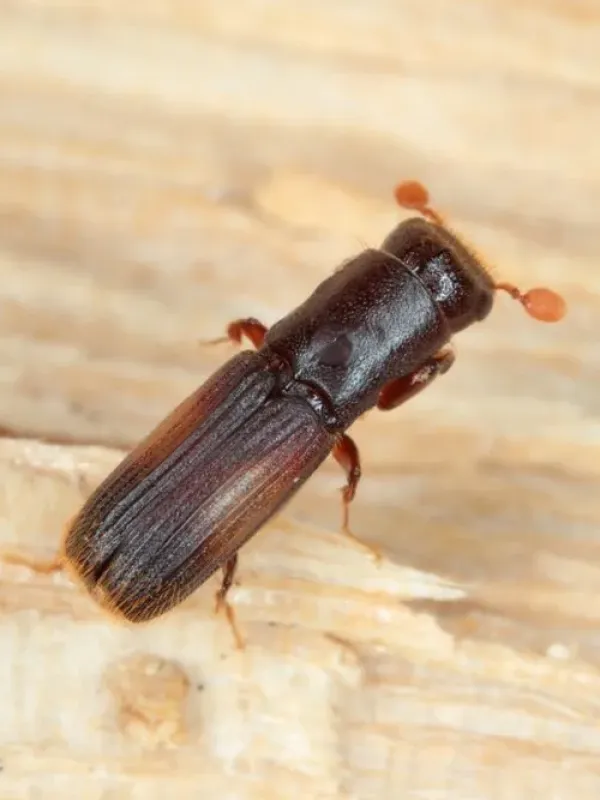
Description
How to identify
Lyctoxylon dentatum is a species of wood-boring beetle belonging to the family Bostrichidae, subfamily Lyctinae. These beetles are relatively small, usually measuring between 2 and 3 millimeters in length.
The body is elongated and somewhat flattened, with a color that can range from light reddish-brown to dark brown. The surface of the elytra is punctuated with fine pits and sparse hairs.
The head is partially hidden by the pronotum, which is a common diagnostic feature for this family. The antennae end in a distinct, two-segmented club, which helps in professional identification.
The larvae are typically whitish and possess a curved, C-shaped body, adapted for burrowing through dense wood fibers using their strong mandibles.
Due to their tiny size, identifying the species often requires high-magnification optics, focusing on the specific structure of the antennae and pronotal shape.
What it damages
This beetle is recognized as a technical pest that primarily attacks seasoned hardwood lumber. Susceptible materials include oak, ash, hickory, and various tropical hardwood species.
It poses a significant threat to timber yards, parquet flooring, antique furniture, and the structural integrity of wooden elements within buildings.
While they can inhabit dead branches or weakened trees in nature, the primary economic damage occurs in industrial timber storage and indoor wooden assets.
Larvae consume the interior of the wood, creating intricate tunnels and reducing the sturdy material to a fine, powdery substance known as frass.
Left unchecked, a severe infestation can lead to the total collapse of structural wooden components as the larvae destroy the wood from the inside out.
When it appears
The biological cycle of Lyctoxylon dentatum is highly dependent on ambient temperature and moisture levels. In heated buildings, they can remain active throughout the year.
The optimal conditions for larval development and adult emergence involve temperatures ranging from 20 to 30 degrees Celsius.
Adult beetles typically emerge during warmer months, leaving the wood through small exit holes to mate and initiate new infestations on available timber.
The total lifecycle, encompassing egg, larva, pupa, and adult stages, may take anywhere from a few months to a full year depending on environmental favorability.
Females deposit eggs directly into the pores of the wood or existing crevices, ensuring that the offspring have immediate access to food upon hatching.
Signs of infestation
The most reliable sign of an infestation is the presence of fine, flour-like wood dust, often found in piles directly beneath the affected timber.
One can identify the presence of this beetle by observing tiny, circular exit holes, approximately 1 to 1.5 millimeters in diameter, on the surface of the wood.
When tapping on infested wood, a hollow sound may indicate extensive internal tunneling and destruction caused by larval feeding.
Surface layers may appear intact, but applying pressure often reveals a lack of density or structural weakness, as the internal structure has been compromised.
- Piles of fine frass (wood powder) under infested items.
- Small circular exit holes (1-1.5 mm) on the wood surface.
- Reduced structural strength and hardness of the timber.
- Occasional scratching sounds made by larvae feeding inside wood.
Control measures
Effective control involves the application of deep-penetrating insecticides designed to reach larvae inside their tunnels and provide long-lasting protection.
Fumigation of storage facilities or individual items is considered the most reliable industrial method to completely eliminate an infestation at all life stages.
Maintaining low wood moisture levels is a crucial preventive measure, as drier wood is less attractive to these beetles for egg-laying and development.
Severely damaged structural components should be promptly removed and burned to prevent the spread of the beetles to other parts of the building or inventory.
Preventive maintenance, including the use of commercial wood preservatives during the manufacturing process, significantly reduces the likelihood of future infestations.
Taxonomy
- Latin name
- Lyctoxylon dentatum
- Order
- Coleoptera (beetles)
- Family
- Bostrichidae
- EPPO code
- LYCXDE
Discussion
No discussions yet — be the first.