
Lyctoxylon
Lyctoxylon
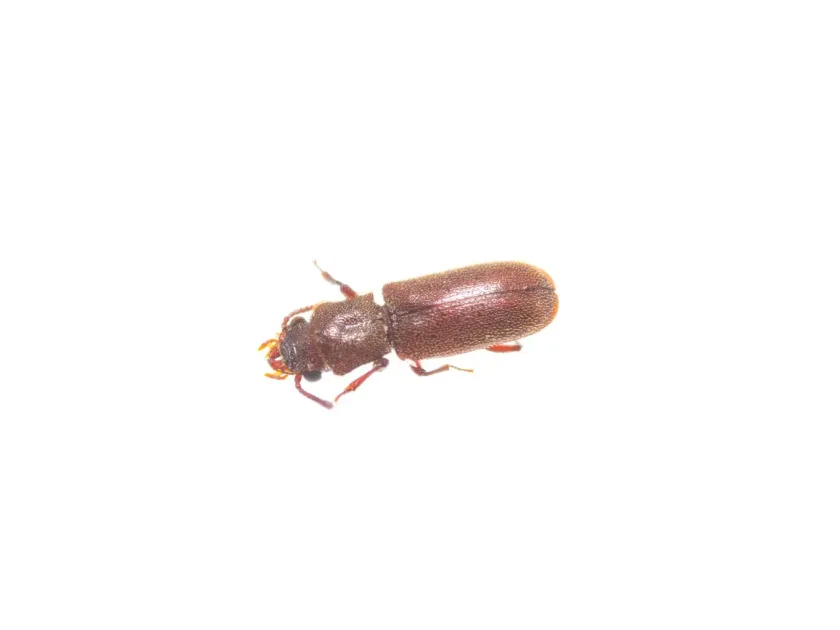
Description
How to identify
Lyctoxylon is a genus of wood-boring beetles belonging to the family Bostrichidae within the order Coleoptera. These insects are highly adapted to life inside dry wood, where they spend most of their life cycle.
Adult beetles are typically small and cylindrical in shape, with a dark coloration that allows them to blend into their environment. Their anatomy is specialized for boring through tough woody tissues, making them efficient pests of seasoned timber.
The life cycle of Lyctoxylon is heavily influenced by environmental conditions, particularly wood moisture content and ambient temperature. Under optimal conditions, these beetles can complete their development rapidly, leading to population explosions.
Larvae are the most damaging life stage. They possess robust mandibles that allow them to create complex networks of tunnels throughout the timber, effectively turning the interior of the wood into sawdust.
Because they spend most of their time hidden inside the substrate, these pests often go unnoticed until they emerge as adults, leaving characteristic exit holes on the surface of the wood.
What it damages
Lyctoxylon specializes in attacking dry, seasoned wood. This includes a wide range of timber, from construction materials to furniture, decorative items, and even wooden tools stored in warehouses.
The beetle can impact both hardwood and softwood species. Vulnerable materials are those that have not been treated with adequate preservatives or those stored in environments with high humidity that favors the development of wood-boring insects.
In agricultural settings, these pests can damage wooden warehouse structures, pallets, and grain storage containers. This indirect damage can pose risks to the integrity of storage systems and potentially contaminate stored goods.
As larvae feed on the wood, they pulverize the fibers, drastically reducing the structural integrity of the material. This often leads to the failure of structural components that were once considered sound.
The damage is cumulative and often extensive. By the time surface signs become visible, the interior of the wood may already be heavily compromised, rendering the affected piece useless for further application.
Signs of infestation
The most prominent sign of a Lyctoxylon infestation is the presence of fine, powdery wood dust, often called "frass," accumulating beneath or around wooden objects.
Small, perfectly round exit holes appearing on the surface of the wood indicate that adult beetles have recently emerged. These holes are clear indicators of an established population inside the material.
A hollow sound when tapping on wooden beams or boards can suggest that the interior has been turned into a network of tunnels, which is a classic symptom of advanced beetle infestation.
Visible piles of frass near the base of wooden furniture or structures require immediate investigation, as this indicates active feeding and development occurring within the wood matrix.
In cases of severe infestation, the edges of the wood may become brittle and crumble easily, confirming that the structural fibers have been largely destroyed by the larval tunnels.
Control measures
The primary strategy for controlling Lyctoxylon involves prophylactic measures, primarily treating wood with deep-penetrating insecticides and wood preservatives during the manufacturing or storage process.
- Heat treatment of timber to lethal temperatures to kill all developmental stages.
- Application of chemical preservatives to repel and eliminate adult beetles.
- Fumigation of infested buildings or storage facilities by licensed professionals.
- Maintaining low wood moisture content (below 10%) to make the substrate unattractive.
- Regular inspection of stored timber and prompt isolation of any affected materials.
For localized infestations, insecticidal injections into the beetle holes can sometimes be effective. This targets larvae deeper within the wood, provided the damage is not yet extensive.
When structural damage is severe, the only reliable solution is the complete removal and replacement of the infested components, as the mechanical properties of the wood cannot be restored once the damage is widespread.
Taxonomy
- Latin name
- Lyctoxylon
- Order
- Coleoptera (beetles)
- Family
- Bostrichidae
- EPPO code
- LYCXSP
Discussion
No discussions yet — be the first.