
Tropical auger beetle
Heterobostrychus aequalis
Description
How to identify
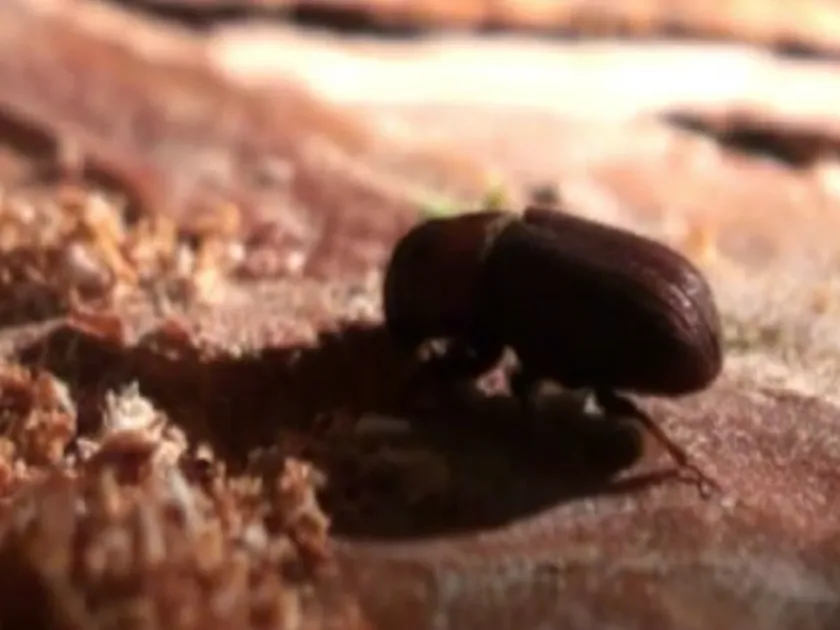
The tropical auger beetle (Heterobostrychus aequalis) is a member of the Bostrichidae family within the order Coleoptera. Adults are typically 6–12 mm long with a cylindrical, dark brown or black body.
A distinctive feature of this species is its strongly hooded pronotum, which is covered in sharp, backward-pointing teeth. This structure obscures the head when the beetle is viewed from a dorsal perspective.
Larvae are creamy white, C-shaped, and possess robust mouthparts designed for chewing through tough, lignified plant tissue. During their larval stage, they remain entirely within the host material.
This beetle is native to tropical regions but has achieved a worldwide distribution through international trade. It is highly successful in colonizing seasoned timber in warehouses, workshops, and domestic environments.
Identification is often delayed because the beetle spends its life cycle hidden inside the wood. Often, the presence of the pest is only recognized after visible damage has already compromised the structural integrity of the item.
What it damages
Heterobostrychus aequalis is a polyphagous pest known for its ability to attack a wide range of hardwoods and, less frequently, softwoods. It is a major economic pest in the timber and furniture industry.
The beetle causes severe damage to seasoned timber, plywood, and finished wood products. The larvae tunnel extensively throughout the wood, reducing the interior to a fine, flour-like dust known as frass.
Beyond wood, it can infest various starch-containing plant materials, such as roots or specialized agricultural commodities stored in infested wooden crates. This adaptability makes it a significant quarantine threat.
The intensity of the damage depends on the wood's moisture content, but the beetle can thrive in relatively dry environments. Extensive galleries created by generations of beetles can cause total structural failure.
Because it is a major quarantine pest in many countries, international shipments containing infested wood may be rejected, resulting in substantial financial losses for timber suppliers and distributors.
Signs of infestation
The most diagnostic sign of infestation is the appearance of small, perfectly circular exit holes, usually 2 to 4 mm in diameter. These holes indicate that adult beetles have emerged from the wood.
Accumulation of fine, powdery frass on or beneath the infested item is a clear indicator of active larval feeding. This dust is often expelled from exit holes or cracks in the wood surface.
Tapping the wood surface often produces a hollow sound, indicating that the internal structure has been destroyed by larval galleries. This is particularly noticeable in solid wood components.
In finished goods, such as furniture or veneer, infestation may be signaled by bubbling or peeling of the surface finish. This happens because the larvae chew tunnels just below the top layer of the wood.
Adult beetles are attracted to light, so their presence around storage facilities at night can serve as an early warning sign of an active infestation that warrants further inspection of stored timber.
Control measures
Industrial-scale fumigation using registered fumigants, such as phosphine, is the most effective method for eradicating all life stages of the beetle within wood shipments. This is the global standard for quarantine compliance.
Heat treatment is an environmentally friendly alternative to chemical control. Heating wood to a core temperature of 60°C for a specified period is sufficient to eliminate eggs, larvae, and adult beetles.
- Applying residual contact insecticides to wood surfaces as a preventative measure.
- Implementing rigorous phytosanitary inspections for all imported wood and wooden packing materials.
- Keeping storage areas clean of wood scraps, bark, and debris to reduce potential breeding sites.
- Isolating and destroying any infested materials to prevent the spread of the pest.
For localized infestations in residential items, direct injection of contact insecticides into exit holes can be effective. Repeated monitoring is essential to ensure that no further adult emergence occurs following the initial treatment.
Taxonomy
- Latin name
- Heterobostrychus aequalis
- Order
- Coleoptera (beetles)
- Family
- Bostrichidae
- EPPO code
- HETBAE
Discussion
No discussions yet — be the first.