
Enneadesmus
Enneadesmus
Description
How to identify
Enneadesmus is a genus of beetles belonging to the family Bostrichidae, commonly known as auger beetles or false powderpost beetles. They are specialized wood-borers found in various woody plants.
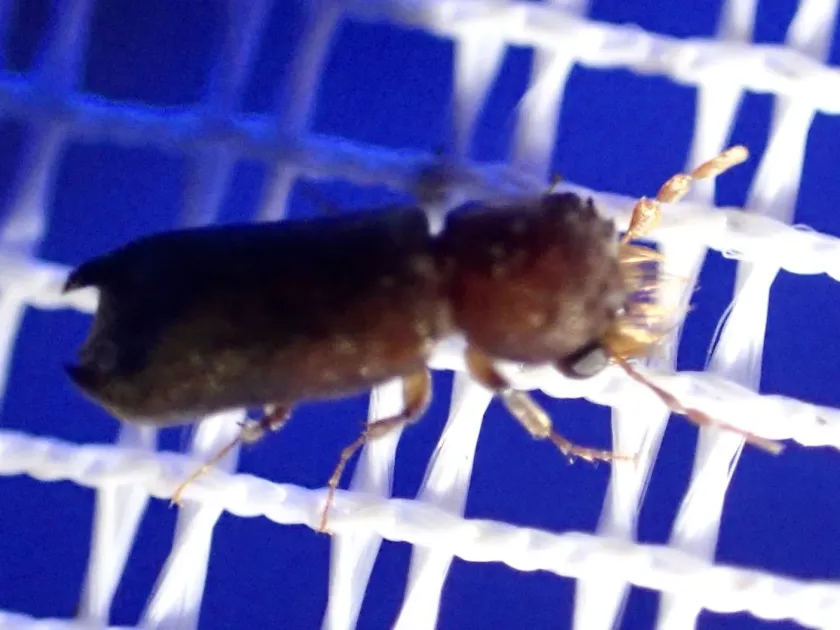
Adult beetles have a cylindrical, compact body shape, typically dark brown or black. Their pronotum is prominent and hood-like, covering the head, which is a classic diagnostic feature of this family.
The larvae are C-shaped, fleshy, and white, possessing robust mandibles optimized for excavating tunnels within the hardwood of stems and branches.
Identification is frequently performed post-mortem or after damage occurs, as these insects lead a highly cryptic life cycle almost entirely concealed within the host plant.
They are primarily found in temperate and subtropical regions where environmental conditions support the continuous development of larvae within the woody tissues.
What it damages
Enneadesmus species typically target weakened or stressed trees and shrubs. Common hosts include fruit trees, such as figs, and various deciduous ornamental species.
The larvae bore tunnels through the xylem and phloem, which disrupts the flow of water and nutrients, causing localized wilting and eventual branch death.
Heavy infestations compromise the structural integrity of the plant, often leading to secondary infections by fungi or bacteria that enter through the exit holes.
In nurseries, these beetles are particularly damaging as they can deform young saplings, rendering them unsellable or causing permanent stunted growth.
The economic impact is significant due to the loss of wood quality in ornamental species and reduced fruit yield in damaged orchard trees.
Signs of infestation
The most recognizable sign is the presence of small, perfectly circular exit holes on the bark, resembling holes made by a fine drill bit or needle.
Frass, or fine wood dust resembling sawdust, often accumulates directly below these holes or in the crotches of branches where the insects have been feeding.
Premature flagging or wilting of individual branches during the growing season is a clear indicator that the vascular system has been compromised by beetle tunneling.
Removing a section of the bark reveals complex, winding galleries packed with frass and wood debris, which confirms an active infestation of the branch.
Severe infestations may also show bark cracking and swelling around the entry points as the plant attempts to compartmentalize the damage caused by the larvae.
Control measures
Sanitation is the most effective control strategy: infested branches should be pruned out immediately and burned to kill larvae and pupae within the wood.
Maintaining optimal tree vigor through proper irrigation, fertilization, and soil management is essential to prevent successful beetle colonization on stressed plants.
Applying contact or systemic insecticides during the peak flight period of adult beetles can provide some protection, although its efficacy is limited by the cryptic behavior.
Monitoring using pheromone or light traps helps in timing insecticide applications or identifying the onset of the beetle activity season in the local environment.
Proper orchard management, including the removal of dead or dying wood and avoiding the storage of pruned branches near healthy trees, is crucial to minimize breeding sites.
Taxonomy
- Latin name
- Enneadesmus
- Order
- Coleoptera (beetles)
- Family
- Bostrichidae
- EPPO code
- ENNDSP
Discussion
No discussions yet — be the first.