
Bamboo borer
Dinoderus minutus
Description
How to identify
The Bamboo borer (Dinoderus minutus) is a beetle belonging to the family Bostrichidae. These insects are notorious for their ability to bore into and infest dried plant materials, especially bamboo stems.
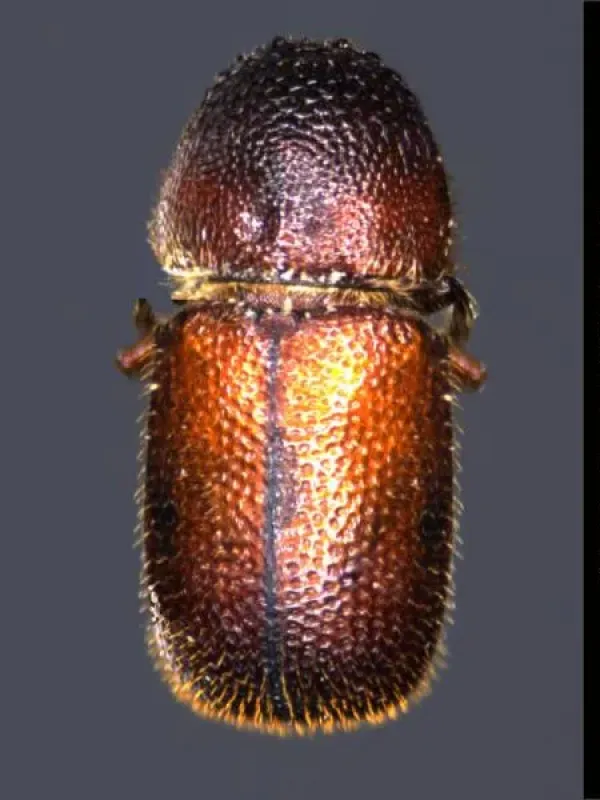
Adult beetles are small, typically measuring between 2.5 and 3.5 mm in length. Their cylindrical bodies are dark brown or black, designed for effective burrowing into hard wood tissues.
The head of the insect is downward-facing and largely obscured by a hood-like pronotum, which features sharp teeth on its anterior margin to assist in the boring process.
Larvae are small, white, and C-shaped, living entirely within the infested material. They possess robust mandibles specifically adapted for breaking down cellulose and starch found in bamboo.
The entire life cycle of this pest is completed within the substrate, allowing populations to grow rapidly in favourable warm and humid conditions.
What it damages
The primary hosts of the Bamboo borer include various species of bamboo. However, they also attack other starchy plant products such as cassava, dried yams, and occasionally grains.
Damage is caused by both adults and larvae as they tunnel through the material. This internal boring activity results in the formation of extensive networks of galleries.
As the infestation progresses, the internal structure of the bamboo is reduced to a fine, flour-like powder, rendering the items structurally unsound and aesthetically ruined.
Commercial losses in the furniture and construction industries are common when infested bamboo is traded or stored without proper treatment.
The pest is a significant threat to global trade in bamboo goods, often requiring stringent quarantine inspections and fumigation measures at ports of entry.
Signs of infestation
The most distinctive sign of infestation is the presence of numerous small, circular exit holes, approximately 1–2 mm in diameter, on the surface of the affected bamboo.
Accumulation of fine, powdery wood dust (frass) beneath the items is a clear indicator that adult beetles have emerged or are actively burrowing into the material.
Infested bamboo items often lose significant density, becoming fragile or collapsing under minimal mechanical pressure due to internal damage caused by the larvae.
A faint rasping or clicking sound can sometimes be heard during periods of high activity, caused by the beetles chewing through the fibers inside the stems.
Observing live beetles on or near stockpiles of bamboo is an immediate red flag, signaling an active infestation that needs to be addressed through isolation and treatment.
Control measures
Effective management begins with strict inspection of all imported bamboo products, checking for visible exit holes and the presence of fine dust.
Heat treatment is highly effective; exposing infested bamboo to temperatures exceeding 60 degrees Celsius for a sustained period kills all life stages of the beetle.
Chemical control involving fumigation with phosphine or other approved gases is the standard practice for treating large commercial shipments in airtight containers.
Preventive measures include applying wood preservatives or insecticide-treated coatings to bamboo products to make them resistant to beetle colonization.
- Store materials in dry, well-ventilated areas to reduce attractiveness.
- Implement rapid turnover of inventory to prevent long-term storage risks.
- Dispose of heavily infested items through burning or deep burial.
- Use sealed storage units to protect clean stock from adult beetles.
Taxonomy
- Latin name
- Dinoderus minutus
- Order
- Coleoptera (beetles)
- Family
- Bostrichidae
- EPPO code
- DINDMI
Discussion
No discussions yet — be the first.