
Bostrychopsis
Bostrychopsis
Description
How to identify
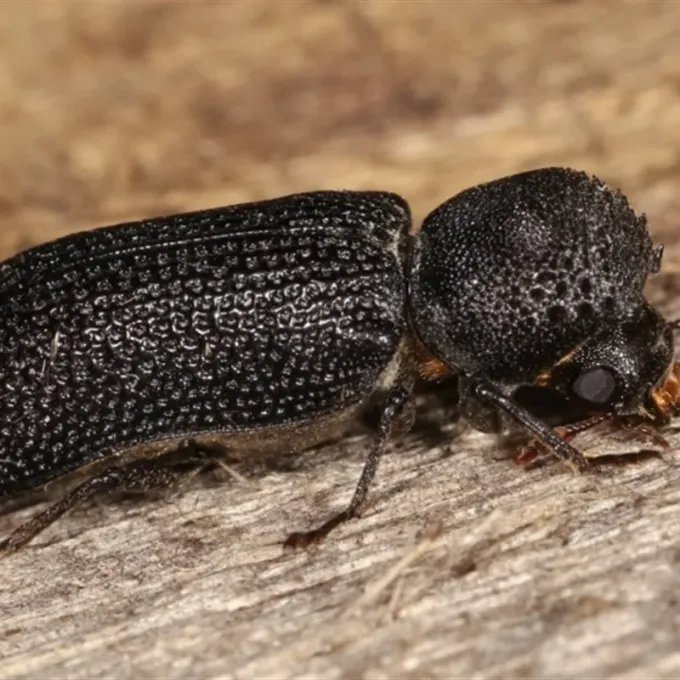
Bostrychopsis is a genus belonging to the family Bostrichidae, also known as auger beetles or powder-post beetles. These are small, cylindrical beetles, typically dark brown or black in color.
A distinctive feature of this genus is the pronotum, which is strongly curved and hood-like, covering the head from above. The surface of the elytra is often covered with small bumps or pits, giving it a rough appearance.
Adults have well-developed chewing mouthparts adapted for boring into solid plant tissues. Larvae are generally C-shaped, whitish or creamy, and possess a well-defined head capsule.
Species identification often requires magnification, as many Bostrichidae look similar. Key diagnostic characters include the shape of the teeth on the pronotum and the structure of the last abdominal segment.
In their natural habitat, these beetles are common in arid regions, where they specialize in infesting weakened or damaged woody plants.
What it damages
This pest primarily attacks woody species, including both forest and fruit-bearing trees. The most significant damage occurs in dry stems, branches, and trunks that lack active sap flow.
Bostrychopsis poses a serious threat to timber and wooden structures located outdoors. The beetles can penetrate deep into the wood, disrupting its structural integrity.
In orchards, the pest may infest weakened fruit trees, especially those stressed by drought or mechanical injury. Infestation often leads to the gradual dieback of individual branches.
Unlike many leaf-eating pests, this species leads a concealed life inside plant tissues. Therefore, damage is often detected only when the tree's health has already significantly declined.
Beyond direct structural damage, the tunnels created by the beetles provide entry points for secondary infections, such as wood-decaying fungi.
When it appears
Beetle flight and the colonization of new areas usually occur during the warm season, from late spring through late summer. Temperature plays a critical role in the rate of generation development.
In warm climates, multiple generations can develop within a single season. Adult beetles are primarily active during the evening and nighttime hours.
The life cycle includes egg, larva, pupa, and adult stages. Larvae spend most of their life inside the wood, feeding and gradually expanding their tunnels.
Overwintering most commonly occurs at the larval stage within the host wood, which provides protection against low temperatures. Development resumes as soon as spring temperatures rise.
Pupation takes place in specialized chambers that larvae prepare within the wood shortly before completing their development cycle.
Signs of infestation
The primary sign of the pest's presence is small, perfectly round exit holes on the bark or wood surface, created by emerging adults.
In areas where beetles have entered, a fine wood dust (frass) can often be seen. Its color typically matches that of the infested wood, which helps distinguish beetle activity from other factors.
Infested fruit trees may exhibit sudden wilting of leaves on specific branches. With heavy infestations, the tree loses its canopy density and may die within a few years.
Tapping the trunk and inspecting cross-sections of the wood reveal winding tunnels filled with frass and wood remnants. These tunnels may run both along and across the grain.
- Round holes on the bark.
- Presence of wood dust (frass) under the tree.
- Premature dieback of branches.
- Disruption of wood structural integrity.
Control measures
Effective protection against Bostrychopsis relies on strict adherence to agrotechnical standards. It is crucial to timely remove and destroy deadwood and heavily damaged branches that serve as pest reservoirs.
Maintaining high tree health through regular irrigation and fertilization is essential. A healthy, vigorously growing tree is better able to resist infestation because active sap flow prevents the creation of tunnels.
If initial signs of infestation are detected in individual branches, they must be pruned below the damage site and burned immediately to prevent the emergence of the next generation.
To protect valuable plantations, preventive insecticide treatments (systemic or contact) can be applied during the peak flight period of the beetles, which discourages them from laying eggs.
Monitoring the sanitary condition of surrounding areas is important, as neglected orchards or lumber storage piles often become the source of re-infestation for cultivated crops.
Taxonomy
- Latin name
- Bostrychopsis
- Order
- Coleoptera (beetles)
- Family
- Bostrichidae
- EPPO code
- BOSYSP
Discussion
No discussions yet — be the first.