
Apate
Apate
Description
How to identify
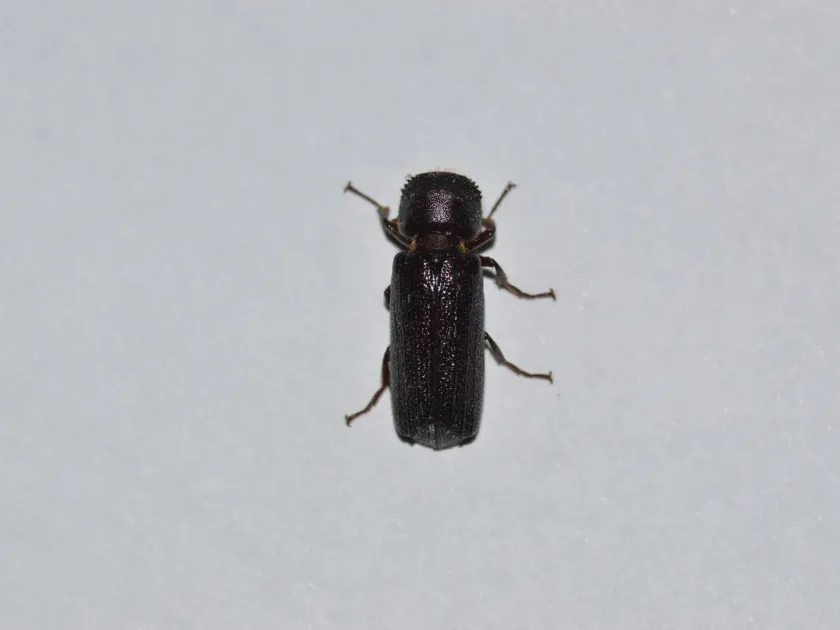
The genus Apate belongs to the Bostrichidae family, commonly referred to as auger beetles or false powderpost beetles. These insects are easily recognized by their cylindrical body shape and a pronotum that covers the head like a hood, which is a hallmark of this family.
Adult beetles are typically dark brown or black in color and range from 10 to 20 mm in length. Their bodies are hardened to withstand the harsh conditions of wood-boring, and the ends of their elytra often feature distinct teeth used to clear debris from their galleries.
What it damages
Apate species are notorious polyphagous pests, capable of attacking a wide variety of woody plants. They are frequently found on fruit-bearing trees such as pomegranates, citrus, figs, and grapes, as well as several ornamental and hardwood tree species.
Damage is caused by both adults and larvae. Adults bore into twigs and branches, often at forks, causing structural weakening. Larvae, however, are the primary internal feeders that create extensive tunnels deep within the wood, disrupting nutrient and water transport.
When it appears
The life cycle of Apate is heavily influenced by climate. In subtropical and tropical environments, they can be active for much of the year. The development process begins with the female laying eggs in bark crevices or wood surface wounds.
Once hatched, the larvae tunnel into the xylem of the branch or trunk. They spend their entire developmental period hidden inside the wood, feeding on tissues, and eventually pupate within these galleries before emerging as adults to start a new cycle.
Signs of infestation
Signs of infestation include the presence of small, circular exit holes on the surface of branches or trunks, often accompanied by piles of sawdust-like frass. A classic indicator is the sudden wilting or breaking of seemingly healthy branches during windy weather.
As the internal galleries expand, the structural integrity of the plant is compromised. In many cases, infected branches show signs of secondary infection by fungi or bacteria, which enter the tree through the tunnels, further accelerating the decline of the plant tissue.
Control measures
The primary control strategy involves rigorous sanitation. Infested branches should be pruned promptly and destroyed by burning to prevent the beetles from completing their life cycle and emerging to infest neighboring trees.
Chemical control can be effective if timed with the peak flight period of adults, using systemic or contact insecticides on branches. Maintaining optimal tree health through proper irrigation and fertilization is also crucial to minimize the attractiveness of trees to these pests.
Taxonomy
- Latin name
- Apate
- Order
- Coleoptera (beetles)
- Family
- Bostrichidae
- EPPO code
- APATSP
Discussion
No discussions yet — be the first.