
Amphicerus bimaculatus
Amphicerus bimaculatus
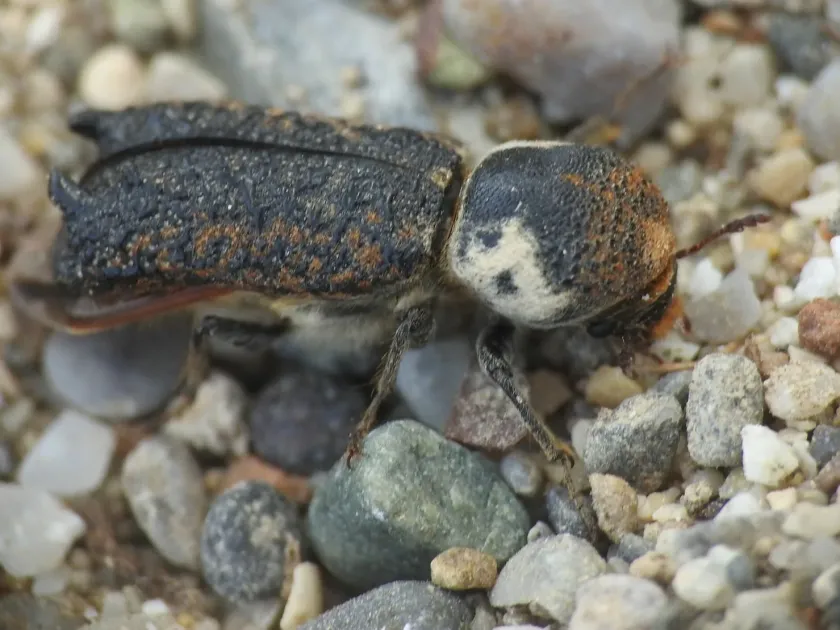
Description
How to identify
Amphicerus bimaculatus is a member of the Bostrichidae family within the Coleoptera order. It is commonly recognized as a wood-boring beetle that poses a threat to various woody plants.
Adult beetles typically measure between 8 and 12 millimeters in length. Their body structure is cylindrical, with a prominent hood-like pronotum that obscures the head.
The coloration of the adult beetle ranges from dark brown to black. A key identification feature is the presence of two distinct depressions or spots on the elytra.
The larvae have a characteristic C-shaped body, which is whitish in color and possesses specialized mouthparts for tunneling through dense wood tissues.
The species undergoes a complete metamorphosis, with its life cycle intimately tied to the internal tissues of the host trees it infests.
What it damages
The pest primarily targets weakened or stressed woody crops, including fruit trees like apples, pears, and also ornamental shrubs and grapevines.
Adult beetles tunnel into the base of young shoots and stems, which causes the affected parts to wilt quickly and often snap off under their own weight.
Larvae develop deep within branches and trunks, excavating complex tunnel systems that disrupt the tree's vascular system and nutrient transport.
Structural damage caused by the larvae weakens the tree, making it susceptible to limb breakage and increasing the risk of secondary infections from pathogens.
In cases of heavy infestation, the cumulative damage can lead to the death of young trees or significant loss of productive crown area in mature plants.
When it appears
The flight period for adult beetles generally commences in late spring and continues into summer when ambient temperatures are consistently warm.
Mating and oviposition occur throughout the summer months, with females seeking cracks in the bark or creating their own entry points to lay eggs.
The development cycle of the larvae can span one to two years depending on environmental conditions, tree health, and the specific host species.
Emergence of new adult beetles usually occurs towards the end of summer or early autumn, after which they may prepare for overwintering.
Effective monitoring and protective measures are most critical during the spring blooming season and the period of rapid shoot elongation.
Signs of infestation
The most visible sign of an infestation is the presence of small, circular exit holes on the bark, often accompanied by fine, powdery wood dust or frass.
Unexpected wilting of shoot tips during the summer is a major indicator that an adult beetle has bored into the base of the branch, cutting off water flow.
Branches breaking easily in the wind or under the weight of fruit often reveal internal tunneling activity performed by the larvae.
Small mounds of wood shavings found in the crotches of branches are clear evidence of active boring behavior by the insects.
Close inspection of the bark may reveal small cuts or scars, which are indicative of feeding activity or preparation for egg-laying by the female beetle.
Control measures
Sanitary pruning is the most vital measure: all infested, wilting, or dead branches should be removed and destroyed to kill larvae before they emerge.
Maintaining strong tree vigor through proper irrigation, fertilization, and general orchard hygiene makes trees less attractive to colonization by these beetles.
Systemic insecticides applied during the peak flight period can significantly reduce beetle populations and prevent successful egg-laying on the trees.
Sealing large pruning wounds and protecting the bark from mechanical damage helps prevent the beetles from finding suitable entry points.
- Deployment of pheromone traps for early population detection.
- Whitewashing trunks to discourage surface exploration by beetles.
- Enhancing orchard biodiversity to support natural predators of wood borers.
Taxonomy
- Latin name
- Amphicerus bimaculatus
- Order
- Coleoptera (beetles)
- Family
- Bostrichidae
- EPPO code
- AMPIBM
Discussion
No discussions yet — be the first.