
Amphicerus
Amphicerus
Description
How to identify
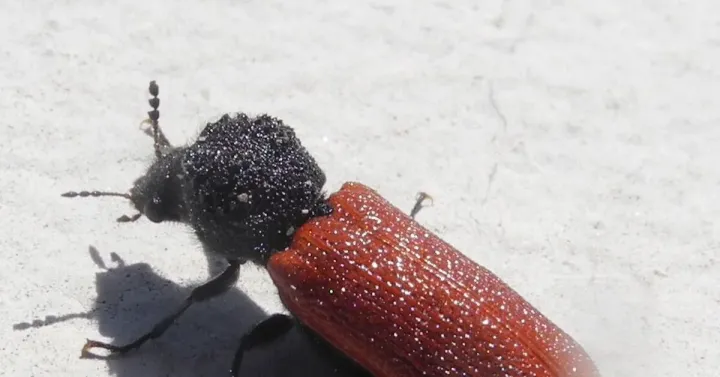
Amphicerus is a genus of beetles belonging to the family Bostrichidae. Commonly known as auger beetles or false powderpost beetles, these insects are characterized by a cylindrical body ranging from 5 to 15 mm in length. The head is partially or entirely hidden by a hood-like pronotum, which gives the insect its distinct appearance.
Adult beetles are typically dark brown or black with a rough, sculpted surface on their elytra. The larvae are creamy white, C-shaped, and possess strong mandibles adapted for excavating galleries deep within the wood of host trees. Their morphology is highly specialized for living within dense woody tissues.
What it damages
These pests primarily target deciduous trees, including fruit species like apples, pears, figs, and grapevines. Both adults and larvae contribute to the damage, though in different ways. They compromise the structural integrity of the plant and disrupt the translocation of water and essential nutrients.
Adult beetles frequently attack young shoots and buds, often creating entry holes that weaken the branch at the point of infestation. Larvae tunnel extensively through the heartwood and sapwood. This internal damage often goes unnoticed until the branch exhibits signs of severe wilt or snaps under minor pressure.
When it appears
The flight period for adult Amphicerus beetles usually occurs from late spring through the summer months. During this time, they actively search for host plants to feed and lay their eggs. Warm weather conditions significantly boost their activity levels and facilitate faster reproduction rates.
The life cycle duration varies depending on environmental conditions but generally takes about one year to complete. Pupation occurs within the larval galleries inside the wood. Once the adult beetle emerges, it leaves a perfectly circular hole, which is the hallmark of this pest's life cycle completion.
Signs of infestation
Early symptoms of an infestation include the sudden flagging or wilting of shoot tips. Close inspection reveals small, round entry holes on the bark, sometimes accompanied by sap or gum exudation. These signs are often concentrated at the junction of branches or on the main stem of young trees.
The presence of fine, sawdust-like frass on the bark or accumulating at the base of the tree is a strong indicator of larval tunneling activity. If suspected branches are pruned, cross-sections will reveal the internal galleries, which are often packed with wood debris and frass left behind by the developing larvae.
Control measures
Sanitation is the most effective management strategy. Pruning and destroying infested branches is critical to reducing the population levels. Because the larvae spend their entire life cycle protected inside the wood, it is vital to burn the removed wood before the next generation of adults can emerge.
Chemical control involves applying registered insecticides during the adult flight and egg-laying phases. Coverage must be thorough to ensure the beetle comes into contact with the toxicant while attempting to bore into the wood. Integrated pest management, including tree vigor maintenance, helps plants tolerate minor infestations.
Taxonomy
- Latin name
- Amphicerus
- Order
- Coleoptera (beetles)
- Family
- Bostrichidae
- EPPO code
- AMPISP
Discussion
No discussions yet — be the first.