
Squamapion vicinum
Squamapion vicinum
Description
How to identify
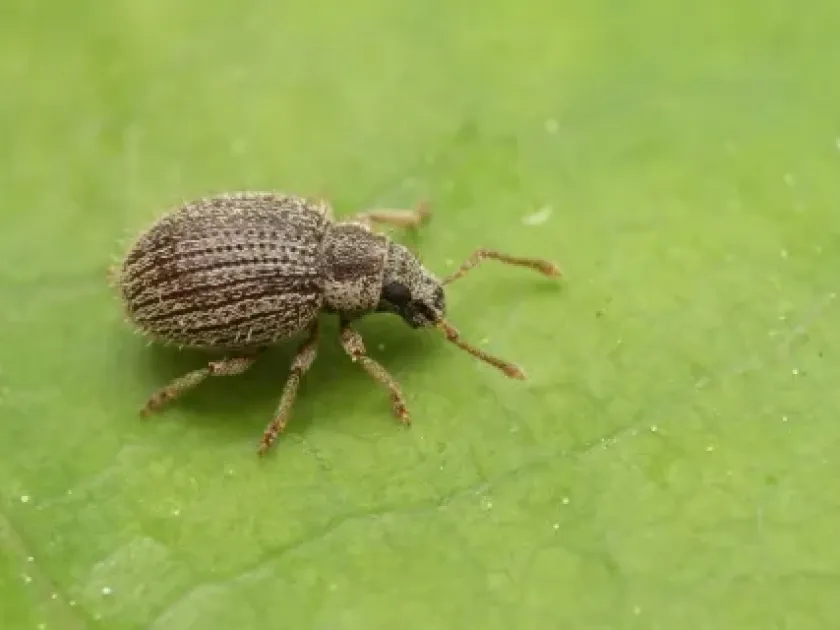
Squamapion vicinum is a small beetle belonging to the seed weevil family (Apionidae). Adults are typically 2 to 3 mm long, with a body shape that is characteristic of most weevils.
The coloration of the adult beetle ranges from dark grey to black, and the body surface is covered with fine scales, which gives the genus its distinctive appearance under magnification.
The larvae are legless, white to cream-colored, and maintain a C-shaped posture. They spend their entire developmental phase inside the seeds of host plants, making them difficult to detect without opening the pods.
The head features a long, thin rostrum, which is used for feeding and preparing sites for oviposition. This anatomical feature is common among several related species, complicating identification.
This species is found in habitats where leguminous plants are abundant, particularly in moist or sheltered areas where host plants grow in high densities.
What it damages
The primary hosts for Squamapion vicinum include various leguminous species, such as clover, vetch, and other pulse crops that are vital in agricultural systems.
Adults consume the leaf tissue of host plants, creating small holes, which is generally a minor issue and rarely causes significant economic impact on the plant's vegetative growth.
The real economic damage occurs during the larval stage. Larvae bore into the developing seeds within the pods and consume the interior, destroying the embryo and food reserves.
Infested pods may appear deformed or ripen prematurely. This damage significantly reduces the seed weight and makes the harvested material unacceptable for sale or replanting.
Damaged seeds exhibit very low germination rates and poor vigor, which poses a serious threat to farmers who rely on farm-saved seeds for the next cropping season.
When it appears
Squamapion vicinum survives the winter as an adult, seeking shelter in soil crevices, leaf litter, or plant debris near fields that supported the host crop in the previous season.
Activity begins in spring as temperatures rise, usually in late April or May, when adults emerge to feed on the early foliage of available leguminous plants in the area.
The mating and egg-laying process is timed to coincide with the development of the host plant pods, ensuring that the offspring have immediate access to food upon hatching.
Larval development occurs throughout the summer months inside the seeds. Once the larva completes its growth, it pupates and eventually emerges as a new adult beetle.
By autumn, the new generation of adults enters a state of diapause, finding suitable overwintering sites as the host plants dry out and end their growing cycle.
Signs of infestation
Early warning signs include small circular feeding holes on the leaves, which indicate the presence of overwintered adults starting to feed in the spring months.
Careful observation of the developing pods may reveal minute entry points or oviposition scars left by females, which are clear indicators of potential future infestation.
Opening mature pods often reveals hollowed-out seeds filled with larval waste, frass, and occasionally the larvae or pupae of the insect itself, confirming the presence of the pest.
In heavily infested fields, patches of prematurely yellowing or drying pods can be seen, which are significantly lighter and thinner than healthy, filled pods.
Laboratory testing of seed samples often shows reduced seed density and damaged internal structures, serving as the definitive proof of pest pressure during the harvest period.
Control measures
Effective management begins with deep tillage in the autumn or early spring to bury crop residues and kill overwintering adults living in the topsoil and debris.
Implementing a diverse crop rotation is essential; avoiding planting legumes in the same field for several consecutive years helps to starve the local pest population.
Harvesting the crop as soon as it reaches maturity helps minimize the duration of larval exposure and prevents the adult beetles from migrating into the soil to overwinter.
Chemical control involving systemic or contact insecticides should be applied during the early flowering and pod-setting stage to reduce adult populations before eggs are laid.
- Remove wild legume weeds from field margins;
- Use early-maturing varieties to escape peak pest pressure;
- Monitor pest activity using yellow sticky traps;
- Thoroughly clean and dry seeds immediately after harvest to stop late-stage development.
Taxonomy
- Latin name
- Squamapion vicinum
- Order
- Coleoptera (beetles)
- Family
- Apionidae
- EPPO code
- SQAPVI
Discussion
No discussions yet — be the first.