
Yellow-legged weevil
Squamapion flavimanum
Description
How to identify
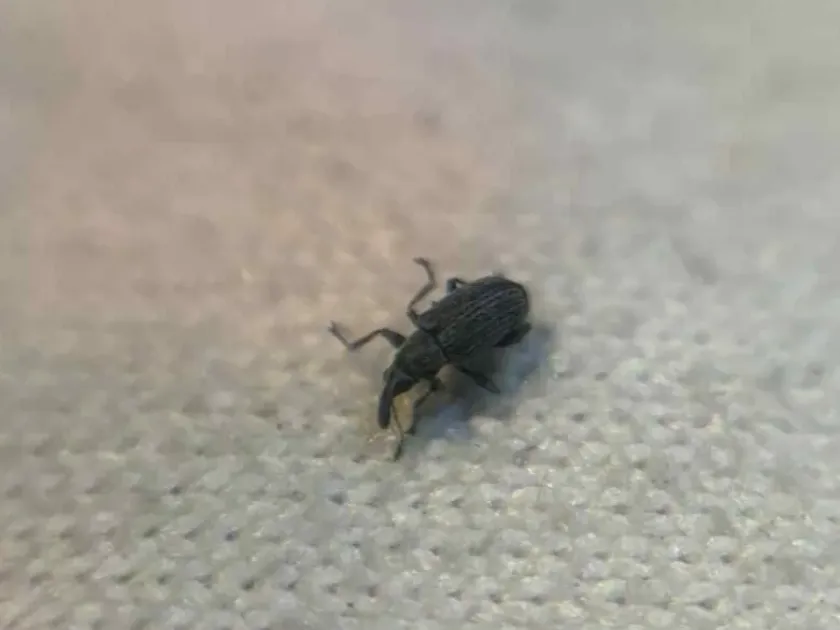
Squamapion flavimanum, known as the yellow-legged weevil, is a small member of the Brentidae family. These beetles are characterized by their pear-shaped body and a thin, elongated snout (rostrum) typical of the weevil group.
The adult beetle is dark in color, often appearing black or dark brown, sometimes with a faint metallic sheen. As indicated by the name, the legs are usually a distinct yellowish color, which helps distinguish them from related species.
Adults typically measure between 2 to 3 millimeters in length. Their larvae are white or cream-colored, legless grubs that develop internally within the host plant's tissues, making them difficult to spot during routine inspections.
Females possess a longer snout than males, an adaptation required for piercing plant tissues like buds or stems to lay eggs. This sexual dimorphism is a helpful feature for entomologists during species identification.
Due to their tiny size and habit of dropping to the ground when disturbed, these pests are often overlooked until significant plant damage becomes visible to the grower.
What it damages
This weevil primarily targets plants within the Malvaceae family, including Althaea officinalis (marshmallow) and various Malva (mallow) species. It is a recognized pest in both medicinal herb farming and ornamental gardens.
Adult beetles feed on leaves, creating small, pinprick-sized holes that reduce the plant's overall photosynthetic capacity. However, the most severe damage is caused by the larval stage.
Larvae feed internally on developing buds, seed pods, and immature seeds. This activity causes the buds to abort and drop prematurely, leading to significant losses in seed yield for commercial growers.
In addition to direct tissue consumption, the damage caused by larvae often allows secondary infections, such as mold or bacterial rot, to enter the reproductive organs of the plant.
While an individual plant may survive an infestation, the loss of reproductive potential significantly impacts the cultivation cycle, particularly for species grown specifically for their seeds or flowers.
When it appears
The life cycle of Squamapion flavimanum is closely synchronized with the growth stages of its host plants. Overwintering adults emerge from the soil or plant debris once spring temperatures rise.
Activity usually begins when ambient temperatures consistently reach or exceed 15 degrees Celsius. This timing aligns with the emergence of new foliage and the subsequent development of flower buds on host plants.
The period of maximum infestation typically occurs during the bud formation and early flowering stages, as these provide the necessary nutrients for larval development inside the buds.
Depending on regional climate, one or more generations may occur throughout the growing season. Warm summers accelerate the developmental cycle, leading to higher population densities.
As autumn approaches and temperatures decline, the adults seek protected areas in the soil or under vegetation to enter a state of diapause, remaining dormant through the winter months.
Signs of infestation
The first signs of infestation are small, circular holes in the leaves, often referred to as "shot-hole" damage, caused by the feeding activities of adult weevils upon emergence.
A closer inspection of buds may reveal tiny, brownish puncture marks—the specific entry points created by females for egg-laying. Frequently, these damaged buds show signs of yellowing or withering.
Opening a damaged bud or seed pod will reveal the white, legless larva feeding inside. This is the most definitive evidence of an active infestation within the plant population.
A sudden, unexplained drop of buds before they open is a classic indicator that the internal tissues have been compromised by larvae, forcing the plant to abort the organ.
Visible deformation of seed pods or their premature opening/shriveling suggests that the interior seeds are being consumed by larvae, significantly reducing the viability of the harvest.
Control measures
Cultural control is a primary defense, involving deep plowing or soil cultivation in the autumn. This process disrupts the overwintering sites of the adults and reduces the population for the next season.
Eliminating weeds related to the Malvaceae family around the field perimeter is crucial, as these plants often act as alternate hosts or reservoirs for the weevils when the primary crop is absent.
Chemical control should be applied before the egg-laying phase. Once larvae are established within the buds, they are protected from contact insecticides, rendering topical treatments ineffective.
Systemic insecticides may be used if the damage threshold is exceeded, provided they are approved for use on the specific host plant and applied according to safety guidelines.
Biological alternatives, such as entomopathogenic fungi, show potential in controlled environments, provided there is adequate humidity for the pathogen to thrive and target the adult beetle population.
Taxonomy
- Latin name
- Squamapion flavimanum
- Order
- Coleoptera (beetles)
- Family
- Apionidae
- EPPO code
- SQAPFL
Discussion
No discussions yet — be the first.