
Pine gall weevil
Podapion gallicola
Description
How to identify
The pine gall weevil (Podapion gallicola) is a small species of beetle belonging to the Curculionidae family. Known for its distinct snout, this insect has evolved to utilize pine shoots as a host for its larvae, creating characteristic galls.
The lifecycle of this pest is holometabolous, passing through egg, larval, pupal, and adult stages. The transformation from larva to adult typically occurs within the protective environment of the gall.
Adult beetles are relatively small, often dark in color, and are primarily active during the growing season. They emerge from existing galls to mate and initiate a new cycle of infestation on younger shoots.
The larvae are legless and creamy-white, perfectly adapted for life inside the wooden gall. They feed on the developing tissues of the shoot, effectively turning the plant's resources into their own growth medium.
Overwintering usually happens at the adult stage, with the insects seeking shelter in bark crevices or pine needle litter to survive the cold months before resuming activity in the spring.
What it damages
The primary hosts for this weevil are species within the genus Pinus. While mature trees can tolerate some infestation, young pines and saplings are particularly susceptible to severe structural damage.
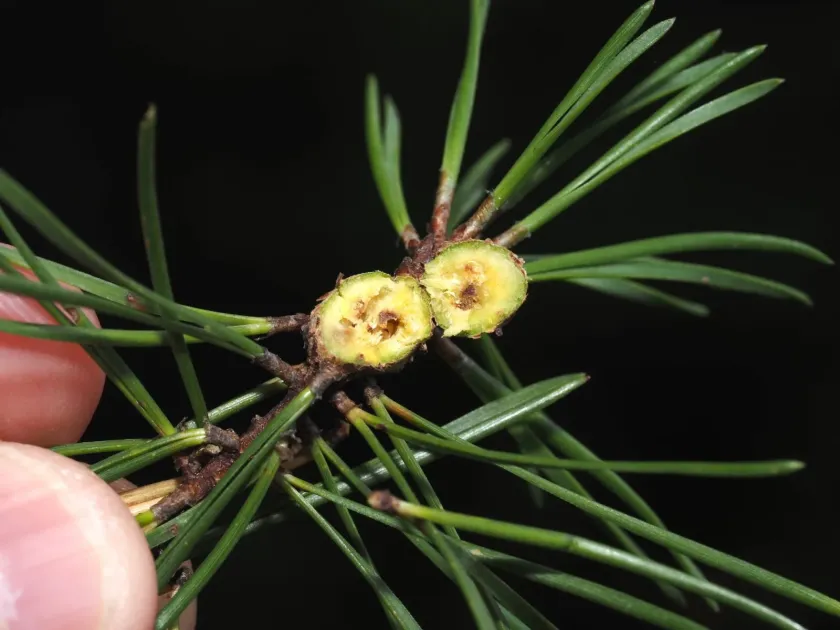
The damage manifests as spherical or oblong galls on the stems of young shoots. These deformations disrupt the vascular transport of nutrients, leading to growth stunting of the affected branch.
When infestation levels are high, the aesthetic value of ornamental pines is severely degraded, and timber quality in commercial plantations can be negatively impacted by crooked branches.
The creation of galls weakens the structural integrity of the affected shoots, making them more prone to breakage during strong winds or under the weight of snow and ice.
Furthermore, the physical wounds caused by the weevils serve as entry points for secondary pathogens, such as fungi, which can lead to further dieback or infection of the tree.
Signs of infestation
The most diagnostic sign of an infestation is the appearance of noticeable galls on the current or previous year's growth. These woody swellings are easily visible upon close inspection of the pine branches.
Circular exit holes on the surface of these galls are clear evidence that the adult weevils have completed their development and successfully emerged, indicating a persistent population in the area.
Branch tips may show signs of yellowing or browning as the vascular system becomes increasingly compromised by the internal larval activity and the resulting gall formation.
Sticky resin exudation on the branches is a common response of the pine tree to the mechanical injury inflicted by the weevil's larvae, often marking the site of the gall.
- Spherical galls appearing on young pine shoots.
- Small, circular exit holes on the galls.
- Deformed or crooked branch growth.
- Premature needle drop or yellowing of branch tips.
- Increased resin flow from the site of damage.
Control measures
The primary method of control is sanitation. Pruning and destroying infested shoots containing galls before the adult beetles emerge is the most effective way to reduce the local population.
Burned waste is essential, as simple pruning without destruction allows the larvae to continue development within the cut material, ultimately contributing to the spread of the insect.
In cases of severe infestation in commercial or high-value landscapes, systemic insecticide applications may be necessary during the peak adult activity period to prevent new egg-laying.
Encouraging natural predators, such as parasitic wasps and predatory birds, can provide biological control in forest settings, maintaining the weevil population below economic injury thresholds.
Ensuring trees are properly watered and fertilized helps maintain high vigor, allowing them to better withstand or recover from minor infestations of the pine gall weevil.
Taxonomy
- Latin name
- Podapion gallicola
- Order
- Coleoptera (beetles)
- Family
- Apionidae
- EPPO code
- PODPGA
Discussion
No discussions yet — be the first.