
Pine seed weevil
Podapion
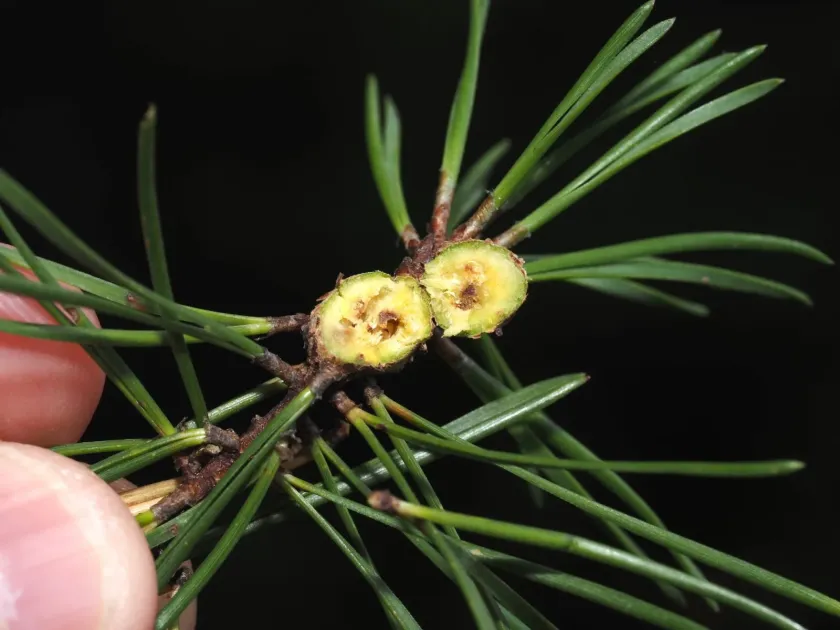
Description
How to identify
The Pine seed weevil (Podapion gallicola) is a member of the Curculionidae family within the order Coleoptera, known for its impact on pine reproductive structures.
Adult weevils are small, typically measuring 3–5 mm in length, with a dark, metallic-colored body and a characteristic elongated snout used for feeding and oviposition.
Larvae are legless, curved grubs, usually cream-colored with a distinct head capsule, residing entirely within the pine cones during their developmental stages.
The insect possesses specialized sensory organs allowing it to detect host trees during the specific phenological stage when cones are receptive for fertilization.
This species is highly specialized, maintaining a synchronized life cycle exclusively with various pine species, making it a significant pest in seed orchards.
What it damages
The primary damage is caused by larvae that feed on the interior tissues and developing seeds of pine cones, leading to a substantial loss of viable seeds.
Adult beetles contribute to damage by grazing on the external surfaces of young cones, which can create entry points for pathogens and cause structural deformation.
Severe infestations often result in the premature abortion and drop of cones, causing significant financial losses in seed production facilities.
The loss of seeds not only affects current yields but also impedes natural forest regeneration efforts in areas where the pest is highly prevalent.
Because the larvae destroy the seeds from within, the damage is often invisible from the outside until the cones begin to show signs of stress or decay.
When it appears
The life cycle of the Pine seed weevil is completed within one year, with all larval development occurring inside a single pine cone.
Adults overwinter in protected sites like leaf litter or tree bark, emerging in early spring to coincide with the budding and flowering of pine trees.
Mating and egg-laying occur on developing cones, ensuring that the hatched larvae have immediate access to the internal tissues required for their growth.
Larval feeding continues throughout the summer months, leading to pupation inside the cone as the summer season approaches its end.
New generation adults emerge in late autumn or the following spring, completing the cycle and preparing for the winter diapause.
Signs of infestation
Presence is first indicated by small, circular exit or entrance holes on the cone scales, which are created by adult weevils during their activity.
The accumulation of fine, wood-like frass on the exterior of the cone or near the cone stalk is a clear indicator of active larval feeding inside.
Discoloration or stunted growth of individual cones, especially when compared to healthy cones on the same branch, is a major visual symptom of infestation.
An internal inspection of damaged cones often reveals extensive tunnels through the seed-bearing scales and the presence of the larvae or pupae themselves.
Premature falling of green or partially developed cones is a classic sign of high pest pressure and requires immediate entomological assessment.
Control measures
Sanitation is a critical control measure; collecting and destroying infested cones before adult weevils emerge can significantly reduce the local population.
Systemic insecticides can be applied during the period of adult emergence, targeting the insects before they successfully lay eggs in the cones.
Monitoring using pheromone-based traps is highly recommended to track the timing of adult activity and optimize the timing for chemical treatments.
Promoting a healthy environment for natural predators, such as parasitic wasps, can help suppress weevil populations in larger forest ecosystems.
Strategic planting and isolating new seed orchards from older, infected stands help prevent the colonization and spread of the Pine seed weevil.
Taxonomy
- Latin name
- Podapion
- Order
- Coleoptera (beetles)
- Family
- Apionidae
- EPPO code
- PODPSP
Discussion
No discussions yet — be the first.