
Clover seed weevil
Perapion
Description
How to identify
The clover seed weevil (Perapion apricans) is a small beetle belonging to the Apionidae family, known for its specific impact on leguminous seed production.
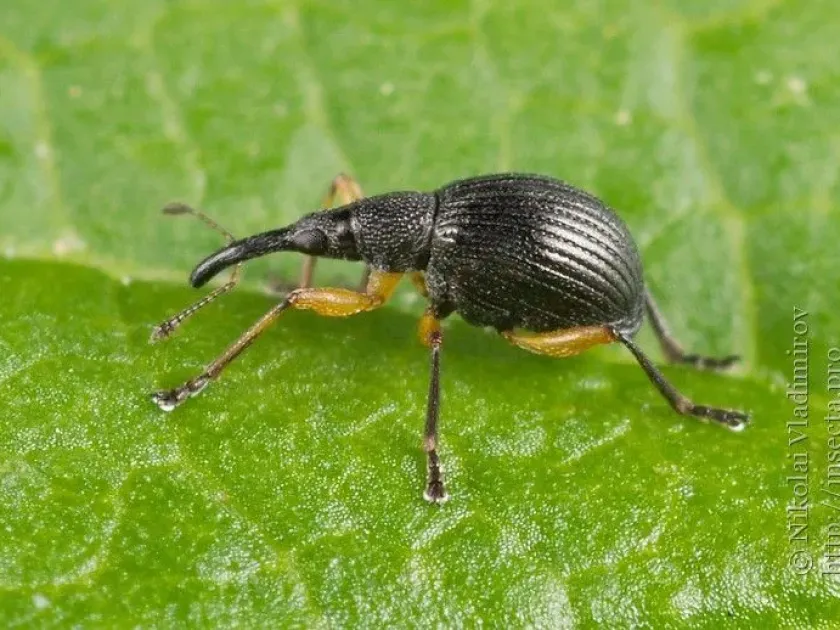
Adult beetles are tiny, usually measuring between 2.2 and 2.8 millimeters in length, with a distinct pear-shaped body and a long, slender snout typical of weevils.
The coloration of the adult is generally black with a metallic blue or green sheen, while the legs and antennae often exhibit reddish-brown tones.
The larvae are small, legless, and white with a curved body, which makes them perfectly adapted for developing inside the tight confines of clover flower heads.
The pupal stage is also completed within the damaged flower heads, protecting the insect from environmental exposure during its transformation.
What it damages
This pest is highly host-specific, primarily attacking red clover (Trifolium pratense), and is particularly destructive to seed-producing fields.
Adult beetles consume the leaves, creating small, characteristic pin-holes, which can reduce the photosynthetic capacity of the plants during early growth.
The most significant damage is caused by the larvae, which bore into the developing flower buds and feed on the seeds, effectively destroying them before maturity.
A single infested clover head can lose a large percentage of its seed potential, leading to substantial yield losses for farmers and seed producers.
In severe infestations, the quality of the harvested seed lot is significantly reduced, resulting in poor germination rates and economic losses.
When it appears
Adult weevils overwinter in the soil or under plant debris, emerging in early spring when temperatures become favorable for activity.
Following a period of supplemental feeding, the beetles move to clover heads to mate and lay eggs, which coincides with the budding and flowering phases.
The lifecycle from egg to adult takes approximately one to one and a half months, during which the larvae complete their development inside the flowers.
The new generation of adults typically emerges during the summer months, feeding briefly before entering a state of diapause or preparing for hibernation.
Weather conditions, especially temperature and moisture levels, significantly influence the timing and speed of the beetle's life cycle development.
Signs of infestation
Early symptoms of infestation include the presence of numerous small holes in the clover leaves, often described as a "shot-hole" appearance.
As the crop reaches the flowering stage, infested flower heads may turn brown, wilt, or dry out prematurely compared to healthy, thriving blossoms.
Upon closer inspection, the interior of the damaged clover head will reveal larval excrement and missing or malformed seeds where the larvae have been feeding.
Increased flower abortion is another common sign of severe weevil presence, as the plant reacts to the physiological damage caused by larval feeding.
- Pin-hole damage on leaf blades.
- Premature browning and drying of flower heads.
- Presence of larvae or pupae inside the floral reproductive organs.
Control measures
Strategic crop rotation and ensuring spatial isolation between fields of clover of different ages are essential to limit the spread of the weevil population.
Timely harvesting of clover for seed production helps to remove the larvae from the field before they can pupate and complete their development.
Deep plowing after the harvest effectively buries the overwintering adults and crop residues, significantly reducing the pest pressure for the following season.
Chemical control, if necessary, should be applied during the early budding stage, targeting the adults before they lay their eggs in the developing buds.
Integrated Pest Management (IPM) practices, including monitoring population densities with sweeps, are crucial for making informed decisions regarding pesticide application.
Taxonomy
- Latin name
- Perapion
- Order
- Coleoptera (beetles)
- Family
- Apionidae
- EPPO code
- PRPNSP
Discussion
No discussions yet — be the first.