
Clover seed weevil
Ischnopterapion virens
Description
How to identify
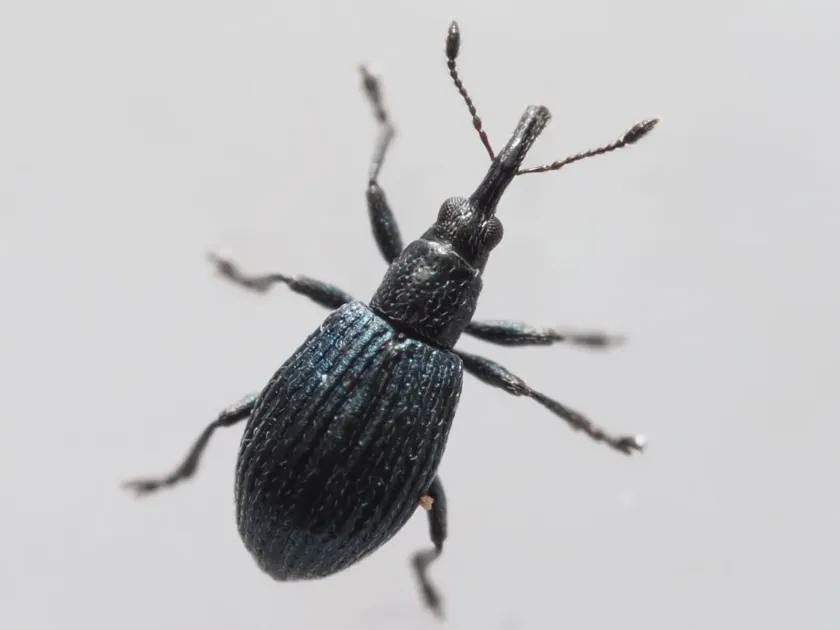
The clover seed weevil (Ischnopterapion virens) is a small beetle belonging to the Brentidae family. These insects typically measure between 2 and 3 millimeters in length and are easily identified by their elongated snout and vibrant green or bluish-green metallic body.
The larvae are legless, C-shaped, and possess a distinct brownish head. They are primarily found hidden within the floral parts of host plants, making them difficult to detect during standard field scouting without dissecting plant samples.
What it damages
This pest specifically targets forage legumes, primarily red and white clover. While adult beetles feed on the foliage, creating small circular perforations, the primary economic damage is caused by the larval stage.
Larvae feed directly on the developing ovules and seeds within the clover flower heads. Heavy infestations can lead to a significant reduction in seed yield and viability, posing a major risk to seed production businesses.
When it appears
Adult weevils overwinter in debris or the upper layer of the soil near host fields. They emerge in the spring as temperatures rise, beginning their life cycle with a period of supplemental feeding on tender clover shoots.
The peak reproductive period occurs during the clover's budding and flowering stages. Typically, there is one generation per year, although environmental conditions may occasionally allow for a partial second generation in warmer climates.
Signs of infestation
Infestation signs start with characteristic "shot-hole" damage on leaves caused by adults. Later in the season, you may notice wilting or premature browning of clover heads, which indicates that larvae are feeding inside.
Dissecting the flower heads is the most reliable method for confirmation. If the seed chambers show signs of excavation or if white larvae are observed within the florets, immediate intervention is usually recommended.
Control measures
Cultural control is the most effective approach, including early mowing of the crop to harvest hay before the larvae complete their development and exit the flowers. This disrupts the life cycle effectively.
Chemical control should be applied sparingly, targeting the adult population before the flowering stage to avoid harming essential pollinators. Integrated pest management practices should always prioritize biological and cultural controls over insecticides.
Taxonomy
- Latin name
- Ischnopterapion virens
- Order
- Coleoptera (beetles)
- Family
- Apionidae
- EPPO code
- ISCTVI
Discussion
No discussions yet — be the first.