
Alfalfa seed chalcid
Holotrichapion
Description
How to identify
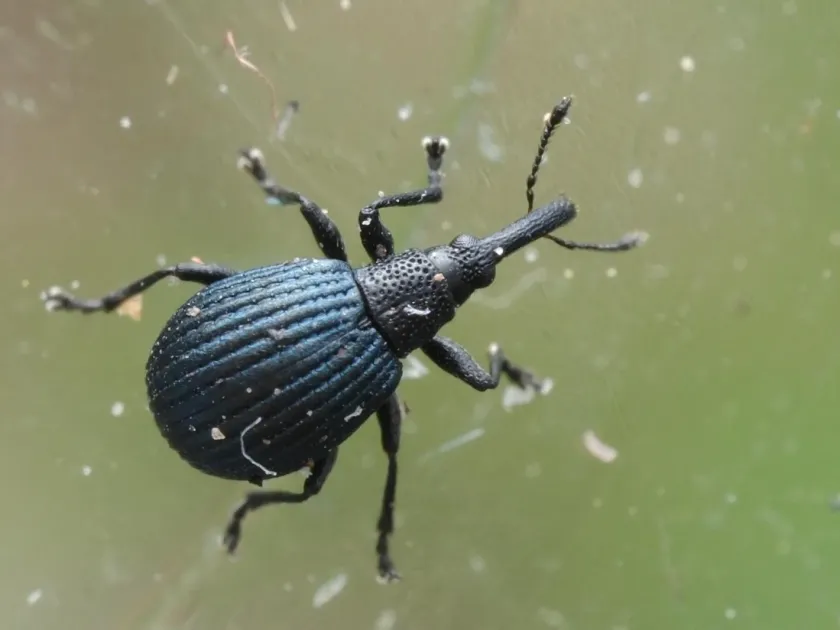
The alfalfa seed weevil (genus Holotrichapion, formerly Apion) is a small beetle belonging to the Brentidae family. These insects typically measure between 2 and 3 mm in length.
The body color ranges from deep black to dark blue with a metallic sheen. They are covered with fine, short hairs, which often give them a slightly matte or dull appearance in bright light.
Their defining feature is a long, slender rostrum (snout) used by females to bore into the developing seed pods of alfalfa to deposit their eggs safely inside.
Larvae are legless, C-shaped, and usually white or creamy yellow with a distinct light brown head capsule. They are strictly endophagous, meaning they live and feed exclusively within the seed.
Adult beetles overwinter in the soil or under leaf litter and crop residues. They emerge in the spring to feed on fresh alfalfa foliage before finding host plants for reproduction.
What it damages
The primary damage is caused by the larvae, which hollow out the developing alfalfa seeds. A single larva can consume the entire embryo of a seed, destroying its germination potential.
Adult beetles contribute to damage by feeding on young leaves and buds in the spring. This feeding creates tiny, characteristic perforations known as "shot holes," which can stunt plant growth.
The economic impact is concentrated in seed-production fields. High infestations can lead to a drastic reduction in seed yield, sometimes exceeding 50% loss in severe cases.
Beyond quantity, the quality of the harvest is compromised. The presence of larvae often causes the seed pods to turn yellow prematurely or wither, leading to seed shedding during harvest.
Infested seeds are often lighter, shriveled, and may contain larvae or exit holes, making them unsuitable for commercial sales or replanting.
When it appears
Adult emergence occurs in the spring when soil temperatures reach approximately 10-12°C, aligning with the early growth phase of the alfalfa crop.
Mating and egg-laying coincide with the flowering period of alfalfa. Females select healthy pods to deposit eggs, ensuring a food supply for the next generation.
The larval stage lasts for 2 to 3 weeks within the seed, followed by pupation inside the same seed pod. Development is completed once the adult beetle bores an exit hole.
A new generation of adults usually emerges in late summer. These individuals feed briefly before entering diapause, seeking shelter in soil crevices or crop stubble for the winter.
Adults are most active during warm, sunny weather, which facilitates their movement between fields and their search for suitable pods for oviposition.
Signs of infestation
- Presence of "shot-hole" patterns on alfalfa foliage during the spring.
- Small, perfectly circular exit holes on the pods of maturing alfalfa.
- Premature yellowing or shriveling of individual pods in the floral racemes.
- Discovery of hollowed-out seeds when inspecting harvested pods.
- Reduced seed weight and high amounts of chaff or damaged seeds during cleaning.
Control measures
Crop rotation and maintaining spatial isolation between old alfalfa stands and new seed-production fields are foundational cultural practices for managing this pest.
Early mowing of the crop for hay can effectively eliminate the larval population before they complete their development, breaking the life cycle of the weevil.
Fall tillage practices, including deep plowing, help bury crop debris and eliminate potential overwintering sites, significantly reducing the pest pressure for the next season.
Chemical control with insecticides is recommended only when monitoring shows that beetle populations exceed the economic injury threshold during the budding stage.
Integrated pest management (IPM) encourages the preservation of natural predators, such as parasitoid wasps, which can naturally regulate the weevil population in alfalfa fields.
Taxonomy
- Latin name
- Holotrichapion
- Order
- Coleoptera (beetles)
- Family
- Apionidae
- EPPO code
- HLTPSP
Discussion
No discussions yet — be the first.