
Sorrel seed weevil
Apion violaceum
Description
How to identify
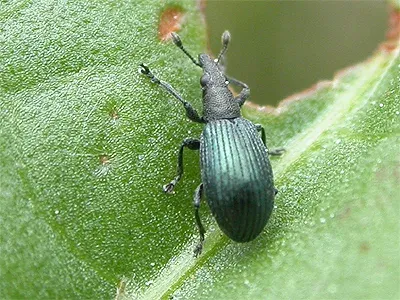
The sorrel seed weevil (Apion violaceum) is a small beetle belonging to the Curculionidae family. It typically measures between 2 and 3 mm in length.
The insect is identified by its distinct metallic blue or violet color and a characteristic pear-shaped body with a slender, elongated rostrum.
The larvae are small, legless, and white or yellowish in color, often showing a slightly curved, C-shaped posture within their tunnels.
Adult beetles possess hard elytra and wings, enabling them to spread easily across fields during the warmer months of the year.
They are relatively easy to miss due to their small size, so regular monitoring of the crop canopy is essential for early detection.
What it damages
The sorrel seed weevil primarily infests common sorrel (Rumex acetosa), but it can also affect other related plants within the Polygonaceae family.
Adults feed on the leaves, leaving behind numerous small, round holes which can severely degrade the quality of leafy vegetable harvests.
The damage caused by larvae is significantly more destructive as they mine into stems and petioles, feeding on internal plant tissues.
Infestation of flower stalks and seed heads leads to premature wilting and a drastic reduction in seed production capacity for the season.
In addition to direct tissue damage, the presence of the pest often predisposes the plants to secondary fungal or bacterial infections.
When it appears
Overwintered adults emerge from the soil in early spring, usually coinciding with the onset of active growth for host plant species.
Females lay eggs in the stems or leaf bases, and the hatching larvae begin their development immediately within the plant tissues.
The lifecycle typically consists of one generation per year in temperate climates, with development taking several weeks to reach maturity.
Peak activity generally occurs during the flowering period, as beetles migrate to feed on generative parts and young succulent growth.
By late autumn, the new generation of adults finds suitable shelter in the soil or under plant debris to enter diapause for the winter.
Signs of infestation
Visible signs of infestation include small, scattered punctures on leaf surfaces where adults have been feeding during the day.
Wilting of specific stalks or flower stems is a major indicator that larvae are mining the internal stem tissues and disrupting water flow.
Yellowing of the foliage around the petioles often points to extensive internal feeding and structural damage by the developing larvae.
Examination of the stems may reveal internal tunnels filled with dark frass, which is a definitive sign of an established infestation.
Stunted plant growth and deformed leaf patterns can also occur in heavily infested areas, impacting overall yield and plant vigor.
Control measures
Effective management starts with early and regular harvesting of sorrel to remove the larvae before they complete their life cycle.
Strict weed control is vital, as wild sorrel and other dock species serve as secondary reservoirs for the weevil population.
Crop rotation and selecting new planting sites far from older, established stands can help prevent migration of the pest to new crops.
When chemical intervention is required, contact or systemic insecticides should be applied carefully according to local safety regulations.
- Regular harvesting;
- Destruction of host plant residues;
- Weed management in surroundings;
- Targeted insecticide applications.
Taxonomy
- Latin name
- Apion violaceum
- Order
- Coleoptera (beetles)
- Family
- Apionidae
- EPPO code
- APIOVL
Discussion
No discussions yet — be the first.