
Gorse seed weevil
Apion ulicis
Description
How to identify
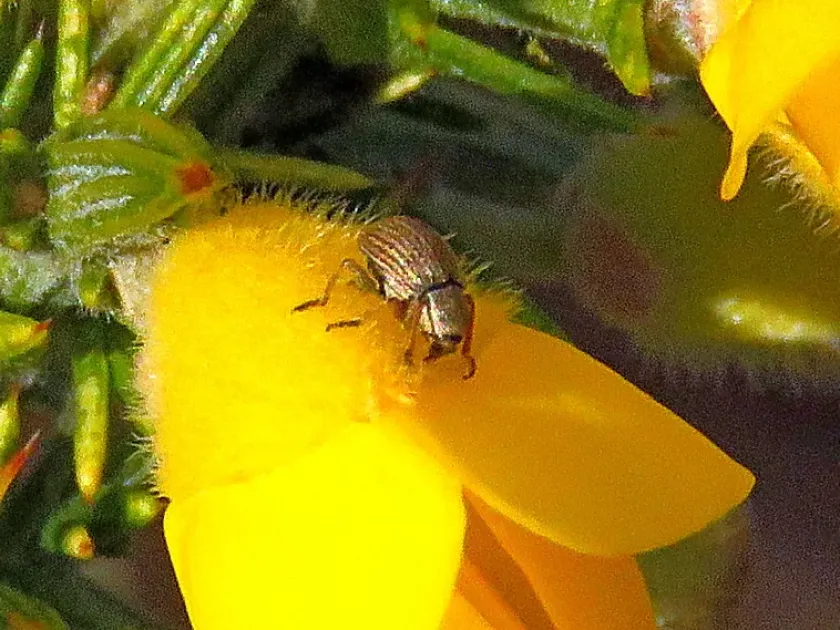
The Gorse seed weevil (Apion ulicis) is a small beetle belonging to the Apionidae family, measuring approximately 2-3 mm in length.
It is characterized by a pear-shaped body and a long, slender snout, which is a diagnostic feature of this specific weevil family.
The body is covered with fine, dense setae (hairs), giving the insect a dark grey to black matte appearance under natural light.
The larvae are white, legless grubs that spend their entire development cycle feeding on the internal tissues of seeds within the pods.
Adult weevils are capable of flight, which facilitates their spread across gorse-infested areas during the spring and summer months.
What it damages
The primary host plant for this species is Ulex europaeus (common gorse), as the beetle's life cycle is strictly synchronized with its flowering.
The damage is caused primarily by larvae that consume the contents of the seeds, rendering them unviable and reducing the plant's reproductive success.
Because of this high host specificity, the insect has been intentionally introduced into several countries as a biocontrol agent against invasive gorse.
While beneficial for controlling invasive weeds, the weevil can be considered a pest if it impacts nurseries or conservation areas of specific legume species.
Economic damage to agricultural crops is virtually non-existent, as the beetle rarely deviates from its primary host plant.
When it appears
Adults emerge from hibernation in early spring, synchronized with the beginning of the gorse flowering period, to begin feeding and mating.
Females deposit eggs directly into the developing flower buds, ensuring the larvae have immediate access to food as the seed pods form.
The larval stage lasts several weeks, during which the insect undergoes multiple instars, ultimately pupating within the hollowed-out seed.
A new generation of adults emerges in mid-to-late summer, typically after the seeds have matured, seeking shelter for the upcoming winter.
Overwintering occurs in sheltered areas such as leaf litter, soil crevices, or dense vegetation near the host plant's base.
Signs of infestation
The most visible sign of infestation is the presence of small, circular emergence holes on the surface of matured gorse pods.
Dissection of the pods reveals empty or partially consumed seeds, often accompanied by fine frass (larval excrement) inside the pod cavity.
Observing small black beetles on flower buds during the early spring confirms the presence of the active adult population.
Premature pod drop or a significant decrease in total seed count per plant is a reliable indicator of high infestation rates.
In areas with high weevil density, the population of new gorse seedlings the following year may be significantly reduced.
Control measures
Control of Apion ulicis is usually not required as it acts as a beneficial biocontrol agent in many ecological systems.
If population reduction is necessary, mechanical destruction of host plants before seed maturation is the most effective management strategy.
Chemical control is rarely justified and should be avoided to prevent harming other beneficial insects and the surrounding environment.
Integrated Pest Management (IPM) practices focus on monitoring the adult flight period to determine the optimal timing for mechanical interventions.
Maintaining a healthy ecosystem with natural predators can help keep weevil populations at a balanced level in regions where they are not desired.
Taxonomy
- Latin name
- Apion ulicis
- Order
- Coleoptera (beetles)
- Family
- Apionidae
- EPPO code
- APIOUL
Discussion
No discussions yet — be the first.