
Mallow weevil
Apion radiolus
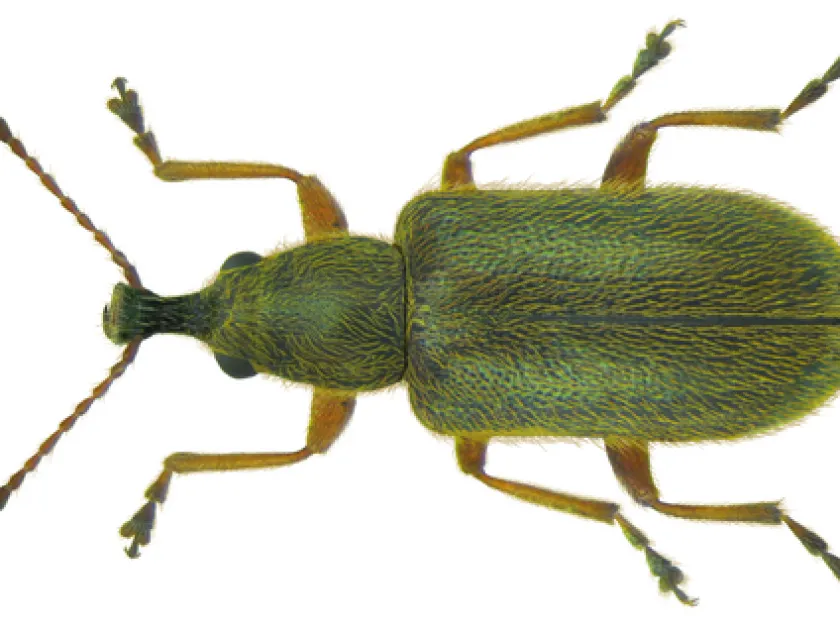
Description
How to identify
The mallow weevil (Apion radiolus) belongs to the family Brentidae, order Coleoptera. The adult insect is a small beetle measuring approximately 2.5 to 3.5 mm in length.
The body has a distinctive pear shape and is black with a slight metallic luster. A key diagnostic feature is the elongated, slender rostrum (snout) typical of this group of weevils.
The larva is legless, curved, and has a creamy white color. It leads a concealed life cycle, developing entirely inside the host plant's tissues, which makes it difficult to detect early.
The pupal stage also occurs within the damaged plant parts. The insect undergoes complete metamorphosis, which dictates the timing and strategy for effective chemical or biological control.
Adults are capable of active flight, which allows for rapid dispersal across gardens and agricultural fields during the peak flowering season of host plants.
What it damages
The primary host plants are species within the Malvaceae family, most notably Malva and Althaea species. The pest specifically targets the reproductive organs of these plants.
In both residential gardens and commercial settings, the damage results in significantly reduced seed production as larvae consume the developing seeds within the pods.
Adult beetles feed on the leaves, creating small, pin-sized holes. While this does not usually kill the plant, heavy infestations weaken the plant's vigor and degrade its ornamental appearance.
The most severe damage occurs when adults and larvae attack buds and ovaries, preventing proper blooming and subsequent fruit development.
Injured tissues often become entry points for secondary pathogens, such as fungal infections, which can further jeopardize the health of the entire plant.
When it appears
Adult activity begins in the spring when temperatures consistently rise, prompting the beetles to emerge from their overwintering sites to feed on young shoots.
Mass reproduction coincides with the budding and flowering phases of mallows. During this time, females lay eggs inside the floral buds or developing seed capsules.
Larval development takes place throughout the summer. Depending on local climate conditions, the insect may complete several generations within a single growing season.
As autumn approaches, the final generation of adults seeks shelter for hibernation, typically burrowing into the soil or hiding beneath leaf litter and plant debris.
Effective pest management relies heavily on targeting these specific seasonal windows, particularly during the onset of the budding stage.
Signs of infestation
The first signs of infestation are small, circular holes in the foliage, resulting from adult beetles feeding on the leaves after emergence.
Bud drop, deformation, or the failure of buds to open are reliable indicators of larval activity inside the reproductive structures of the plant.
Opening a damaged seed pod often reveals eaten seeds, white larvae, or fine frass (insect excrement), which confirms the presence of the mallow weevil.
A general decline in plant vigor, stunted flower spikes, and yellowing of specific floral parts can indicate internal infestation by the pest.
A significant reduction in viable seed yield at the end of the season is a critical indicator of a high infestation level that requires intervention in the following year.
Control measures
Cultural practices are the first line of defense: thoroughly remove and destroy all plant debris in the autumn to eliminate overwintering populations.
Tilling the soil around the base of plants during the dormant season can disrupt the hibernation sites of the beetles, significantly reducing their survival rate.
During the growing season, if infestation levels are high, targeted insecticide applications during the early bud stage can effectively prevent the pest from laying eggs.
Regular monitoring using sticky traps or visual inspection allows for precise timing of interventions, minimizing the need for broad-spectrum chemical use.
- Hand-picking beetles in the early morning when they are less active.
- Pruning and incinerating heavily infested flower buds.
- Using biological controls, such as entomopathogenic fungi.
- Maintaining field hygiene to remove secondary host weeds.
Taxonomy
- Latin name
- Apion radiolus
- Order
- Coleoptera (beetles)
- Family
- Apionidae
- EPPO code
- APIORA
Discussion
No discussions yet — be the first.