
Mallow seed weevil
Apion longirostre
Description
How to identify
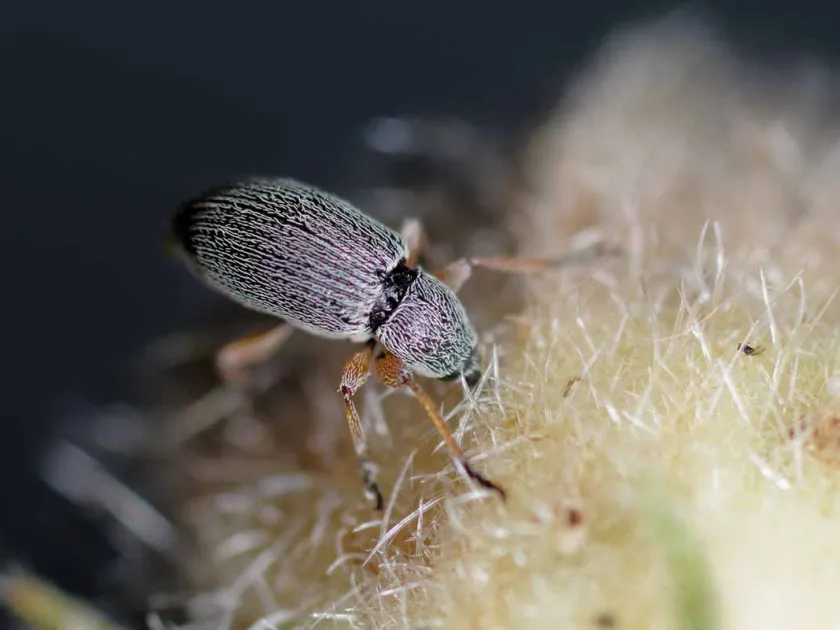
The mallow seed weevil (Apion longirostre) is a small beetle belonging to the Apionidae family. Adults typically measure between 3 and 4 mm in length and are distinguished by a dark, almost black coloration with a subtle metallic sheen.
The most prominent morphological feature of this species is its elongated, slender rostrum (snout). This specialized structure is essential for the female to feed on plant tissue and bore precise holes for oviposition into the seed capsules.
The larvae are apodous (legless), curved, and creamy-white in color, often with a darker head capsule. Because they develop entirely inside the developing seeds, they remain hidden from view throughout most of their life cycle.
These weevils are capable of active flight, which facilitates their spread across gardens and landscapes where their host plants are present. They typically overwinter as adults in protected sites like plant debris or soil.
Their life cycle is highly synchronized with the phenology of their host plants, starting in early spring when overwintering adults emerge to feed on tender foliage before mating and laying eggs.
What it damages
The primary hosts for this weevil are plants within the Malvaceae family, most notably hollyhocks (Alcea rosea) and various ornamental mallows. The insect is highly host-specific, making it a major concern for those cultivating these flowers.
While adult feeding creates small, circular holes in the leaves, this damage is generally minor and does not threaten the plant's overall health or structural integrity in significant ways.
The true economic damage is caused by the larvae, which bore into the seed capsules and consume the developing seeds. This destruction renders the seeds unviable, often resulting in near-total seed loss for the affected plant.
Persistent infestations can lead to a decrease in the plant's aesthetic value, as the damage causes seed pods to yellow and wither prematurely, disrupting the natural display of the plant.
For gardeners interested in seed saving, the presence of these weevils represents a total failure of the harvest, as the interior of the pods is often filled with larval waste and eaten seed husks.
Signs of infestation
Early signs of infestation include small, distinct pinprick-like holes in the leaves, which are caused by adult feeding as they emerge and prepare for the breeding season.
Inspect the young seed capsules for small, circular punctures. These are the entry points created by the female weevil during the egg-laying process, often appearing as small darkened spots.
Internal damage can be verified by opening a seed pod; if the seeds appear hollowed out or are replaced by fine, powdery debris and larvae, the presence of the mallow seed weevil is confirmed.
If you notice seed pods turning yellow or brown and shriveling significantly earlier than the rest of the plant's pods, it is likely that the larvae are currently feeding inside.
Adult beetles can often be observed sitting on the buds or flowers during the blooming period. Their presence is a clear indicator that the reproductive organs of the plant are currently at risk.
Control measures
The most effective cultural control is the thorough removal and destruction of all mallow debris in the autumn. By eliminating these sites, you remove the primary overwintering habitat for the adult weevils.
Collecting and disposing of infested seed pods during the summer months is crucial. This action prevents the larvae from completing their development and emerging as the next generation of adults.
If the infestation is severe, a targeted application of insecticides during the bud-development stage can help manage adult populations before they have the chance to lay eggs in the pods.
Avoid planting new mallow specimens directly adjacent to heavily infested areas, as the proximity will almost guarantee the immediate colonization of the new plants by existing populations.
Biological control methods, including the use of entomopathogenic nematodes or fungi, can be an environmentally conscious option for gardeners looking to suppress weevil numbers without chemical intervention.
Taxonomy
- Latin name
- Apion longirostre
- Order
- Coleoptera (beetles)
- Family
- Apionidae
- EPPO code
- APIOLO
Discussion
No discussions yet — be the first.