
Apion intermedium
Apion intermedium
Description
How to identify
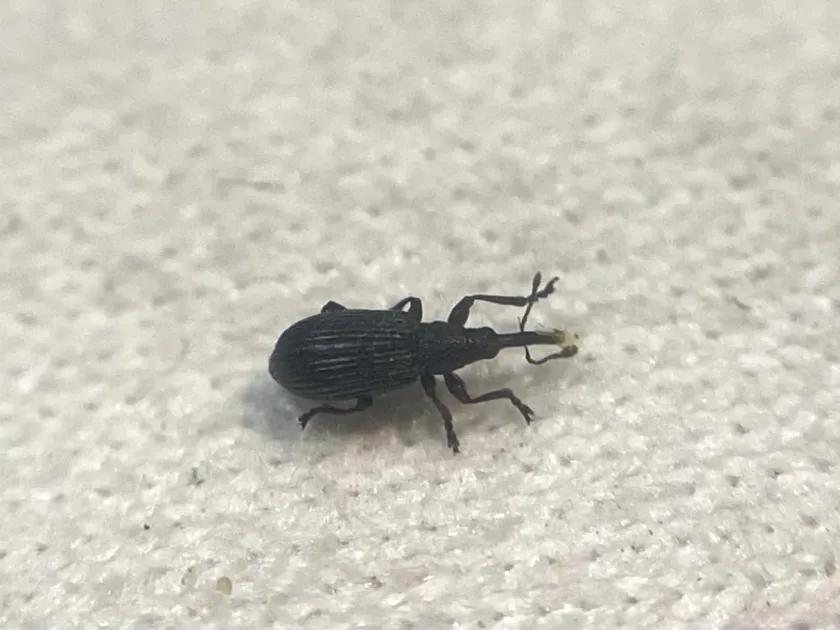
Apion intermedium is a small beetle belonging to the family Apionidae within the order Coleoptera. Adult weevils typically measure between 2 and 3 mm in length.
These insects are characterized by a pear-shaped body and an elongated rostrum. They are usually dark blue or black with a metallic sheen and covered in fine hairs.
The larvae are legless, slightly curved, and white or yellowish with a dark head capsule. They live and feed internally within plant tissues, making them difficult to spot.
Identification of this species is complex due to the morphological similarity among other members of the Apion genus, often requiring expert analysis.
Adult beetles hibernate in the soil, leaf litter, or plant debris, emerging in the spring when temperatures consistently rise.
What it damages
This pest primarily attacks perennial leguminous plants, with clover and alfalfa being the most susceptible crops to damage.
Adult beetles cause damage by chewing small holes in the leaves, which reduces the plant's photosynthetic surface and overall vigor.
The most significant damage is caused by the larvae, which feed on the buds, flowers, and developing seeds inside the pods, leading to severe yield loss.
In seed production fields, Apion intermedium can cause economic losses by preventing proper pollination and destroying the developing seed stock.
Severe infestations often result in the premature dropping of buds and withered inflorescences, negatively affecting both seed and fodder yield.
When it appears
Overwintered adults emerge in the spring, coinciding with the early growth phases of leguminous crops.
Mating and oviposition occur during the budding and early flowering stages, as these provide optimal nutritional conditions for the larvae.
The life cycle from egg to adult takes approximately 30 to 45 days, depending on environmental temperature and humidity levels.
New generation adults appear by mid-summer, feeding on foliage before preparing to seek overwintering sites in the autumn.
As temperatures drop in the fall, the beetles migrate to sheltered areas to enter diapause for the duration of the winter.
Signs of infestation
The initial signs of infestation include tiny holes or "windows" in the leaves caused by the feeding activity of adult beetles.
Deformed, yellowing, or drying flower buds are key indicators of larval activity inside the plant's reproductive organs.
If suspicious buds are opened, legless larvae can be found feeding on the internal structures of the flowers.
High populations can be monitored using sweep nets during the early morning or evening when the beetles are most active.
A reduction in overall plant productivity and the presence of empty or damaged pods are definitive signs of a high infestation level.
Control measures
Cultural practices, such as crop rotation and spatial isolation of new legume fields from old ones, are essential for limiting pest spread.
Early harvesting of forage legumes before the larvae can complete their development effectively reduces the pest population.
Deep plowing in the autumn helps destroy overwintering sites, significantly reducing the beetle population for the following season.
When the economic threshold is reached, chemical control using approved insecticides during the budding phase can protect the seed harvest.
Biological control, focusing on the preservation of natural predators and parasitoids, plays a vital role in integrated pest management strategies.
Taxonomy
- Latin name
- Apion intermedium
- Order
- Coleoptera (beetles)
- Family
- Apionidae
- EPPO code
- APIOIN
Discussion
No discussions yet — be the first.