
Clover seed weevil
Apion flavipes
Description
How to identify
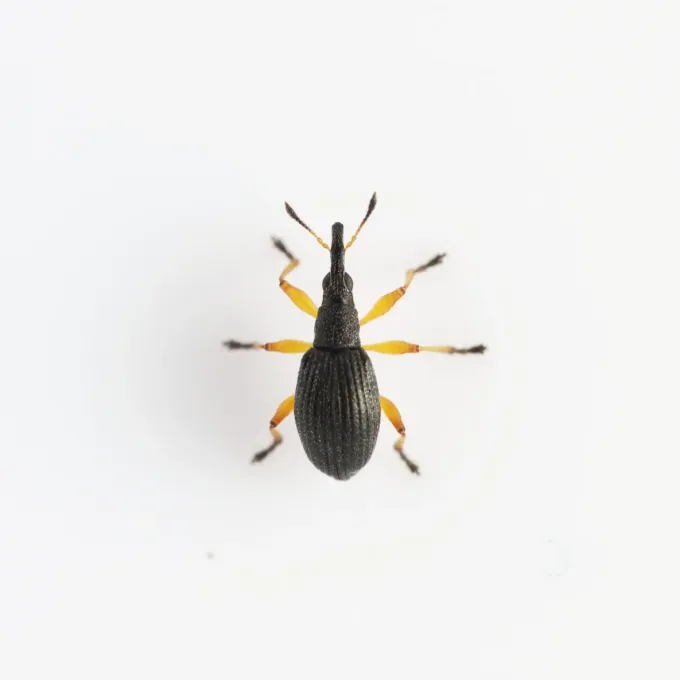
The clover seed weevil (Apion flavipes) is a small beetle belonging to the Curculionidae family. It typically measures between 2 to 2.5 mm in length and is characterized by a black, slightly metallic body.
The most distinctive feature of this species is its yellow-colored legs, which serve as a primary diagnostic trait for field identification. The head ends in a long, slender rostrum used for feeding and egg-laying.
The larvae are legless and C-shaped, with a pale, creamy color and a light brown head. They are primarily found inside the developing seed pods of host plants, making them difficult to spot during routine inspections.
Systematically, this beetle is classified under the order Coleoptera, family Apionidae. They have evolved as highly specialized pests that synchronize their life cycle with the phenology of leguminous plants.
These insects overwinter as adults, finding shelter in leaf litter, soil crevices, or plant debris, which allows them to survive harsh winter temperatures and re-emerge in early spring.
What it damages
The primary hosts for this pest are clover species, especially red clover. Damage is most significant when the larvae feed on the developing seeds within the flower heads, rendering them unviable.
Adult weevils emerge in the spring and cause initial damage by feeding on young leaves, leaving behind numerous small, round holes. While this reduces plant vigor, it is not the most destructive phase.
The real economic impact occurs when females oviposit into the flower buds. The larvae hatch and consume the seeds, often destroying the entire contents of the pod and leading to a significant loss of harvestable seed.
High infestation rates can devastate seed production, often resulting in a complete failure of the seed crop. This makes it a critical pest to manage for farms dedicated to clover seed production.
Besides seed loss, the physical damage to the reproductive organs can cause flower heads to abort prematurely or wither, further reducing the overall forage yield of the clover stand.
When it appears
Adult weevils emerge from their overwintering sites in early spring, usually as soon as the ambient temperatures reach 10-12 degrees Celsius. They start feeding on the available clover foliage immediately.
The mating and egg-laying period is strictly timed with the budding phase of the clover. This is the period when the pest is most vulnerable to control measures but also when it causes the most widespread damage.
The larval stage lasts for several weeks as they develop within the flower head. Once they have completed their feeding, they pupate inside the remains of the clover head, sheltered from external threats.
The new generation of adults usually emerges in mid-to-late summer. They feed on the remaining foliage for a short period before seeking out suitable hibernation sites for the winter.
Warm, dry springs tend to accelerate the life cycle and increase the population density of the weevil, requiring vigilant monitoring during the onset of the clover blooming season.
Signs of infestation
The first sign of an infestation is the appearance of small, circular holes in the clover leaves in early spring, which confirms the presence of overwintered adults on the field.
During the flowering stage, observant farmers will notice discolored, stunted, or prematurely withered flower heads. These heads often contain larvae or evidence of internal seed consumption.
Sampling with a sweep net is the standard method for determining the pest population. A threshold of 20-30 weevils per 10 sweeps usually indicates the need for immediate intervention.
At the time of harvesting, if the seed yield is unusually low or if the seeds appear shriveled and hollow, it is a strong indicator of prior seed weevil activity during the growth stage.
Poor germination rates in collected seeds can also be traced back to weevil damage, as the internal embryo is often destroyed by the developing larvae.
Control measures
Cultural control is essential. Practicing crop rotation and maintaining proper distance between new seed crops and old clover fields helps to minimize the migration of adult weevils.
Early harvesting of clover for hay can be an effective strategy to disrupt the life cycle, as it destroys the larvae inside the flower heads before they reach the pupal stage.
Chemical control involving systemic or contact insecticides is effective during the budding phase. Applications must be timed to avoid harming pollinating insects, particularly honeybees.
Biological control, including the protection of parasitic wasps that predate on the weevil larvae, can help stabilize the pest population in organic or integrated pest management systems.
- Rotate crops to avoid building up pest populations.
- Monitor adult emergence with sweep nets early in the season.
- Time insecticide applications to protect bloom-visiting pollinators.
- Remove and destroy plant residues to reduce overwintering sites.
Taxonomy
- Latin name
- Apion flavipes
- Order
- Coleoptera (beetles)
- Family
- Apionidae
- EPPO code
- APIODI
Discussion
No discussions yet — be the first.