
Clover seed weevil
Apion assimile
Description
How to identify
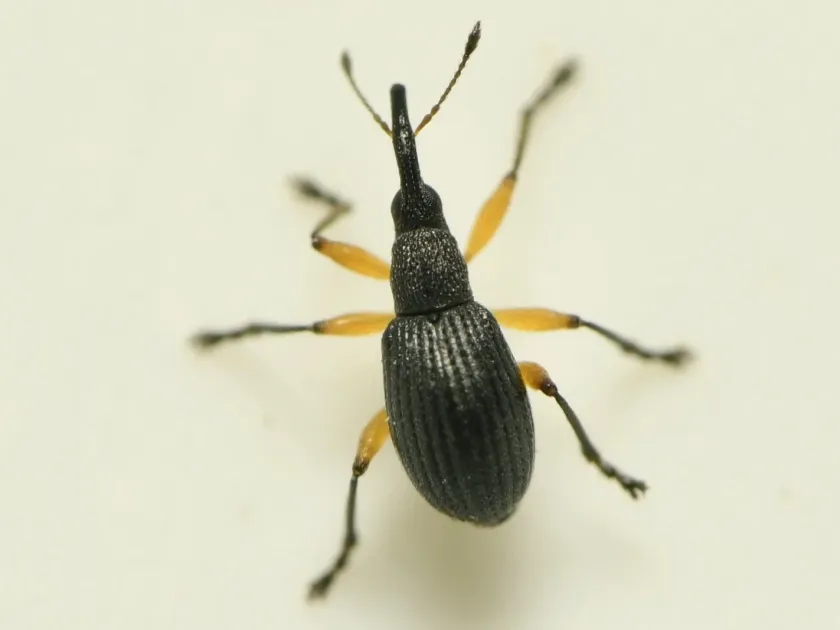
The clover seed weevil (Apion assimile) is a small beetle belonging to the Curculionidae family. It is a significant pest in leguminous forage crops, specifically targeting red clover. Adults are approximately 2–2.5 mm long, characterized by a pear-shaped body and a slender, elongated snout.
The color of the adult beetle is generally black or dark grey, often with a subtle metallic luster. Their elytra (wing covers) are finely textured with small hairs, giving them a somewhat matte appearance. Larvae are legless, C-shaped, cream-colored with a brown head capsule, specialized for development within plant tissues.
These insects are widespread in temperate regions where clover is cultivated. They are highly active during warm, sunny weather, which corresponds to the peak blooming period of their host plants. Their mobility allows them to infest large agricultural areas effectively.
Adult weevils overwinter in the upper soil layers, leaf litter, or nearby hedgerows. As temperatures rise above 10°C in spring, they emerge from hibernation and migrate to clover fields to feed on leaves and young buds before laying eggs.
The life cycle is closely synchronized with the phenology of clover. Females lay eggs directly into the developing flower buds, ensuring that the emerging larvae have immediate access to the nutrient-rich developing seeds.
What it damages
The clover seed weevil primarily damages red clover (Trifolium pratense). The most severe damage is caused by the larvae, which feed exclusively on the developing ovules and seeds within the clover florets. This consumption leads to a direct and significant reduction in seed yield.
Although the infested flower heads might look relatively normal from the outside, they often contain partially or fully destroyed seeds. This makes the pest particularly damaging for seed production, where quality and seed count are the primary economic drivers.
Adult weevils also cause damage by feeding on leaves and buds, creating small circular holes. While this feeding does not usually kill the plant, it weakens the clover's vigor and reduces its ability to support full seed development.
Environmental stress, such as drought, often exacerbates the damage caused by these weevils. Weakened plants are less capable of compensating for the seed loss, which leads to lower overall harvest weight and decreased vitality of the harvested seeds.
High infestations can result in up to 50% loss of the potential seed harvest if left unmanaged. Such losses have a direct impact on the profitability of clover seed farms, necessitating proactive monitoring during the vegetative season.
Signs of infestation
Early signs of infestation include small, distinct holes in the clover leaves and buds, appearing during the stem elongation phase. These signs indicate that adult beetles are actively feeding and preparing to lay their eggs.
During the flowering stage, observant farmers may notice individual florets within a head turning brown or wilting prematurely. Dissecting these heads often reveals the presence of larvae inside the developing seed structures.
Uneven ripening across the field can also signal a clover seed weevil problem. Infested areas may show signs of premature shedding or heads that appear to be drying out too quickly, even when soil moisture levels are adequate.
Using a standard sweep net is the most effective method for detecting the presence of adults. Monitoring counts per sweep helps farmers estimate population density and decide if insecticide application is required before the egg-laying stage peaks.
The presence of insectivorous birds foraging in the clover field during the late spring can sometimes indicate a high local concentration of these beetles, serving as an early biological warning for the producer.
Control measures
Integrated Pest Management (IPM) for the clover seed weevil starts with crop rotation and maintaining spatial distance between new and established clover fields. This strategy disrupts the migration path of overwintering beetles.
Deep autumn plowing is a recommended cultural practice to destroy overwintering habitats in the soil. Additionally, removing host weeds from the field borders helps eliminate secondary breeding sites, reducing the population pressure on the main crop.
Chemical control is often necessary if the pest population exceeds the economic injury threshold. Timing is crucial; applications must occur at the bud stage to maximize effectiveness while avoiding the peak bloom period to protect essential honeybees and pollinators.
Recommended insecticides include systemic and contact-acting products registered for leguminous crops. It is vital to rotate different chemical classes to prevent the weevil population from developing resistance to commonly used treatments.
Biological control methods, such as encouraging the presence of natural parasitoids that prey on larvae and eggs, can help manage populations sustainably. Combining these approaches minimizes the reliance on broad-spectrum chemicals while protecting the environment.
Taxonomy
- Latin name
- Apion assimile
- Order
- Coleoptera (beetles)
- Family
- Apionidae
- EPPO code
- APIOAS
Discussion
No discussions yet — be the first.