
Clover seed weevil
Apion apricans
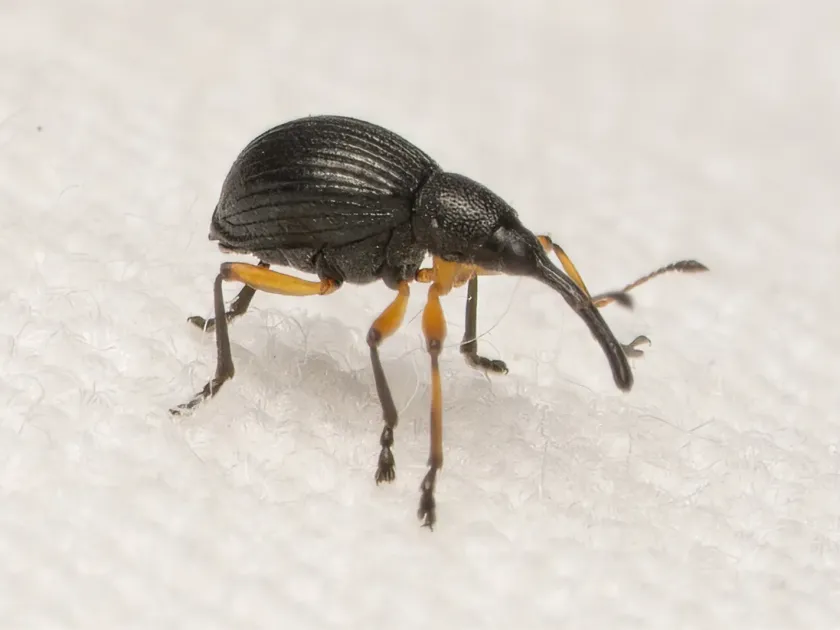
Description
How to identify
The clover seed weevil, Apion apricans, belongs to the family Apionidae within the order Coleoptera. This small beetle typically measures 2 to 3 mm in length and is easily recognizable by its elongated rostrum (snout). The adult insect is characterized by a black or dark-colored body, often with a slight sheen, covered in sparse, fine whitish hairs.
What it damages
This pest primarily attacks red clover Trifolium pratense, posing a severe threat to seed production. While adult beetles feed on the foliage of host plants, the larvae are responsible for the most significant economic damage. They develop inside the flower heads, consuming the developing ovaries and seeds, which directly reduces the yield potential of the clover crop.
When it appears
Clover seed weevils overwinter as adults in the soil, among leaf litter, or in field debris. As temperatures rise in early spring, they emerge from hibernation and begin supplemental feeding on young clover leaves. The timing of their migration to the budding inflorescences is critical and typically occurs as the plant enters the reproductive growth stage.
Signs of infestation
Early symptoms of infestation are manifested as small, circular 'shot-hole' patterns on the leaves caused by adult feeding. However, the most destructive signs appear within the clover heads. Infested flower heads may show discoloration or premature browning. Opening the heads often reveals small, legless, white larvae with dark heads feeding inside the florets.
Control measures
Integrated pest management (IPM) for this species includes good agricultural practices such as crop rotation and the early cutting of clover stands to disrupt the larval development cycle. Chemical control using insecticides is effective during the budding stage, provided that application timing avoids harming pollinating insects. Deep autumn plowing is also recommended to destroy overwintering sites.
Taxonomy
- Latin name
- Apion apricans
- Order
- Coleoptera (beetles)
- Family
- Apionidae
- EPPO code
- APIOAP
Discussion
No discussions yet — be the first.