
Urodon rufipes
Urodon rufipes
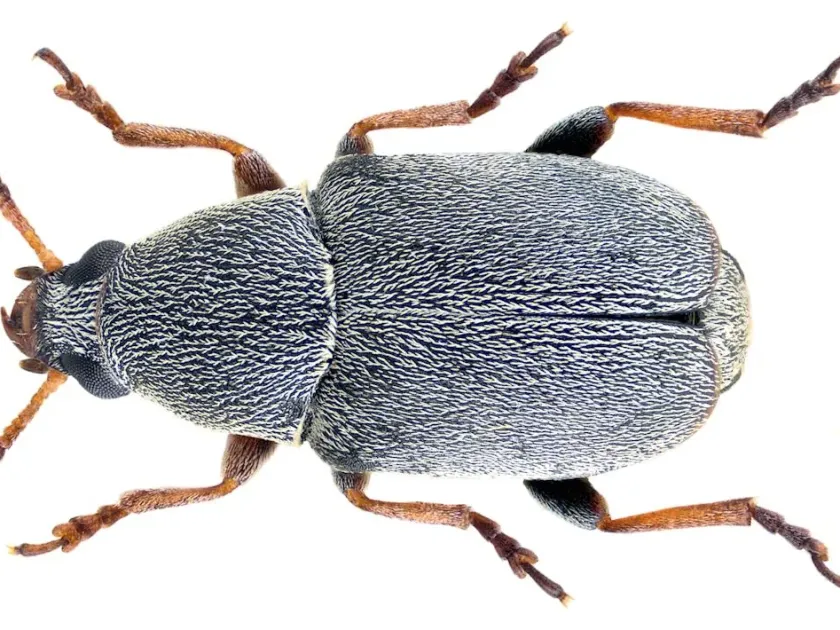
Description
How to identify
Urodon rufipes is a beetle species belonging to the family Anthribidae (fungus weevils). These insects are relatively small, typically measuring between 3 to 4 millimeters in length, making them easy to overlook in the field.
The body of the beetle is covered with dense, greyish or brownish hairs that provide excellent camouflage against various plant parts. As the scientific name suggests, the legs and antennae are distinctively reddish-brown.
The rostrum (snout) of this beetle is notably short and broad, which differentiates it from the more common Curculionidae (true weevils). They possess functional wings and are capable of flight to locate host plants.
The larvae are legless, white to cream-colored grubs that live endophytically, meaning they develop entirely within the seeds or pods of host plants. This hidden life stage makes them particularly difficult to detect.
The life cycle consists of complete metamorphosis. In temperate climates, the species generally overwinters as an adult in soil debris or protected plant crevices, emerging during the spring as temperatures rise.
What it damages
Urodon rufipes primarily targets plants within the Resedaceae family and various legumes. The insects focus their feeding activities on the reproductive parts of the plant, including flower buds and developing pods.
Adult beetles feed on pollen and floral tissues, which can lead to poor pollination and the subsequent shedding of developing fruits. This reduces the total crop yield significantly.
The most severe damage is caused by the larvae, which bore into the developing seeds. They consume the internal contents, including the embryo and endosperm, effectively destroying the seed's viability.
Externally, pods might appear normal, but internally they contain hollowed-out seeds filled with larval frass. Such damage renders the crop unsuitable for commercial use or further sowing.
High infestation rates can lead to substantial economic losses, as the structural integrity of the seeds is compromised, allowing for secondary fungal infections and seed decay.
Signs of infestation
The first signs of an infestation include small, irregular feeding marks on flower petals and young pods. These are created by adults as they graze on the plant surfaces.
During the flowering season, adults can be spotted on plants during warm, sunny days. They often exhibit a defensive behavior of dropping to the ground and feigning death when approached.
Infected seeds are noticeably lighter than healthy ones. Breaking open a damaged seed usually reveals a hollowed cavity, sometimes containing the larva itself or dark fecal matter left behind.
Tiny exit holes on the surface of mature pods are a clear sign that larvae have completed their development and have emerged, or are about to emerge, to pupate.
During harvesting and winnowing, heavily infested seeds are easily separated from healthy ones by air currents because they are much lighter, which serves as a definitive indicator of infestation intensity.
Control measures
Effective management begins with sound agronomic practices. Deep autumn plowing is crucial, as it buries crop residues where adult beetles overwinter, effectively reducing the next season's population.
Maintaining clean fields by removing wild Resedaceae weeds is essential to eliminate local reservoirs that allow the pest to persist and migrate to cultivated crops.
The use of high-quality, cleaned, and sorted seeds is a vital preventative measure. Seed cleaning machinery effectively removes light, damaged seeds containing larvae, ensuring better establishment.
If adult populations reach economic thresholds during the bud formation stage, targeted applications of approved insecticides may be necessary to suppress the pest population.
Monitoring using yellow sticky traps can help agronomists determine the precise timing of adult emergence, allowing for more precise and environmentally friendly timing of protective interventions.
Taxonomy
- Latin name
- Urodon rufipes
- Order
- Coleoptera (beetles)
- Family
- Anthribidae
- EPPO code
- URODRU
Discussion
No discussions yet — be the first.