
Coffee bean weevil
Araecerus crassicornis
Description
How to identify
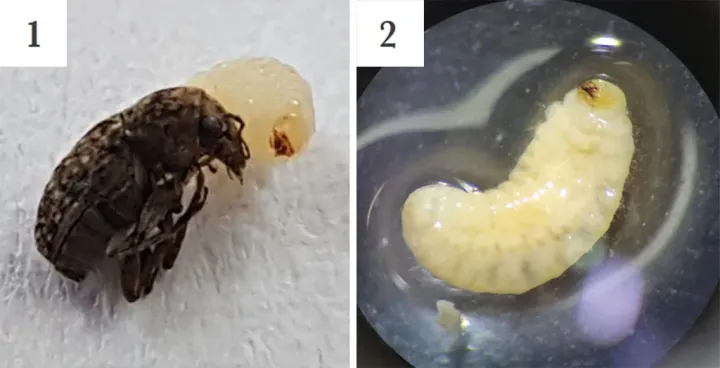
The coffee bean weevil belongs to the Anthribidae family within the Coleoptera order. Adult beetles measure between 3 and 5 millimeters in length, characterized by an oval, convex body that is typically brown or greyish with distinct light-colored patterns on the elytra.
A key diagnostic feature is the massive antennae, which in males are notably longer than the body and feature club-like thickenings at the tips. The head is relatively small and retracted, which distinguishes it from true weevils, which possess a distinct elongated snout.
The larvae are whitish or cream-colored, C-shaped, and legless, with a well-developed, dark head capsule. They go through several larval instars while consuming the internal contents of the seed and eventually prepare a chamber for pupation within the host material.
The life cycle is highly dependent on ambient environmental conditions, especially temperature and humidity. Optimal development occurs at temperatures between 25 and 30 degrees Celsius, allowing the population to thrive in warehouse environments.
These insects are capable of sustained flight, which facilitates their rapid spread between storage rooms, shipping containers, and transportation vehicles, posing a high risk to logistics and international trade in agricultural commodities.
What it damages
While the primary host is coffee, the coffee bean weevil is a polyphagous pest that attacks a wide range of stored products, including cocoa beans, corn, various legumes, nuts, and even dried fruits, making it a major threat to agricultural storage.
Larvae feed internally, creating tunnels and consuming the endosperm of the seed. This activity often leaves nothing behind but the hollowed-out outer shell, rendering the product completely unfit for commercial use or human consumption.
Adult beetles also feed on the surface of the beans, creating additional mechanical damage. This feeding behavior not only destroys the product but also creates an entry point for secondary pathogens, such as molds and various bacteria.
The accumulation of waste products, such as frass and larval excrement, significantly degrades the quality of the stored batch. This results in an unpleasant, musty odor and lowers the nutritional and commercial value of the grain.
Economic impact can be severe as infestations can go undetected until a significant percentage of a shipment is compromised. Without intervention, entire stockpiles can be decimated within a few months of favorable storage conditions.
When it appears
In tropical climates, the coffee bean weevil can reproduce year-round, as there is no true diapause. The development cycle from egg to adult takes approximately one month under optimal conditions, enabling rapid population explosions.
In temperate climates, the pest remains active throughout the year as long as warehouses are heated. Constant temperature management is vital, as the weevil can continue its development cycle continuously in storage facilities.
Activity levels typically peak during warmer months or inside facilities where high temperatures are maintained. During these periods, adults emerge more frequently to mate and infest new containers or areas of the storage facility.
While development slows down during colder months or in non-heated warehouses, the insects do not perish. They may enter a state of reduced metabolism, resuming their life cycle immediately once temperatures rise again.
Continuous monitoring is essential because infestations are often initiated during the transportation stage. Detecting the presence of adults early is key to preventing the spread of the pest across the entire warehouse complex.
Signs of infestation
The most prominent sign of infestation is the presence of small, circular exit holes on the surface of coffee beans or seeds. These holes indicate that the larvae have completed their development and the adults have emerged.
A layer of fine, flour-like dust accumulating underneath bags or on the surface of bulk grain is a strong indicator of heavy feeding activity. This dust consists of damaged seed fragments and insect waste products.
The presence of live adult beetles crawling on the surface of containers, floors, or equipment is a clear sign of an active infestation. They are often more active during twilight hours or when the grain mass is disturbed.
An abnormal musty or fermented odor emanating from the storage room can signal an infestation. This odor is typically associated with the moisture increase and decomposition processes triggered by larval feeding and secondary fungal growth.
Using pheromone-based monitoring traps can reveal the presence of beetles long before significant physical damage to the grain becomes visible, allowing for preemptive control actions to be taken in time.
Control measures
Stringent quality control upon the receipt of goods is the first line of defense. All incoming shipments should be inspected for signs of infestation, and suspected batches should be quarantined immediately.
Maintaining unfavorable storage conditions is essential. This includes keeping grain moisture content below 12% and ensuring adequate ventilation, which creates an environment hostile to the growth and development of the weevil population.
Sanitation within storage facilities is critical. Regularly sweeping floors, removing spilled grain, and cleaning debris prevents the establishment of the pest during the off-season and removes potential breeding grounds.
Fumigation is the most effective method for eradicating existing infestations. This must be carried out by certified professionals using approved fumigants, ensuring the gas reaches all parts of the infested material without compromising quality.
- Deploy pheromone traps to monitor adult beetle activity.
- Seal warehouse entry points to prevent migration from outside sources.
- Apply residual insecticides to warehouse surfaces to deter pest movement.
Taxonomy
- Latin name
- Araecerus crassicornis
- Order
- Coleoptera (beetles)
- Family
- Anthribidae
- EPPO code
- ARAECR
Discussion
No discussions yet — be the first.