
Fungus weevil
Anthribus nebulosus
Description
How to identify
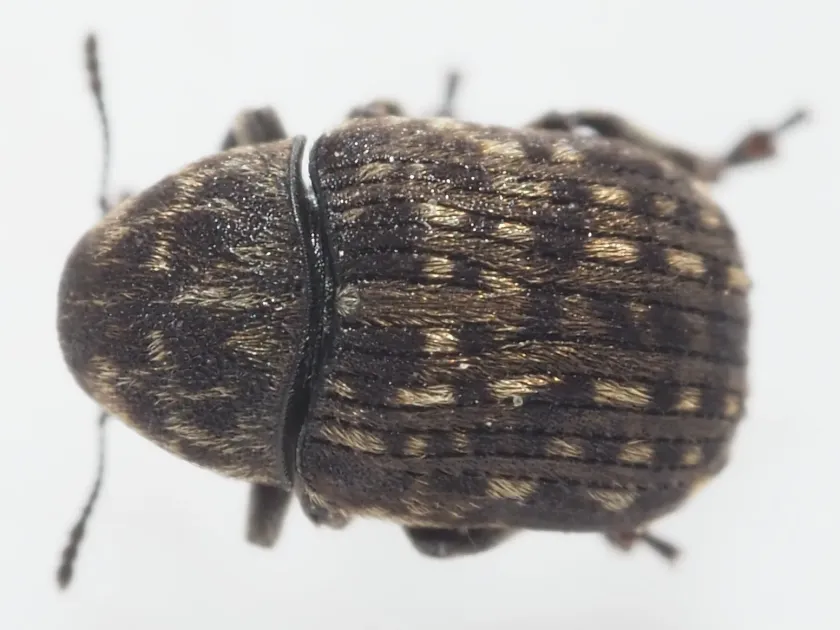
The fungus weevil (Anthribus nebulosus) is a small beetle measuring 3 to 5 mm in length. Its body is covered with dense, variegated hairs creating a mottled grey and brown pattern, providing excellent camouflage against tree bark.
The beetle features a characteristic short and wide snout, typical of the Anthribidae family. Long, clubbed antennae distinguish them from the common true weevils.
The larvae are whitish, curved, and possess a well-developed head capsule. They live concealed inside wood or beneath bark, making them difficult to detect during early stages.
Adults are most active during the day, particularly in warm, sunny weather. They are capable of flight, allowing them to disperse rapidly across orchard areas.
Taxonomically, this species belongs to the order Coleoptera and the family Anthribidae.
What it damages
The fungus weevil primarily affects fruit-bearing trees such as apples, pears, and plums. Adults are typically found on weakened or dying branches.
Larvae feed within the wood, often concentrating on tissues already affected by fungal infections. They function primarily as secondary pests, colonizing trees that are already stressed or diseased.
By tunneling through the wood, the larvae accelerate the decay process. While they rarely kill healthy trees, their activity can lead to the death of individual branches or structural weakening.
Healthy trees with vigorous sap flow and intact bark are generally resistant to colonization, as these conditions are unfavorable for larval development.
An infestation of this species is an indicator of poor plant health, signaling a need for improved horticultural practices.
When it appears
Adult activity occurs throughout the growing season, typically from late April to August. Peak population levels often coincide with the blossoming of fruit trees.
Pupation takes place within wood tunnels created by the larvae. The new generation of adults emerges by mid-summer, ready to mate and begin the cycle again.
Overwintering usually involves adults or late-stage larvae, which seek refuge in deep bark crevices, hollows, or the leaf litter near the base of the trunk.
The life cycle generally consists of one generation per year, though this can be influenced by regional climate and the quality of the wood substrate.
Increased humidity promotes fungal growth on bark, which serves as a food source for the larvae, thereby extending the potential activity period of the pest.
Signs of infestation
The primary evidence of an infestation is the presence of small, circular exit holes on the surface of the bark, left by emerging adults.
Localized areas of dead or loose bark often hide the larval tunnels. These tunnels may be packed with frass (wood dust) and fungal spores.
Infested trees often appear stunted, with visible signs of tip dieback and leaf yellowing, reflecting the overall stress of the host plant.
During sunny days, adults can be spotted on the trunk as they emerge from their hiding spots to mate or move across the surface.
- Darkened or decaying patches on the bark.
- Small exit holes on branches.
- Accumulation of fine wood dust near the base of the tree.
Control measures
The most effective management strategy is regular sanitary pruning. Removing dead, diseased, or infested branches eliminates the essential habitat for the larvae.
Maintaining good horticultural practices, such as cleaning dead bark from trunks and applying lime wash, significantly reduces the survival rate of overwintering beetles.
Chemical control should be reserved for cases of severe infestation, targeting the period when adults emerge from their winter quarters using systemic insecticides.
Controlling fungal diseases on the bark is crucial, as these fungi are often the primary attraction and food source for the weevil larvae.
Promoting a healthy ecosystem by encouraging insectivorous birds can provide effective biological control of the beetle population throughout the year.
Taxonomy
- Latin name
- Anthribus nebulosus
- Order
- Coleoptera (beetles)
- Family
- Anthribidae
- EPPO code
- BRATNE
Discussion
No discussions yet — be the first.