
Fungus weevil
Anthribus fasciatus
Description
How to identify
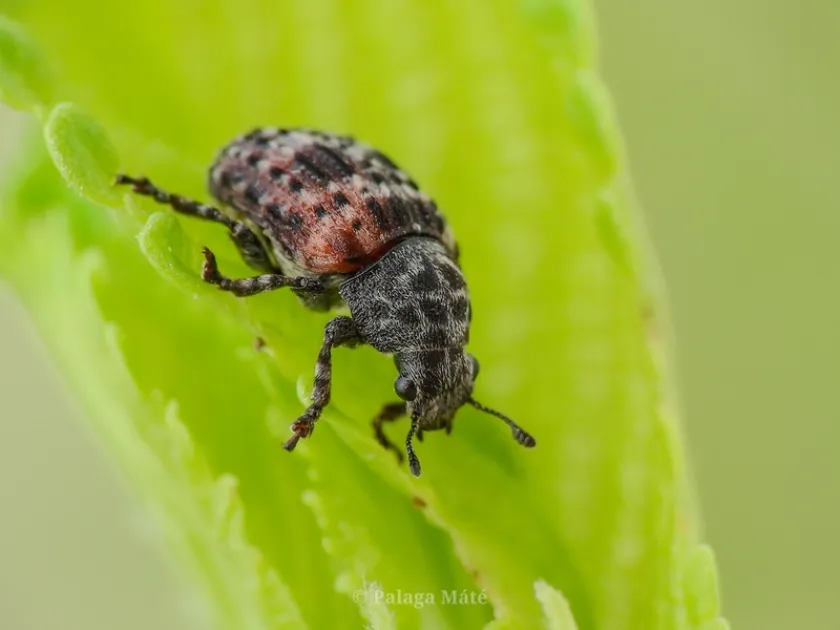
The fungus weevil (Anthribus fasciatus) belongs to the Anthribidae family. These beetles are characterized by their elongated antennae with distinct club-like tips, which are key for identification.
The body of the adult is oval-shaped and typically covered in dense, patterned scales or hairs, providing excellent camouflage against tree bark textures.
Unlike true weevils (Curculionidae), fungus weevils lack an elongated snout (rostrum) and have mouthparts directed forward, making them easily distinguishable to experts.
The larvae are white, fleshy, and slightly curved, featuring a well-developed head capsule suitable for navigating wood or fungal substrates.
These insects are primarily xylomycetophagous, meaning they have evolved to feed on the fungi developing within decaying or stressed wood tissues.
What it damages
This species primarily targets weakened deciduous and fruit trees, including apple, pear, and plum varieties, as well as various forest timber species.
The larvae feed on the fungal mycelium growing inside the bark and wood, often causing additional damage to the tree's living vascular tissues in the process.
While the initial health decline is usually caused by fungal infection, the infestation of these weevils accelerates the deterioration of the tree's structure.
In commercial orchards, the presence of these beetles serves as an indicator of poor plant health or unmanaged fungal outbreaks within the bark.
Heavy infestations lead to the formation of extensive necrotic bark patches, making the tree highly susceptible to secondary pathogens and further insect attacks.
When it appears
The active flight period of adults occurs from late spring throughout the summer, aligning with the peak metabolic activity required for reproduction.
The life cycle involves complete metamorphosis, including egg, larval, pupal, and adult stages, adapted to surviving inside woody environments.
Overwintering usually takes place as larvae within the galleries they have excavated under the bark, which provides insulation against harsh winter conditions.
Females typically deposit eggs directly into fissures or wounds on the bark, where moisture and fungal growth provide ideal conditions for larval development.
A single generation per year is standard, though development time can be influenced by local climatic variables and the availability of their specific food source.
Signs of infestation
The first signs of infestation include small, circular entry holes on the bark, often accompanied by fine frass (wood dust) accumulating in crevices.
Infested trees often appear lethargic; the bark may begin to flake or peel away, revealing areas of fungal mycelium growth beneath the surface.
Removing a small section of bark often reveals winding galleries packed with larval excrement mixed with fungal debris and damaged wood particles.
Adults are most active during dusk or overcast days, making them elusive during routine inspections, which necessitates careful observation of the trunks.
- Darkened bark patches indicating internal activity.
- Accumulation of wood frass near the tree base.
- Yellowing foliage and premature branch dieback.
- Visible fungal growth beneath the bark layer.
Control measures
The primary control strategy is cultural management, ensuring trees remain vigorous and resistant to the initial fungal infections that attract these weevils.
Regular sanitation, such as pruning infected branches and removing dead wood, is essential to disrupt the habitat and food supply for the larvae.
Proper wound care with grafting wax and white-washing trunks helps prevent bark cracking and sunscald, which often serve as entry points.
If chemical control is necessary, insecticides targeting the flight period of the adults can prevent subsequent egg-laying on vulnerable trees.
Integrating fungicide treatments to manage wood diseases is critical, as eliminating the fungal food source makes the trees unattractive to the weevils.
Taxonomy
- Latin name
- Anthribus fasciatus
- Order
- Coleoptera (beetles)
- Family
- Anthribidae
- EPPO code
- BRATFA
Discussion
No discussions yet — be the first.