
Anaphothrips
Anaphothrips
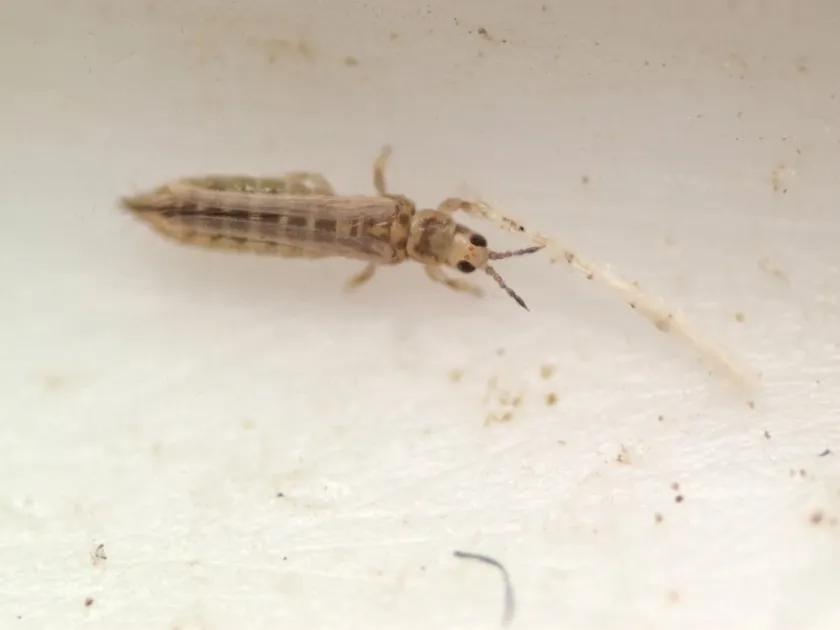
Description
How to identify
Anaphothrips is a genus of insects belonging to the order Thysanoptera and the family Thripidae. These tiny, slender insects are known as thrips and are widespread in agricultural landscapes.
Adults are very small, typically ranging from 1 mm to 1.5 mm in length. Their bodies vary in color from pale yellow to dark brown, which helps them camouflage on various plant parts.
The life cycle of Anaphothrips consists of egg, larva, propupa, pupa, and adult stages. This complex metamorphosis allows them to adapt to different environmental conditions efficiently.
They are known for their high reproductive potential. Many species can reproduce through arrhenotokous parthenogenesis, allowing populations to explode within a few weeks.
During the pupal stage, these insects usually drop into the soil or hide in deep plant crevices to protect themselves, which complicates manual control efforts.
What it damages
Anaphothrips species are polyphagous, meaning they feed on a wide variety of plant hosts, including grasses, cereals, and numerous horticultural crops like onions and cucumbers.
They damage plants by piercing the epidermal layer of leaves, stems, and flowers with their mouthparts and sucking out the cell contents, leading to cellular collapse.
This feeding behavior causes significant physiological stress, reduced photosynthesis, and stunted growth. In severe cases, the entire plant may wither and fail to produce fruit or seed.
Beyond direct feeding damage, these thrips are notorious vectors of plant viruses. They transmit pathogens that cause systemic diseases, often causing more financial loss than the insects themselves.
Cereal crops are particularly vulnerable during the flowering stage, where feeding in the spikelets can lead to sterile florets or shriveled, low-quality grain at harvest.
When it appears
Activity typically begins in the early spring as temperatures rise. The insects emerge from their overwintering sites in the soil or under debris to locate fresh host plants.
Hot and dry weather conditions are ideal for their development. During such periods, the life cycle duration can be as short as 10 days, leading to multiple overlapping generations.
Late spring and early summer often see the highest population densities in cereal fields. Farmers should monitor crops closely during these critical growth stages.
As the weather cools down in late autumn, the adults seek out protected areas. They enter a state of diapause, overwintering in the soil or protected crevices of perennial weeds.
Environmental monitoring and weather data can help predict potential outbreaks, as prolonged dry spells are a strong indicator of an upcoming thrips population surge.
Signs of infestation
The most common sign is the appearance of silvery or greyish streaks on the leaves. This is caused by the empty cell tissues losing their green pigment after being sucked dry.
Small black specks, which are insect excrement, can often be seen on the undersides of leaves, confirming the presence of an active infestation in the area.
Leaf curling, yellowing, and premature senescence are common symptoms. Heavily infested leaves may eventually dry out and fall off, significantly reducing the plant's leaf area.
In the case of cereals, look for 'white heads' or bleached spikes. This occurs when the insects feed on the peduncle or base of the spike, disrupting nutrient flow to the grain.
To detect them, tap a plant over a white sheet of paper. Small, elongated insects will fall onto the paper, moving quickly and revealing their presence to the observer.
Control measures
Integrated Pest Management (IPM) is the best approach. Start with cultural practices such as removing volunteer plants and weeds that act as alternative hosts between cropping seasons.
Crop rotation is essential to break the life cycle of the pest. Planting non-host crops in adjacent fields can also help slow the migration of the population into your main fields.
Chemical control should be timed based on scouting results. Use systemic insecticides that move through plant tissues to effectively target insects hiding in concealed areas.
Ensure that insecticides are rotated by chemical class to prevent the development of resistance. Overuse of a single pesticide often leads to faster resistance in thrips populations.
Encouraging natural predators such as minute pirate bugs, lacewings, and predatory mites can help keep populations below the economic threshold without the need for intensive spraying.
Taxonomy
- Latin name
- Anaphothrips
- Order
- Thrips
- Family
- Thripidae
- EPPO code
- ANAPSP
Discussion
No discussions yet — be the first.