
Australian plague thrips
Thrips australis
Description
How to identify
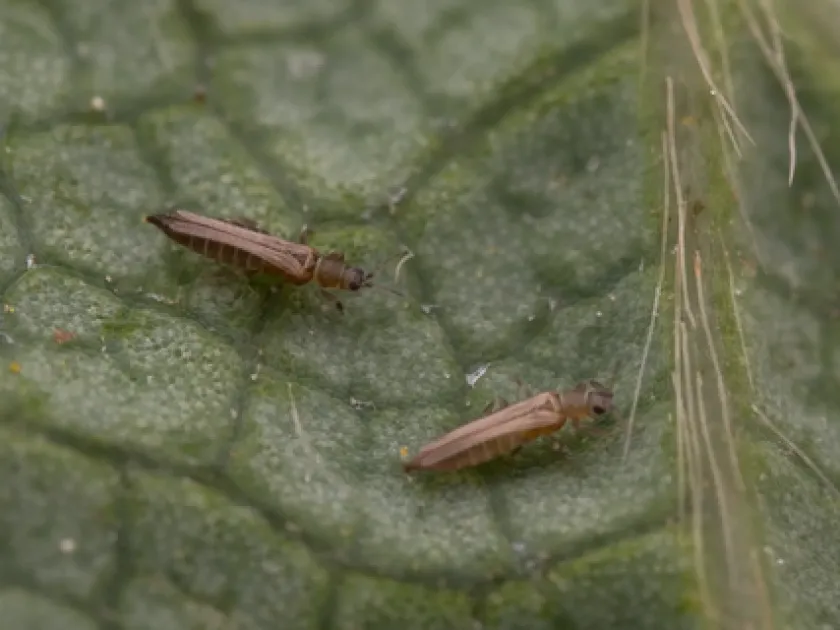
The Australian plague thrips (Thrips australis) belongs to the order Thysanoptera and the family Thripidae. These are tiny insects characterized by slender bodies and two pairs of wings fringed with hairs.
Adult thrips typically measure about 1 to 1.5 millimeters in length. Their coloration varies, usually appearing yellow, brown, or dark brown depending on the life stage and the specific host plant.
The life cycle consists of the egg, two larval stages, two pupal stages (propupa and pupa), and the adult. Unlike many other insects, the pupal stages are often passed in the soil or in crevices of plants.
These insects are highly mobile and are known to be dispersed by wind over long distances, making them a challenge to contain once an infestation begins.
They thrive in warm climates, allowing them to reproduce rapidly and maintain high population levels throughout the growing season.
What it damages
The primary hosts of this species include plants from the Myrtaceae family, especially Eucalyptus species. However, they are known to feed on a wide variety of other vegetation.
By using their piercing-sucking mouthparts, they extract cellular sap from leaves, flowers, and tender shoots, leading to tissue chlorosis and necrosis.
Frequent feeding on terminal buds results in stunted growth and severe deformity of leaves, which significantly impacts the development of young plants.
Mass infestations often result in reduced flower production and poor fruit set, as the insects prefer to feed on the reproductive parts of the plant.
Beyond direct damage, their feeding creates wounds that serve as entry points for various bacterial and fungal pathogens, potentially causing secondary infections.
Signs of infestation
An early sign of infestation is the appearance of silvery or greyish streaks on the leaf surface, often referred to as "silvering" due to the destruction of cells.
Small black fecal spots found on the underside of leaves or within floral parts are clear indicators of thrips presence and active feeding.
Curling, twisting, and premature browning of the leaves are common symptoms observed when the population density reaches high levels.
Visual inspection of the flowers often reveals tiny, slender insects scurrying within the petals when the bloom is gently shaken or tapped.
Floral distortion, such as spotted petals or petals failing to unfurl properly, is a classic sign of Australian plague thrips activity.
Control measures
Monitoring using blue sticky traps is essential for early detection, as these insects are highly attracted to the blue color spectrum.
Systemic insecticides are the most effective chemical method to control these pests, as they target the insects hidden deep within plant tissues or flowers.
Biological control agents, such as predatory mites (e.g., Amblyseius cucumeris) and predatory bugs (e.g., Orius spp.), provide sustainable management in greenhouses.
Cultural practices, including the removal of weeds that serve as alternate hosts and maintaining optimal irrigation, help reduce the prevalence of these pests.
Proper sanitation and strict quarantine of incoming plant material are critical to preventing the introduction of thrips into new agricultural environments.
Taxonomy
- Latin name
- Thrips australis
- Order
- Thrips
- Family
- Thripidae
- EPPO code
- THRIAU
Discussion
No discussions yet — be the first.