
Arizona thrips
Thrips arizonensis
Description
How to identify
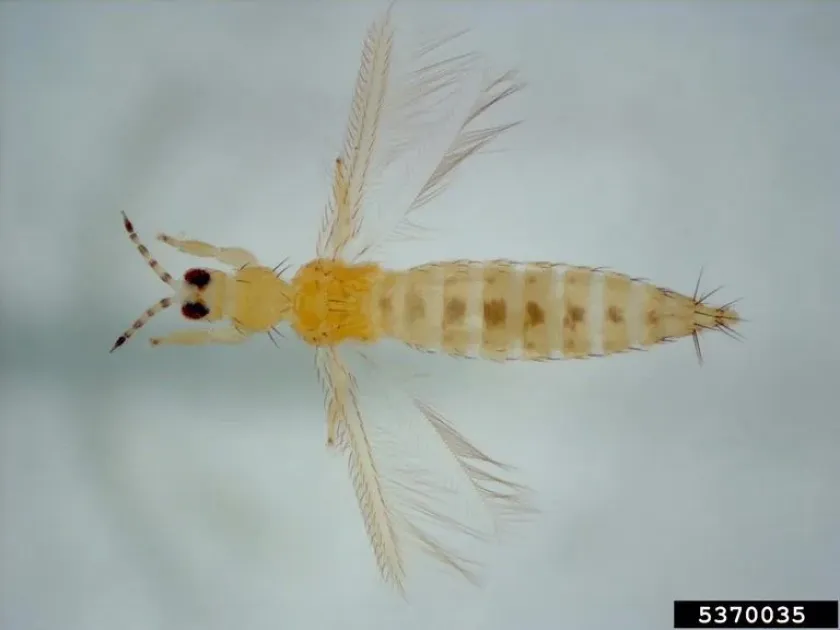
The Arizona thrips (Thrips arizonensis) is a small insect belonging to the order Thysanoptera and family Thripidae. Adults are typically 1-2 mm long and possess characteristic fringed wings, which gave the order its name.
The insect body is slender, ranging from pale yellow to dark brown in color. Identification is often complex due to their small size and the similarity between various thrips species, requiring expert microscopic examination.
The biological cycle consists of egg, larva (two instars), propupa, pupa, and adult stages. Depending on the species-specific adaptations, some stages occur on the foliage, while others may take place in the soil or leaf litter.
Their reproduction rate is high, especially in warmer conditions. This pest is highly adaptable to arid environments, making it a persistent challenge for farmers in specific geographical regions.
Understanding their developmental timeline is crucial for timing interventions, as immature stages often feed in protected areas of the plant, such as leaf axils or unopened flower buds.
What it damages
Arizona thrips feed by piercing plant cells and sucking out the contents. This feeding method causes significant physical damage to the leaves, flowers, and tender shoots of various host plants.
The initial signs of infestation include tiny, silvery, or bleached patches on the leaf surface. As the infestation progresses, leaves may become distorted, curled, or scorched, leading to a substantial decrease in photosynthetic efficiency.
Besides direct mechanical damage, they are recognized as vectors for various plant viruses. Transmission occurs during feeding, which can cause systemic infections resulting in stunted growth or plant death.
Crop loss is primarily linked to flower drop and fruit deformation caused by the pests feeding on the reproductive parts of the plant. This significantly reduces both the quality and quantity of the harvest.
Heavy infestation levels can lead to the formation of dark spots caused by the accumulation of excrement, which further degrades the aesthetic and market value of ornamental and edible crops.
Control measures
Effective management begins with monitoring. The use of sticky traps, particularly blue ones, is the industry standard for detecting the early arrival of adult thrips in crop fields and greenhouses.
Cultural practices include rigorous weed control, as many weed species act as alternative hosts for thrips. Maintaining clean field borders helps reduce the primary population influx.
Chemical control strategies involve the application of systemic insecticides. Because thrips develop resistance quickly, it is essential to rotate active ingredients with different modes of action to ensure sustained control.
Biological control, using predators like Orius bugs or predatory mites (e.g., Amblyseius species), is highly effective. These beneficial insects provide a sustainable way to keep thrips populations below the economic injury level.
Sanitation plays a vital role in preventing outbreaks. Removing and destroying infested plant material, along with regular monitoring of humidity and temperature, creates a less favorable environment for the rapid population growth of the pest.
Taxonomy
- Latin name
- Thrips arizonensis
- Order
- Thrips
- Family
- Thripidae
- EPPO code
- THRIAR
Discussion
No discussions yet — be the first.