
Sericothrips
Sericothrips
Description
How to identify
Sericothrips is a genus of insects belonging to the order Thysanoptera and the family Thripidae. These tiny insects, commonly known as thrips, are significant agricultural pests across many regions of the world.
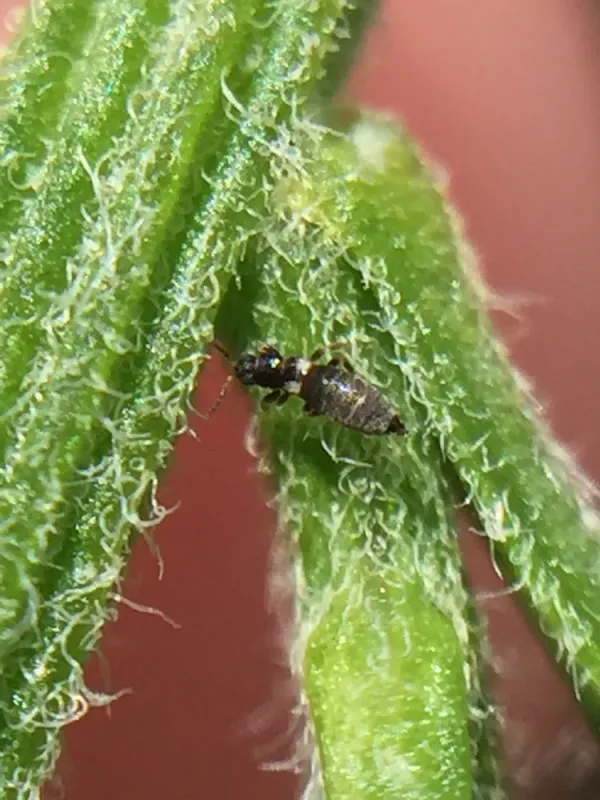
Adult individuals are typically between 1 and 1.5 mm in length. Their bodies are elongated, often yellowish to brownish in color, with distinctive fringed wings that allow them to disperse over short distances.
The taxonomic identification of this genus is based on the specific structure of the cuticle and the arrangement of setae on the body segments. The life cycle involves egg, two larval stages, prepupa, pupa, and adult.
Because of their minute size, these insects are difficult to detect with the naked eye. Agronomists usually employ magnifying glasses or sticky traps to monitor their presence in a field.
The developmental speed is highly dependent on environmental conditions, with warmer temperatures accelerating the metamorphosis from egg to adult significantly.
What it damages
Sericothrips are polyphagous pests, capable of feeding on a wide variety of botanical families. They frequently attack legumes, cereals, and many types of ornamental plants.
Using their rasping-sucking mouthparts, they puncture plant cells and ingest the content. This feeding activity results in localized cell death and the formation of whitish or silvery patches on the foliage.
Heavy infestations can lead to stunting, leaf deformation, and reduced photosynthetic capacity of the plant. This directly impacts the plant's metabolic processes and overall biomass production.
Besides direct physical injury, these insects are known vectors for various plant viruses. The introduction of pathogens during feeding can lead to systemic infections that are more damaging than the mechanical injury itself.
In high-density populations, the cumulative damage can result in significant yield losses, affecting both the quality and quantity of the harvest.
When it appears
The population dynamics of Sericothrips are highly seasonal and fluctuate with temperature and moisture levels. They are most active during warm, dry summer months.
The pests overwinter as adults in protected environments, such as leaf litter, soil crevices, or on perennial weeds that remain green throughout the winter period.
Activity typically resumes in early spring as temperatures increase. They first colonize surrounding vegetation before migrating onto growing field crops during their peak active phases.
Multiple generations can occur within a single growing season. Under optimal conditions, a complete life cycle can be finished in approximately two to three weeks, causing rapid population spikes.
As autumn approaches and temperatures drop, the metabolic activity of the thrips decreases, signaling the transition into a dormant or overwintering state.
Signs of infestation
The most characteristic sign of infestation is the appearance of mottled or silvery-white patches on the surface of the leaves, resulting from the emptying of plant cells.
Leaves affected by Sericothrips may become distorted, curled, or wilted. Severe cases of infestation lead to premature yellowing and dropping of leaves.
Tiny black spots, which are the excrement of the insects, are often found on the undersides of the leaves. This is a reliable diagnostic feature for confirming thrips presence.
If flowers are attacked, they may show irregular discoloration, streaking, or deformation, which significantly reduces the aesthetic or market value of the crop.
Visual inspection during the cooler parts of the day, such as early morning, often reveals the presence of adult insects scurrying across the leaf surfaces.
Control measures
Managing Sericothrips requires a multifaceted Integrated Pest Management (IPM) strategy that combines monitoring, cultural practices, and chemical or biological interventions.
Cultural methods are crucial, including the destruction of weeds that serve as alternate hosts and the implementation of clean plowing to disrupt their overwintering habitats.
Blue sticky traps are highly recommended for monitoring purposes. They provide valuable data on population fluctuations, allowing for targeted application of control agents.
Chemical control should be reserved for periods when populations exceed the economic injury level. Insecticides from various classes, including neonicotinoids and spinosyns, can be effective if applied correctly.
Biological control involves the introduction or preservation of natural enemies such as predatory mites (e.g., Amblyseius spp.) and predatory bugs (e.g., Orius spp.), which help maintain thrips numbers below harmful thresholds.
Taxonomy
- Latin name
- Sericothrips
- Order
- Thrips
- Family
- Thripidae
- EPPO code
- SERTSP
Discussion
No discussions yet — be the first.