
Avocado thrips
Scirtothrips perseae
Description
How to identify
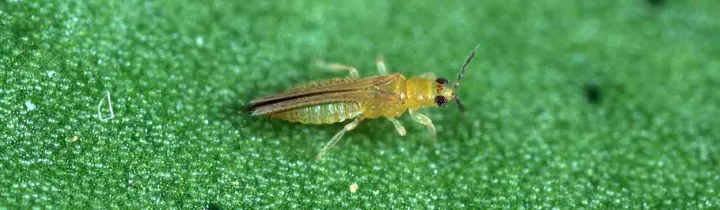
Avocado thrips (Scirtothrips perseae) is a small insect species belonging to the order Thysanoptera and the family Thripidae, specifically adapted to feed on avocado trees.
The life cycle of this pest consists of egg, two larval stages, two pupal stages (prepupa and pupa), and the adult stage, typically completed in a few weeks depending on temperature.
Larvae are minute, pale yellow organisms that gather in colonies on the underside of leaves and on the skin of developing avocado fruit.
Adults are small, winged insects capable of flying short distances and moving rapidly across foliage, which allows them to colonize new parts of the canopy efficiently.
Taxonomically, this species is closely monitored in regions where avocado cultivation is a significant economic activity due to its high reproductive potential.
What it damages
The primary host plant is the avocado (Persea americana), though the pest can occasionally impact other members of the Lauraceae family in proximity.
Damage is characterized by feeding on the surface tissues of young leaves and expanding fruit, which causes the plant to respond by forming protective callous tissue.
Feeding on leaves leads to curling, deformation, and necrotic spotting, which reduces the tree's overall photosynthetic capacity and vigor.
The most severe economic impact occurs on the fruit, where feeding results in unsightly, leathery, and scarred surfaces, effectively downgrading the produce.
High infestation levels can lead to significant fruit loss or rejection in fresh markets due to the extensive scarring and reduced shelf life of the affected avocado.
Signs of infestation
The hallmark symptom of avocado thrips is a characteristic network-like scarring pattern on the surface of developing green fruit.
Young leaves exhibit silvery discoloration and distinct brown spots where the epidermis has been breached by the thrips' feeding apparatus.
The presence of tiny black fecal droplets on the underside of the leaves is a common indicator of an active population of thrips.
Visual inspection often reveals deformed, twisted new shoots that fail to develop properly due to the constant stress caused by the feeding activity.
In cases of high density, the leaves may show premature yellowing and drop, which provides a clear signal that the pest has reached an economic threshold.
Control measures
Biological control relies on the conservation and release of natural predators, such as predatory mites (e.g., Euseius hibisci) that prey on larvae.
Cultural management includes the use of pruning to improve light and air circulation, as well as maintaining proper irrigation to ensure tree resilience.
Chemical control involves the timely application of systemic or contact insecticides, following established thresholds to prevent resistance and harm to pollinators.
- Utilization of blue sticky cards to monitor the flight activity and population density of adult thrips.
- Application of horticultural oils or soaps in early stages to physically disrupt the pest population.
- Strategic timing of treatments based on the phenological stages of the avocado crop and pest monitoring data.
Integrated Pest Management (IPM) is the recommended approach, balancing biological inputs with necessary chemical intervention to keep populations below damaging levels.
Taxonomy
- Latin name
- Scirtothrips perseae
- Order
- Thrips
- Family
- Thripidae
- EPPO code
- SCITPE
Discussion
No discussions yet — be the first.