
Kenyan thrips
Scirtothrips kenyensis
Description
How to identify
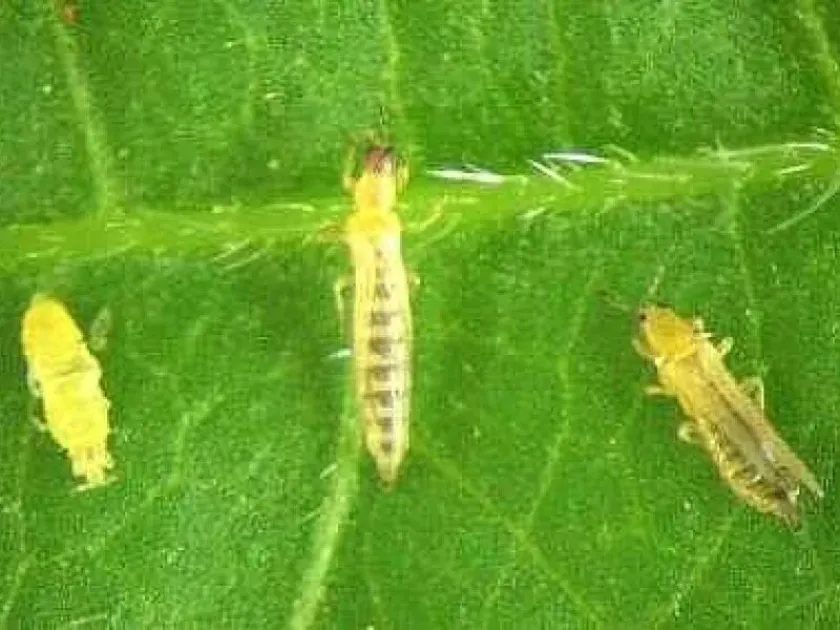
The Kenyan thrips (Scirtothrips kenyensis) is a small insect belonging to the order Thysanoptera and the family Thripidae. Adults are approximately 1 mm long, with a slender, pale-yellow to brownish body that is difficult to spot without magnification.
The lifecycle includes egg, two larval instars, prepupa, pupa, and adult stages. Under optimal warm and dry conditions, the lifecycle is rapid, allowing the population to reach damaging levels within a very short period.
Adults possess fringed wings, which assist in short-distance migration between plants, while larvae are wingless and tend to stay in concealed areas like leaf undersides or flower buds.
Identification is best achieved by placing blue sticky traps in the crop canopy. Unlike many other species that prefer yellow traps, Scirtothrips kenyensis exhibits a strong preference for blue.
This species is highly adaptable to protected environments like greenhouses, where stable temperatures allow it to thrive and reproduce throughout the year without a traditional winter diapause.
What it damages
Scirtothrips kenyensis is a significant polyphagous pest, known for causing substantial damage to a variety of horticultural and specialty crops, including coffee, tea, tomatoes, and various ornamentals.
Damage occurs primarily through the feeding process: the insect uses its rasping-sucking mouthparts to pierce plant cells, causing the death of epidermal tissues and a reduction in photosynthetic capacity.
Beyond direct feeding damage, these thrips are vectors for various plant viruses, which can lead to systemic infections, further compounding yield losses and plant quality degradation.
Fruit quality is severely impacted; feeding on developing fruits leads to the formation of corky skin, silvery patches, and deformities, which disqualifies the product from premium markets.
In cases of severe infestation, plants suffer from stunted growth, leaf curling, and eventual abscission of flowers and buds, leading to a drastic reduction in overall crop productivity.
Signs of infestation
Visible signs of infestation often begin as irregular silvery or whitish streaks on the upper leaf surface, resulting from the destruction of cell contents by the pest.
The presence of minute black dots on leaves, which are the excrement droplets of the thrips, serves as a diagnostic sign that indicates a localized colony presence.
Deformation of new, growing leaves and terminal buds is a common indicator of high-pressure infestations, often leading to the rosette-like appearance of plant tops.
Fruit damage manifests as rough, brownish, or silvery-grey patches or scabs, significantly reducing the aesthetic and commercial value of the harvested produce.
A noticeable reduction in the number of blossoms and an increase in early flower abortion are typical consequences when the population of Scirtothrips kenyensis reaches peak activity.
Control measures
Integrated Pest Management (IPM) for this species requires rigorous sanitation, including the removal of weeds and crop debris that serve as alternative hosts during the off-season.
Biological control agents, particularly predatory mites such as Amblyseius or Neoseiulus species, are effective for regulating populations in greenhouse environments.
Chemical control should be employed strategically, using systemic insecticides only when necessary, and always rotating active ingredients to mitigate the risk of insecticide resistance development.
The use of trap crops and physical barriers, such as fine-mesh insect nets on greenhouse vents, can significantly reduce the initial influx of the pest into the cultivation area.
Regular monitoring using blue sticky traps is essential to detect early infestations, allowing for localized treatments before the population spreads across the entire field or greenhouse facility.
Taxonomy
- Latin name
- Scirtothrips kenyensis
- Order
- Thrips
- Family
- Thripidae
- EPPO code
- SCITKE
Discussion
No discussions yet — be the first.