
Grape thrips
Rhipiphorothrips cruentatus
Description
How to identify
Grape thrips (Rhipiphorothrips cruentatus) are tiny insects belonging to the order Thysanoptera and the family Thripidae, known for causing significant damage in viticulture.
The adults are elongated, measuring about 1–1.5 mm in length, and generally possess a dark brown to black coloration that helps them remain inconspicuous on the plant.
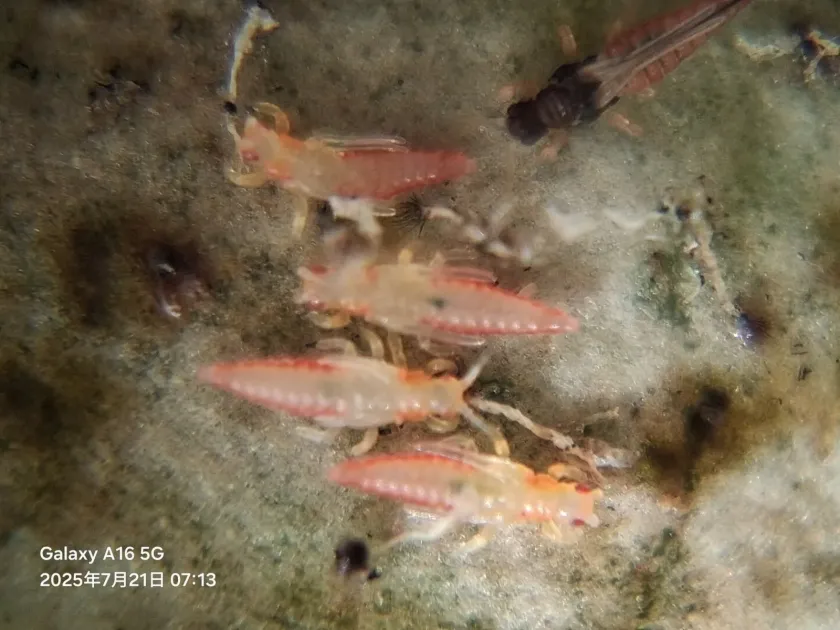
Nymphs are typically yellow or orange in color and are highly mobile, feeding actively on the sap of the vine's leaves and tender shoots.
These insects are equipped with piercing-sucking mouthparts, allowing them to extract nutrients directly from the plant tissue with high efficiency.
The life cycle encompasses several stages: egg, larva, prepupa, pupa, and adult, with some stages often taking place in the soil under the host plant.
What it damages
This species is a generalist pest that targets not only grapevines but also various fruit and ornamental crops in tropical and temperate regions.
By feeding on the mesophyll cells of the leaves, thrips destroy chlorophyll, which severely impairs the plant's photosynthetic capacity.
Heavy infestations lead to the necrosis of leaf tissues, premature defoliation, and a significant reduction in the vine's overall vigor and storage of carbohydrates.
Clusters affected by thrips often show stunted berry growth, scarring, and deformities, directly leading to lower market quality and reduced yields.
Continuous feeding stress also renders the grapevines more susceptible to secondary pathogenic infections and environmental stressors like drought.
When it appears
Grape thrips activity is heavily dependent on temperature, thriving in warm, dry weather conditions which accelerate their reproductive cycles.
The initial infestation usually occurs in late spring or early summer, coinciding with the rapid development of the vine's new green growth.
Populations tend to reach their peak during the hottest months of the summer, as high temperatures facilitate rapid generational turnover.
The pest can remain active throughout the growing season, potentially producing multiple overlapping generations if environmental conditions remain favorable.
Wintering is typically carried out in the pupal or adult stage, hidden within the soil or protected under the vine's bark or leaf litter.
Signs of infestation
The earliest symptom of infestation is the appearance of small silver-colored spots or streaks on the underside of the leaves where feeding occurs.
Characteristic tiny black specks on the leaf surface are deposits of insect excrement, serving as a primary indicator of a thrips presence.
As the infestation progresses, leaves show chlorosis, turning yellow and eventually brown, leading to the curling of leaf margins and leaf drop.
Damage to young clusters results in flower abortion, reduced fruit set, and the browning of peduncles, which can be mistaken for nutrient deficiencies.
- Silvery discoloration on leaves.
- Presence of black frass spots.
- Leaf curling and deformation.
- Premature leaf drop.
Control measures
Integrated pest management begins with monitoring using blue sticky traps, which are highly effective for detecting and measuring thrips population density.
Cultural practices are essential, including the removal of weeds around the vineyard that serve as alternative hosts during the off-season.
Chemical control should involve the application of systemic insecticides that reach the pests feeding on the underside of the foliage.
To ensure long-term effectiveness, growers must rotate products with different modes of action to prevent the development of pesticide resistance.
Soil cultivation in the autumn and late winter can help disrupt the pupation cycle of thrips, significantly reducing the overwintering population.
Taxonomy
- Latin name
- Rhipiphorothrips cruentatus
- Order
- Thrips
- Family
- Thripidae
- EPPO code
- RHIHCR
Discussion
No discussions yet — be the first.