
Grape thrips
Retithrips syriacus
Description
How to identify
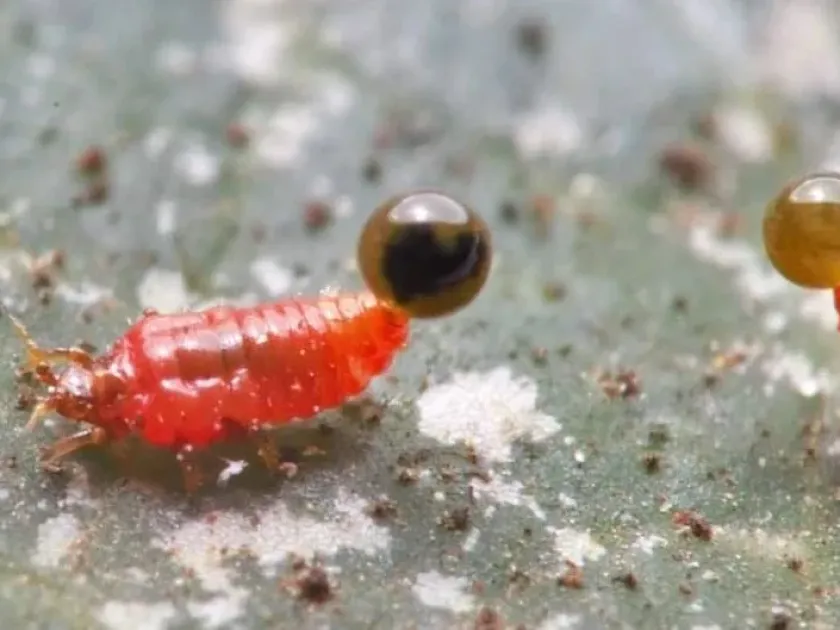
The grape thrips (scientific name Retithrips syriacus) belongs to the order Thysanoptera and the family Thripidae. These are tiny insects, typically measuring between 1 and 1.5 mm in length, characterized by a dark brown body with a distinct reticulated pattern on their cuticle.
Larvae are generally lighter in color, appearing yellowish or whitish with semi-transparent skin. The life cycle consists of several stages: egg, two larval instars, prepupa, pupa, and adult (imago).
Adults possess fringed wings, which is a key diagnostic feature of this order. Females deposit their eggs directly into the leaf tissue on the underside of the leaf using an ovipositor to slit the epidermis.
Adult thrips are highly mobile and tend to congregate in colonies, especially during hot and dry weather conditions. They are most active when temperatures rise, quickly spreading throughout the canopy of the vine.
Field identification requires the use of a magnifying glass to inspect the undersides of leaves, particularly in areas showing discoloration. Look for small, dark-colored adults and lighter, more sluggish larvae among the foliage.
What it damages
While grapes are the primary host, Retithrips syriacus is a polyphagous pest capable of attacking other crops such as pomegranates, citrus, figs, and various ornamental plants in the surrounding landscape.
The pest primarily targets leaves and young shoots. By sucking the sap from plant cells, the thrips disrupt the plant's metabolic processes, leading to reduced vitality and weakened vegetative growth.
Extensive damage to the leaf surface reduces photosynthesis, which is crucial for sugar accumulation in berries and the maturation of canes before the dormant winter season. This makes the vines less productive and more susceptible to stress.
Severe infestations can lead to premature leaf drop, which exposes the ripening bunches to direct sunlight, potentially causing sunburn. This significantly impacts the market value and quality of the grape harvest.
Young vineyards are particularly vulnerable. Stunted growth and poor shoot development can delay the entry of young vines into the fruit-bearing stage, causing long-term economic loss to the grower.
When it appears
Grape thrips activity is heavily influenced by climate. They thrive in hot and dry weather, with peak populations usually observed during the summer months when temperatures regularly exceed 25°C.
The pest produces multiple generations within a single growing season. The speed of development is directly proportional to temperature, leading to rapid population explosions in warmer southern regions.
Overwintering occurs in the adult stage in protected areas such as under the bark of vines, in leaf litter, or within the soil surface around the base of the plant. They emerge as soon as the spring weather provides enough warmth.
The critical monitoring period is mid-summer through late summer (July and August). During this time, growers must be vigilant, as the population can increase exponentially if left unchecked.
Short generation cycles allow the species to adapt quickly to environmental changes. Keeping a close watch on the vines throughout the mid-summer is essential for effective population management.
Signs of infestation
Initial symptoms include small, localized discolorations on the undersides of leaves, which gradually turn brown or necrotic as the tissue dies due to intense feeding.
The upper leaf surface displays chlorotic spots or a characteristic marble-like appearance. As the infestation progresses, leaves may curl, dry out, and drop prematurely, which is a common sign of stress.
A reliable sign of a thrips infestation is the presence of small black droplets of excrement on the underside of the leaves. These droplets are easily visible even without high-powered magnification.
- Yellow or silvery necrotic patches on leaf undersides.
- Leaf curling and deformation.
- Presence of black fecal spots on the foliage.
- Reduced shoot growth and poor berry development.
In cases of heavy infestation, the foliage appears scorched or rusty. The overall vigor of the plant declines, and the bunches may fail to mature properly, resulting in a loss of sweetness and overall crop failure.
Control measures
Integrated Pest Management (IPM) is the most effective approach. This includes cultural practices such as removing leaf litter and weeds that serve as overwintering sites, as well as maintaining overall vine health.
Chemical control should be implemented when population thresholds are exceeded. Use systemic or contact-action insecticides registered for vineyards, ensuring thorough coverage of the leaf undersides where thrips reside.
It is vital to rotate different chemical classes of insecticides to prevent the development of resistance. Application should be timed to catch the most active periods of the pest's life cycle.
Biological control methods involve supporting natural enemies, such as predatory mites and bugs, which feed on thrips larvae. Some biological preparations based on entomopathogenic fungi have also shown promise.
Monitoring with sticky traps is recommended for early detection. By tracking the migration of adult thrips, growers can apply localized treatments before the infestation spreads across the entire vineyard.
Taxonomy
- Latin name
- Retithrips syriacus
- Order
- Thrips
- Family
- Thripidae
- EPPO code
- RETTSY
Discussion
No discussions yet — be the first.