
Bean thrips
Megalurothrips usitatus
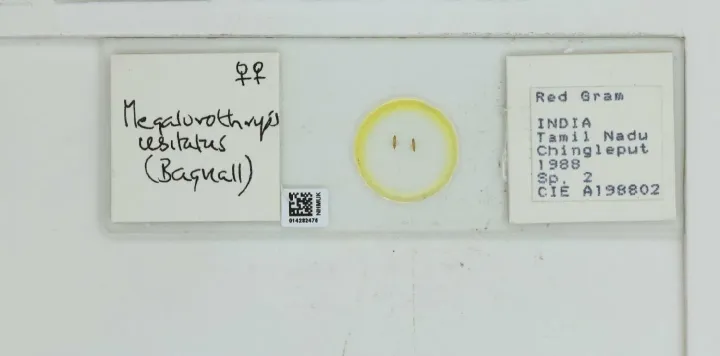
Description
How to identify
The bean thrips (Megalurothrips usitatus) is a small insect belonging to the order Thysanoptera and the family Thripidae. Adult thrips are typically 1.2–1.5 mm long, characterized by a slender, dark brown to black body with two pairs of narrow, fringed wings.
The immature stages, known as larvae, are usually pale yellow or orange and lack wings. They are highly mobile but tend to remain hidden within the protective structures of the plant, such as unopened flower buds or new leaf shoots.
What it damages
This pest primarily attacks various legume crops, including soybeans, cowpeas, green beans, and lentils. It feeds on the sap of the plant tissues, focusing its destructive activities on the reproductive parts of the host plants.
Feeding causes significant physiological stress to the plant, resulting in bud drop, flower abortion, and deformed pods. These damages directly reduce the yield quality and quantity, often leading to severe economic losses in commercial agriculture.
When it appears
Megalurothrips usitatus is a warm-weather pest, with its activity peaking during hot and dry conditions. The duration of its life cycle is highly dependent on temperature, often taking less than two weeks from egg to adult in optimal climates.
The insect overwinters as pupae in the soil or within plant debris. As temperatures rise in the spring, adults emerge to infest early-season vegetation, potentially completing multiple overlapping generations throughout the growing season.
Signs of infestation
Typical symptoms of an infestation include the appearance of silvery or white streaks on the surfaces of leaves and petals due to cell destruction. Infected flowers often wither, turn brown, and fall off prematurely before pod development.
Close observation of the flowers often reveals the presence of both adults and larvae feeding in the central parts of the blossom. One might also notice tiny dark dots of excrement on the plant surfaces, which are characteristic of thrips presence.
Control measures
Management requires an integrated pest management (IPM) approach that combines cultural practices and chemical control. Regular scouting of fields is essential to monitor population levels and apply treatments before the pest causes irreversible damage.
Chemical control usually involves the application of systemic insecticides that reach the hidden insects within the flowers. Additionally, rotating crops and maintaining clean fields free of alternative weed hosts are vital steps to reduce the overall pest pressure.
Taxonomy
- Latin name
- Megalurothrips usitatus
- Order
- Thrips
- Family
- Thripidae
- EPPO code
- MEGTUS
Discussion
No discussions yet — be the first.