
Pea thrips
Kakothrips pisivorus
Description
How to identify
Pea thrips (Kakothrips pisivorus) are small insects belonging to the order Thysanoptera, family Thripidae. They are notorious pests primarily attacking legume crops.
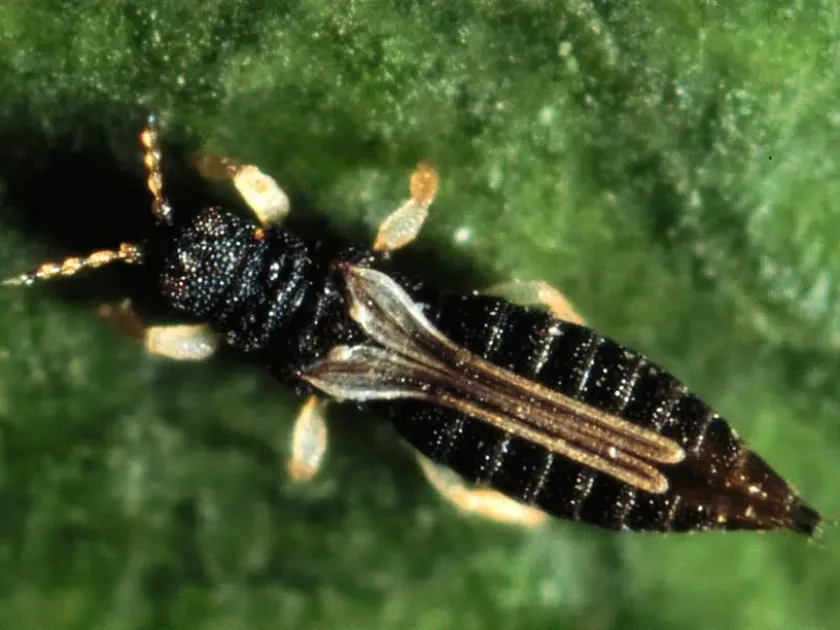
Adults are small, slender insects measuring about 1.5–2 mm in length, with dark brown or blackish bodies. They possess fringed wings, which is a key identifying feature of the suborder.
Larvae are typically yellowish-white or orange in color and are highly mobile, feeding on plant juices. They pass through two larval stages before pupation in the soil.
Overwintering occurs in the pupal stage deep within the soil profile. As spring temperatures rise, adults emerge to start the new infestation cycle.
Identification in the field often requires a magnifying glass, as the insects are small and tend to hide in the sheltered parts of the pea plant.
What it damages
The primary hosts are peas, but the pest also infests beans, vetch, and lentils. It poses a significant economic threat to farmers during favorable conditions.
Both adults and larvae use their piercing-sucking mouthparts to feed on the sap of young leaves, flower buds, and developing pods. This leads to severe physiological stress in the plants.
Flower buds are particularly susceptible. Infestation often leads to flower abortion or incomplete pod set, which directly impacts yield quantity and seed quality.
Deformed, twisted, and scarred pods are typical signs of pea thrips damage. Internally, seeds may be shriveled or fail to develop entirely due to sap depletion.
Heavy infestations reduce the overall vigor of the pea crop, making the plants more prone to lodging and susceptible to various fungal diseases like Ascochyta blight.
When it appears
Adults appear on pea crops during the bud development stage. This initial migration marks the beginning of the critical period for crop protection.
As the plants start to flower, the population of larvae increases rapidly. The warm, humid environment within the flower clusters provides ideal conditions for growth.
The life cycle is quite short, with a generation completing in approximately 3–4 weeks. Depending on the region, one or occasionally two generations can occur per season.
Hot, dry weather patterns during the late spring and early summer often lead to population explosions, causing extensive damage to crops in a short time frame.
As the pods reach maturity and harden, the larvae drop to the ground to pupate in the soil, effectively ending their activity in the pea field for the current season.
Signs of infestation
Early symptoms include silvery or whitish streaks on leaves, resulting from the destruction of epidermal cells during feeding. The foliage may appear mottled and dull.
Flowers often turn yellowish, wither, and drop prematurely. A reduction in the total number of pods is usually the most noticeable sign of a significant infestation.
Pods show characteristic symptoms such as surface scarring, browning, and significant deformity. Small black spots caused by insect excrement are frequently observed on pods.
In the field, infested pea patches may exhibit stunted growth and uneven ripening. The plants often appear stressed, with twisted leaflets and malformed terminal growth.
A simple field test for monitoring is to shake flower clusters over a sheet of white paper to count the number of adult thrips and larvae present.
Control measures
Crop rotation is the foundation of management for this pest. Avoiding consecutive pea plantings in the same field helps break the survival cycle of the thrips.
Deep autumn plowing of crop residues is an essential cultural practice. This buries the pupae in the soil, preventing successful emergence of the next generation.
Choosing early-maturing varieties can sometimes help the crop complete its most sensitive developmental stages before the peak population density of the pest.
Chemical control is required when the infestation exceeds the economic injury level. Timing of insecticide application is crucial for success.
- Organophosphates
- Pyrethroids
- Neonicotinoids
Farmers must strictly adhere to label instructions and local regulations to minimize the impact on non-target species, especially pollinators during the blooming stage.
Taxonomy
- Latin name
- Kakothrips pisivorus
- Order
- Thrips
- Family
- Thripidae
- EPPO code
- KAKORO
Discussion
No discussions yet — be the first.