
Beet thrips
Dictyothrips betae
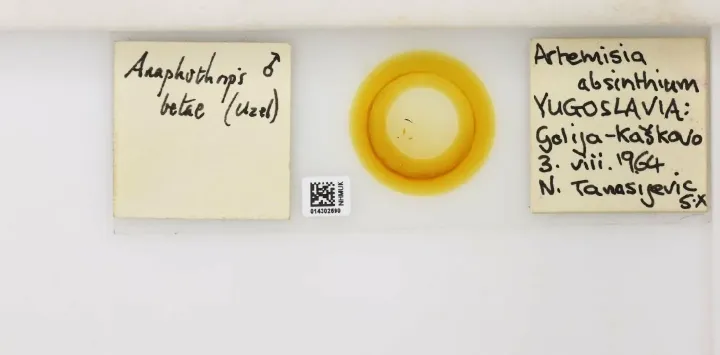
Description
How to identify
The beet thrips (Dictyothrips betae) is a small insect belonging to the order Thysanoptera, family Thripidae. The adult insects are generally 1 to 1.5 mm long, with a brownish-black body and characteristic fringed wings.
Larvae are paler in color, ranging from white to yellowish, and are wingless. They possess a piercing-sucking mouthpart, which is highly efficient at extracting sap from the tender tissues of host plants during their feeding process.
The life cycle of the beet thrips involves several stages: egg, larva, prepupa, pupa, and adult. Warm and dry weather conditions are known to significantly accelerate the transition between these stages, leading to multiple generations in a single season.
Beet thrips overwinter as adults, primarily seeking shelter in the upper layers of the soil or protected by debris from host plants. As spring temperatures rise, they emerge to infest young crops in the field.
They are highly mobile insects that move rapidly across the leaf surface, typically congregating on the undersides of leaves where they are shielded from direct sunlight and environmental stressors.
What it damages
The primary hosts for this pest include sugar beet, garden beet, and fodder beet. Additionally, various weed species from the Amaranthaceae family often serve as alternative hosts, helping to sustain populations throughout the season.
Both adults and larvae inflict damage by feeding on the leaf tissues. By sucking the cell contents, they cause a depletion of nutrients and a decrease in the photosynthetic capacity of the plant, which is crucial for healthy root development.
Young plants are particularly vulnerable to thrips attacks. Severe infestations in the early stages of growth can result in significant stunting, reduced plant vigor, and, in extreme cases, the total loss of the seedling.
Feeding often causes the leaf epidermis to be damaged, which interferes with the plant's ability to maintain water balance. This makes the crop more susceptible to wilting, especially under conditions of drought or high heat stress.
The overall impact on commercial yields can be substantial, as the cumulative effect of reduced leaf area and weakened plant health leads to lower root weights and reduced sugar content in sugar beet crops.
Signs of infestation
The first visual symptom of a thrips infestation is the appearance of silvery-white streaks or spots on the leaves. These patches are caused by the ingestion of cell content and the subsequent intake of air into the ruptured leaf tissue.
As the infestation progresses, leaves may become curled, deformed, or crinkled. This distortion is a clear sign that the feeding pressure has exceeded the plant's ability to develop normally and compensate for the injury.
The presence of tiny black dots, which are the excrement of the insects, on the underside of the leaves is a reliable indicator of thrips activity. These markings allow agronomists to distinguish thrips damage from other physiological disorders.
Close observation using a magnifying glass during sunny periods will often reveal the active larvae or adults moving along the veins of the leaves. Their small size makes them easily overlooked by the naked eye during initial inspections.
If the central whorl of the leaf rosette is damaged, it may cause a disruption in new leaf development, known as stunted growth, which is a major indicator of high pest pressure and the need for immediate action.
Control measures
Successful management of beet thrips starts with sound agronomic practices, such as crop rotation. Avoiding planting sugar beets in fields adjacent to the previous year's beet crop helps to break the pest's life cycle.
Weed management is a critical pillar of control. Eliminating weeds that act as reservoir hosts around the field edges is essential to prevent the migration of thrips into the main crop at the beginning of the season.
When the threshold for pest density is reached, chemical intervention becomes necessary. The use of systemic insecticides, applied early in the infestation cycle, is generally the most effective way to protect the crop.
- Monitoring fields with yellow sticky traps to track population spikes.
- Ensuring optimal plant growth through balanced fertilization to increase stress tolerance.
- Using insecticide-treated seeds to provide protection during the critical early seedling stage.
- Applying registered systemic insecticides as soon as symptoms are identified.
A proactive monitoring program during June and July allows for targeted applications, ensuring that pests are controlled before they spread across the entire plantation and cause significant economic damage.
Taxonomy
- Latin name
- Dictyothrips betae
- Order
- Thrips
- Family
- Thripidae
- EPPO code
- DIKTBE
Discussion
No discussions yet — be the first.