
Caliothrips striatus
Caliothrips striatus
Description
How to identify
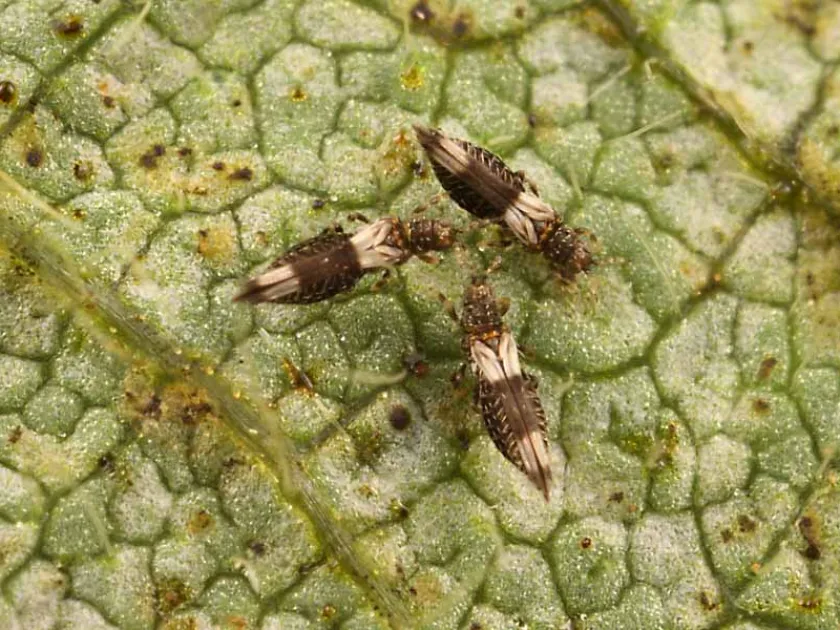
Caliothrips striatus is a species of thrips belonging to the order Thysanoptera and the family Thripidae. These insects are characterized by their small size and distinctively marked wings, which give them a striped appearance.
The adult insect has a dark-brown to black body with a reticulated structure on the head and pronotum. The antennae consist of eight segments, with specialized sensory cones on the third and fourth segments, which are key for species identification.
The larvae are typically pale yellow or orange and lack wings. They are usually found in secluded areas of the plant, such as leaf sheaths or inner leaf tissues, where they feed protected from predators.
The life cycle includes the egg stage, two larval stages, prepupa, pupa, and adult. The pupal stages frequently occur in the soil, which complicates direct contact control measures during the cropping season.
Adults are capable of active flight, especially during warm weather, which allows them to migrate rapidly across fields and infest new areas of cultivation.
What it damages
The primary hosts for Caliothrips striatus include various cereal crops such as wheat, barley, and oats. The pest also affects legumes and several vegetable species, making it a polyphagous insect of economic concern.
They feed by piercing the plant epidermis and sucking the cell sap. During feeding, they inject saliva that contains toxins, which disrupts the plant's physiological functions and damages photosynthetic tissues.
Heavy infestations result in significant yield losses. The plants show stunted growth, reduced vegetative mass, and poor grain development, leading to smaller kernels and lower grain quality.
In addition to direct damage, Caliothrips striatus can act as a vector for various plant viruses. Viral transmission often causes systemic diseases that result in total crop failure within the affected areas.
The stress caused by thrips feeding makes the plants more vulnerable to environmental factors, such as drought, and secondary pathogens like rust or powdery mildew.
When it appears
Adults overwinter in plant debris, leaf litter, or the upper layers of the soil. Emergence from hibernation begins in early spring as temperatures rise above 10–12°C.
The first generation typically develops on wild grasses before migrating to cultivated crops. This migration is highly dependent on climate conditions and the availability of suitable host plants.
Several generations can occur during a single growing season. The peak population density is usually observed during the stem elongation and heading phases of cereal crops.
Hot and dry conditions accelerate the life cycle of Caliothrips striatus, leading to a rapid buildup of the population. Conversely, high humidity can inhibit larval development.
As the season progresses and the plants reach maturity, the thrips begin to seek overwintering sites, often moving into the soil or sheltered crevices for the colder months.
Signs of infestation
The initial signs of infestation are small white spots or streaks on the leaf surface. As feeding continues, these spots coalesce, giving the foliage a silvery or greyish appearance.
- Silvery discoloration or streaking on leaf blades.
- Leaf curling and premature yellowing of lower leaves.
- Presence of black frass (excrement) on the underside of leaves.
- Deformed ears and shriveled grains.
- Overall growth retardation in localized spots of the field.
Inspecting the base of leaves and the ears is crucial, as the pests tend to congregate in these sheltered spots during the hottest parts of the day.
Infected tissues may also show signs of secondary fungal growth due to the weakening of the plant's natural defenses following the feeding damage.
Early detection through field scouting is vital, as the pests can spread very quickly once the population crosses the economic injury threshold.
Control measures
Effective control involves cultural practices such as crop rotation and early fall plowing. These methods help destroy overwintering sites and reduce the initial population size.
Controlling weeds around the edges of fields and in nearby shelterbelts is essential, as these areas often serve as reservoirs for the pest throughout the year.
Chemical control using systemic insecticides should be implemented only when scouting confirms that population numbers have exceeded the economic threshold for the specific crop.
Biological control methods, such as the release of predatory bugs (e.g., Orius species), can be effective in integrated pest management programs to keep thrips numbers in check.
Monitoring using blue or yellow sticky traps is a reliable way to detect the arrival of the pest and to determine the optimal timing for intervention.
Taxonomy
- Latin name
- Caliothrips striatus
- Order
- Thrips
- Family
- Thripidae
- EPPO code
- HEROST
Discussion
No discussions yet — be the first.