
Bean thrips
Caliothrips fasciatus
Description
How to identify
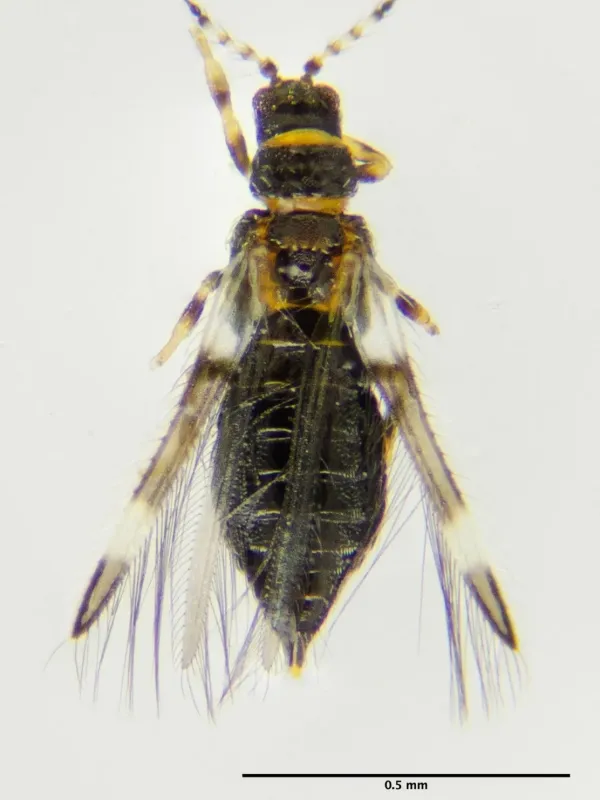
The bean thrips (Caliothrips fasciatus) is a small insect belonging to the order Thysanoptera and the family Thripidae. Adults measure approximately 1-1.5 mm and are easily distinguished by their dark-brown color and characteristic white bands on the wings.
The head and thorax feature a distinct reticulated pattern, which is a key diagnostic feature for professionals identifying the species under magnification. Their eight-segmented antennae have a specific structure unique to this group of thrips.
Larvae are typically pale yellow or orange, lack wings, and remain relatively stationary compared to the mobile adults. The lifecycle follows a hemimetabolous pattern including egg, larva, propupa, pupa, and adult stages.
Hot and dry weather conditions are ideal for their development, significantly accelerating their reproductive cycle and allowing populations to reach damaging levels quickly.
Adults are capable of long-distance flight, enabling them to migrate from wild hosts or neighboring crops into new fields as environmental conditions change throughout the growing season.
What it damages
This pest is a significant polyphage known to cause economic damage to a wide range of crops, including beans, cotton, citrus, and various vegetables. They feed by rasping plant tissues and sucking out the cell contents.
Young seedlings are particularly vulnerable to infestations, as the damage to tender leaves and stems can lead to stunted growth, curling, and permanent deformity of the plant.
Fruit production is often severely affected in orchards, where feeding on blossoms and developing fruit causes scarring, surface pitting, and reduced market value for the harvested produce.
In addition to direct physiological harm, the bean thrips can serve as a vector for certain plant viruses, which often leads to systemic disease spread within a crop field.
Under greenhouse conditions, the pest is persistent, thriving year-round due to stable temperatures and the lack of natural environmental checks that usually regulate outdoor populations.
Signs of infestation
The earliest signs of an infestation include small, silver-colored stippling or white patches on the leaf surface caused by the collapse of damaged plant cells.
Small, dark, glossy fecal droplets are frequently visible on the foliage near the feeding sites, serving as a reliable indicator of active thrips presence.
Severe infestations often result in leaf curling, yellowing, and eventual leaf drop, which impairs the plant's photosynthetic capacity and weakens its vigor.
Flowers infested by thrips may fail to set fruit or produce deformed pods, which is a critical sign of economic loss during the flowering stages of the plant development.
Careful inspection of the leaf undersides, especially along the midribs, often reveals colonies of larvae and adults tucked away in the plant's protected crevices.
Control measures
Effective management of Caliothrips fasciatus requires an integrated pest management (IPM) approach that combines cultural, biological, and chemical strategies.
Cultural control is centered on weed management, as many wild hosts serve as reservoirs for thrips populations during the off-season, enabling them to move into crops as they emerge.
Implementing crop rotation and ensuring sufficient spatial distance between susceptible crops can help reduce the pressure from migratory adult thrips.
When economic thresholds are reached, chemical control using systemic insecticides is necessary. It is crucial to rotate active ingredients to manage potential resistance development in the population.
Biological control, including the release of beneficial predatory mites or bugs, is highly recommended in protected environments to maintain low pest density without relying solely on chemical sprays.
Taxonomy
- Latin name
- Caliothrips fasciatus
- Order
- Thrips
- Family
- Thripidae
- EPPO code
- HEROFA
Discussion
No discussions yet — be the first.