
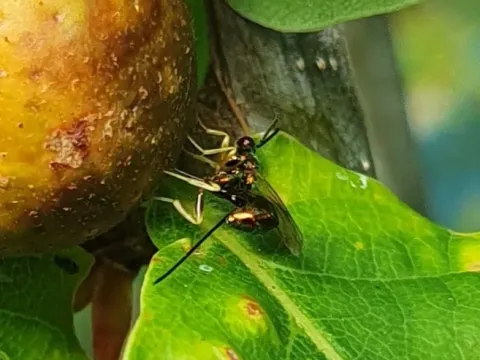
Syntomaspis
Syntomaspis
Syntomaspis is a genus of insects belonging to the family Torymidae within the order Hymenoptera. These are minute wasps, many of which act as parasitoids, but some species are known to cause significant damage to plant seeds.
What the section contains
Syntomaspis
The adult insects are characterized by their small size and often possess a metallic luster, commonly in shades of green or bronze. Their wing structure and venation patterns are typical of the Chalcidoidea superfamily.
Identifying this pest in the field is difficult due to its microscopic size and cryptic behavior. Accurate identification typically requires laboratory examination by an entomologist.
The female Syntomaspis is equipped with a long ovipositor, which is used to penetrate plant tissues, such as fruits or young ovaries, to deposit eggs directly into the developing seed.
The larvae are legless and white or yellowish. They remain protected within the seed coat, consuming the endosperm and embryo, which allows them to complete their development safely.
Syntomaspis species primarily target the seeds of various fruit and berry trees. By feeding on the seed content, they destroy the embryo, which prevents germination and propagation.
Heavy infestations can lead to significant economic losses, especially in nurseries and seed production facilities where seed quality is of the utmost importance.
The damage caused by this pest is often internal and hidden. The fruit may appear normal from the outside, while the internal seed material is being systematically destroyed.
Premature fruit drop is a common symptom in severely infested orchards, as the plant reacts to the damage sustained by its developing reproductive structures.
International spread of this pest often occurs through the movement of infested seeds or nursery stock, making phytosanitary protocols essential for control.
Adult activity usually coincides with the flowering and fruit-setting period of the host plants, as this is when the females seek suitable fruits for oviposition.
The overwintering stage is typically the larva, which remains inside the infested seed. This provides the insect with a stable microclimate during the cold winter months.
In the spring, as temperatures rise, the larvae undergo pupation within their chambers. The emergence of adults is highly synchronized with the phenology of the host plant.
Depending on the climatic zone and species, there might be one or more generations per year. The life cycle is strictly dependent on the availability of suitable host tissues.
As autumn approaches, the larvae enter a period of diapause, staying within the seeds to survive until the following spring, ensuring the continuity of the population.
The most distinctive sign of infestation is the presence of small exit holes on the surface of seeds or fruits, created by adults when they emerge after development.
Premature ripening and the shedding of fruits can indicate an underlying issue, including infestation by seed-eating insects like Syntomaspis.
Laboratory dissection of seeds reveals the internal damage, characterized by empty shells or the presence of larvae inside, which is the most reliable diagnostic method.
A reduction in the weight and viability of seed batches stored for planting is a strong indicator of historical infestation and ongoing pest activity.
Observing an unusual abundance of small wasps around fruit trees during the fruit-set period is a signal to initiate monitoring and pest management procedures.
The primary control measure involves rigorous orchard sanitation, specifically the removal and destruction of fallen fruits, which serve as the main reservoir for overwintering larvae.
Chemical control with systemic insecticides may be effective if applied during the adult flight period, provided that safety regulations and harvest intervals are strictly followed.
Biological control strategies focus on preserving natural enemies that prey upon or parasitize these wasps, thereby maintaining their population at non-economic levels.
Tillage and soil cultivation in orchards can help disturb the environment for overwintering stages, reducing the survival rate of the population.
- Monitoring pest flight using traps.
- Selecting resistant plant varieties.
- Ensuring rigorous quarantine measures for nursery stock.
- Maintaining optimal plant health to enhance natural recovery.