
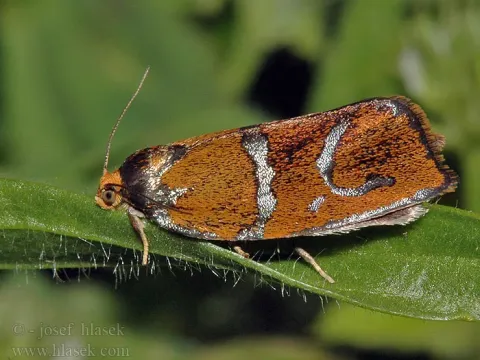
Leaf roller
Ptycholoma lecheanum
The forest leaf roller (Ptycholoma lecheanum) is a moth species belonging to the family Tortricidae. The adult moth has a wingspan of 16–22 mm, featuring distinctive ochre-brown forewings adorned with dark transverse patterns and markings.
What the section contains
Leaf roller
The larvae, or caterpillars, reach a length of 15–18 mm. They possess a greenish or yellowish-green body with a glossy dark head and a prominent thoracic shield. These larvae are highly active and will drop on silk threads when disturbed.
The eggs are laid in batches covered with a protective secretion that mimics the texture and color of tree bark, making them extremely cryptic and difficult to detect during orchard inspections.
The pupae are dark brown, approximately 10 mm long. They typically reside within rolled leaves or deep crevices of the bark, providing shelter from environmental stressors and predators.
This species is univoltine, meaning it has one generation per year. It overwinters as second or third-instar larvae, hidden in silk cocoons found in branch crotches or under tree bark scales.
This pest is a polyphage, capable of feeding on a wide range of woody plants. It causes significant damage to orchard trees, including apples, pears, plums, and cherries, which directly threatens fruit production.
Beyond fruit trees, the forest leaf roller infests various broad-leaved trees such as oaks, maples, lindens, and birches. Consequently, it is a common pest in parks, forests, and shelterbelts.
The primary damage occurs in early spring when larvae emerge to feed on budding leaves and reproductive parts. By consuming the contents of the buds, they severely reduce the potential yield.
During the summer, larvae construct shelters by rolling leaves or tying them together with silk webbing. Feeding within these structures allows them to damage the leaf surface, hindering photosynthesis.
Severe infestations can lead to heavy defoliation of the canopy, which weakens the host tree, reduces its vigor, and makes it more susceptible to winter frost and opportunistic diseases.
The activity period in spring coincides with bud burst, typically when average daily temperatures reach 10-12 degrees Celsius. This is the optimal window for early-season monitoring.
Active larval feeding occurs throughout May and early June. During this phase, caterpillars are most vulnerable to control measures, as they actively consume the foliage of the host plants.
Pupation takes place in mid-June, usually lasting about two weeks within the rolled leaves. This stage is followed by the emergence of the adult moths.
Adult flight activity occurs from late June through July. These moths are primarily nocturnal, making them elusive to spot during daylight hours without specialized pheromone traps.
After mating and egg-laying, the next generation embryos develop by late summer. The young larvae hatch, feed briefly, and then seek overwintering sites to survive the cold season.
Early symptoms include the presence of silk webbing on the tips of young shoots. If buds appear hollowed out or fail to open properly, it is a strong indicator of leaf roller activity.
The most recognizable sign is the presence of rolled or folded leaves bound together with silk. Unfolding these structures often reveals the caterpillar or its frass (waste).
- Ragged leaf margins where tissue has been consumed.
- Blossoms and fruit buds webbed together.
- Visible silk cocoons in bark crevices.
- Wilting or browning of terminal shoots caused by larval feeding.
Visual inspection of the canopy reveals sparse foliage or damaged, curled leaves that have lost their natural shape. Heavily infested branches may appear stunted.
During dormant periods, growers can look for signs of old cocoons in branch forks, which indicate areas where the population has successfully overwintered and may emerge again.
Cultural control practices include the removal and destruction of infested branches containing silk nests. Scraping off loose, old bark from trunks can help destroy overwintering sites for the larvae.
The installation of sticky bands or cardboard traps on tree trunks can help capture migrating caterpillars, providing an effective non-chemical monitoring and control tool.
Biological control methods involve the use of eco-friendly insecticides based on Bacillus thuringiensis, which target the caterpillars while preserving beneficial predatory insects.
Chemical control should be timed to coincide with the most vulnerable stages of the larval life cycle, such as bud burst or immediately after the petal fall stage in orchards.
Integrated Pest Management (IPM) strategies, including the rotation of active ingredients in insecticides, are essential to prevent the development of resistant pest populations.